AI governance often starts as a policy document. That document may define approved tools, data handling, acceptable use, security requirements, and procurement rules.
For software teams, that is only the beginning. Once AI agents can edit files, run commands, create branches, and open pull requests, governance has to move into the software delivery workflow.
An AI code governance platform should answer a practical question: when AI helps write code, can your organisation see, control, validate, review, and audit the work before it reaches production?
Why AI Code Governance Is Different
General AI governance focuses on model risk, data handling, approval workflows, and organisational policy. AI code governance is narrower and more operational.
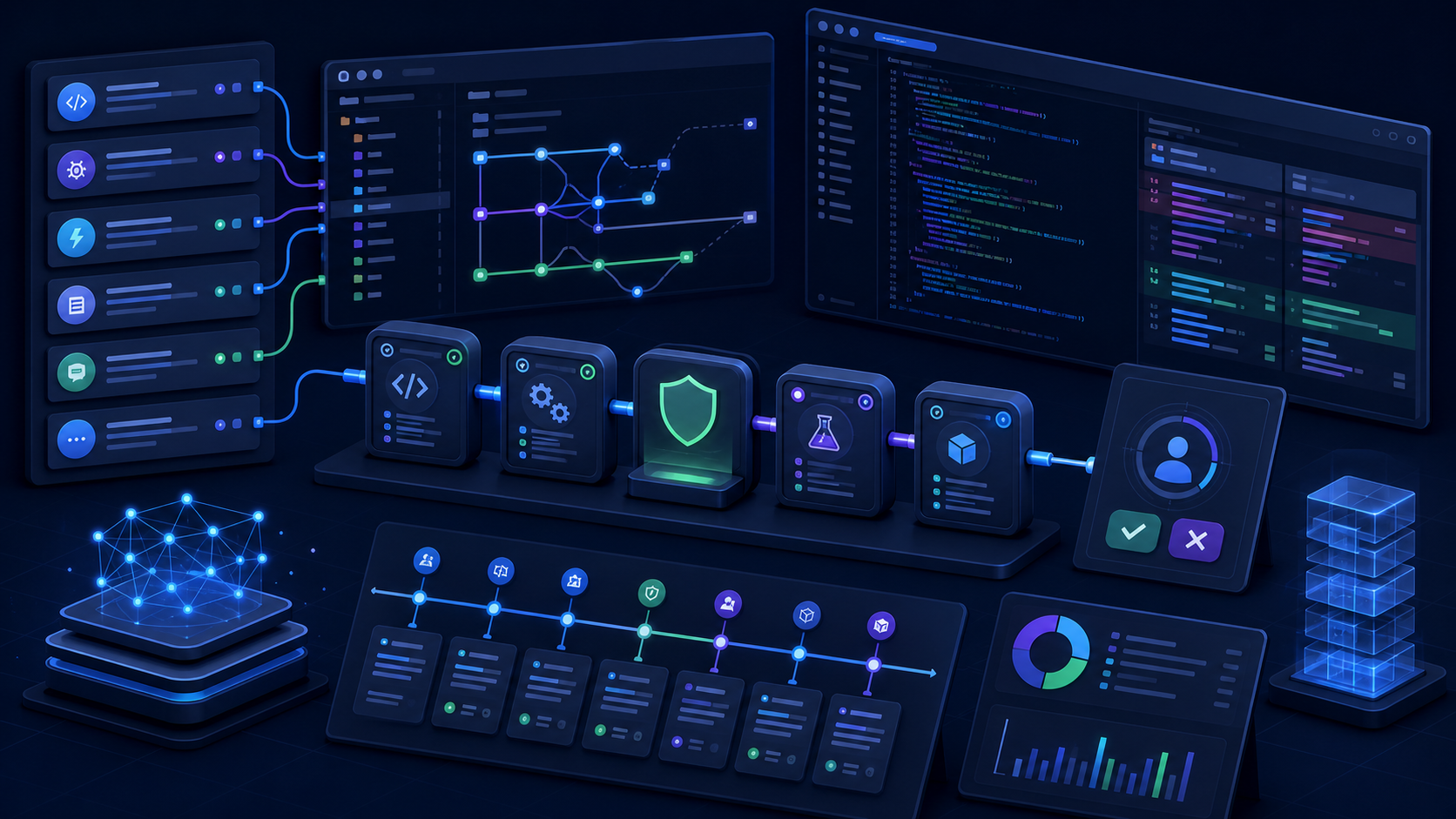
It has to cover:
- which repositories an agent can access
- which work items are approved for AI coding
- what system context the agent used
- which commands the agent was allowed to run
- what code was changed
- whether validation passed
- who reviewed and approved the PR/MR
- what audit evidence remains afterwards
That makes AI code governance a delivery-layer concern, not only a compliance-layer concern.
The Risk of After-the-Fact Governance
Many teams try to govern AI-generated code after it appears in a pull request.
That is weak because the important decisions already happened:
- the prompt was written
- the agent gathered context
- the repository was accessed
- commands may have run
- files were changed
- the reviewer now has to reconstruct intent from the diff
After-the-fact review still matters, but it should not be the first control point.
Good governance starts before coding and continues through validation, review, and audit.
Core Capabilities to Look For
An AI code governance platform should provide seven controls.

1. Approved Work Intake
AI coding should start from approved work where possible. That can be a Jira issue, GitHub Issue, GitLab Issue, Azure Boards item, Linear issue, monday.dev item, or another controlled queue.
The platform should preserve:
- ticket identity
- requester
- approval state
- priority
- acceptance criteria
- labels and routing rules
This turns governance into a workflow decision, not an informal prompt.
MergeLoom’s work intake integrations are built around this pattern.
2. Repository and Permission Control
Agents should not receive broad code access by default.
Look for:
- approved repository lists
- scoped credentials
- read/write separation
- protected branch restrictions
- PR/MR-only handoff
- visibility into which repositories each run touched
For regulated or sensitive environments, this may also require a self-hosted worker. MergeLoom supports that through Self Hosted AI coding infrastructure.
3. Context Governance
AI coding quality depends on context, but more context is not automatically better.
Governance should define:
- which documentation sources are approved
- which repositories can be used for context
- how stale context is refreshed
- which rules override model guesses
- whether sensitive data is excluded
MergeLoom’s Context Engine gives teams a controlled way to attach repository rules, docs, and system context before execution.
4. Validation Gates
An AI-generated branch should not go straight to review without checks.
Validation gates can include:
- setup commands
- linting
- format checks
- type checking
- unit tests
- build checks
- custom repository policy commands
The platform should capture command results and stop or repair failed work before reviewers inherit it.
MergeLoom’s Quality Agents handle validation, bounded repair, specialist review, and Diff Guard before PR/MR handoff.
5. Human Review Ownership
AI code governance should not remove human review. It should make review better.
The platform should support:
- normal GitHub, GitLab, or Azure Repos review flows
- branch protection
- CODEOWNERS or reviewer routing
- clear PR/MR summaries
- reviewer focus areas
- no auto-merge unless explicitly governed outside the platform
The key principle is simple: AI prepares the change; humans approve and merge.
6. Audit Trails
Audit trails should connect the whole delivery path.
Useful audit evidence includes:
- source ticket
- run owner or requester
- context sources
- model/provider path where available
- commands run
- validation output
- repair attempts
- files touched
- PR/MR link
- line-level attribution where available
MergeLoom’s audit trails and attribution focus on this delivery evidence.
7. Cost and Outcome Visibility
AI coding cost should be tied to accepted work, not only token spend.
Track:
- runs attempted
- runs stopped before coding
- validation failures
- PRs/MRs opened
- PRs/MRs merged
- review rework
- cost per accepted PR/MR
MergeLoom’s Reduce AI Costs page explains why outcome economics matter more than raw model usage.
How This Differs From AI Code Review Tools
AI code review tools are useful. Tools such as CodeRabbit, Qodo, and Greptile help teams inspect pull requests, enforce standards, and surface issues.
But code review is only one layer.
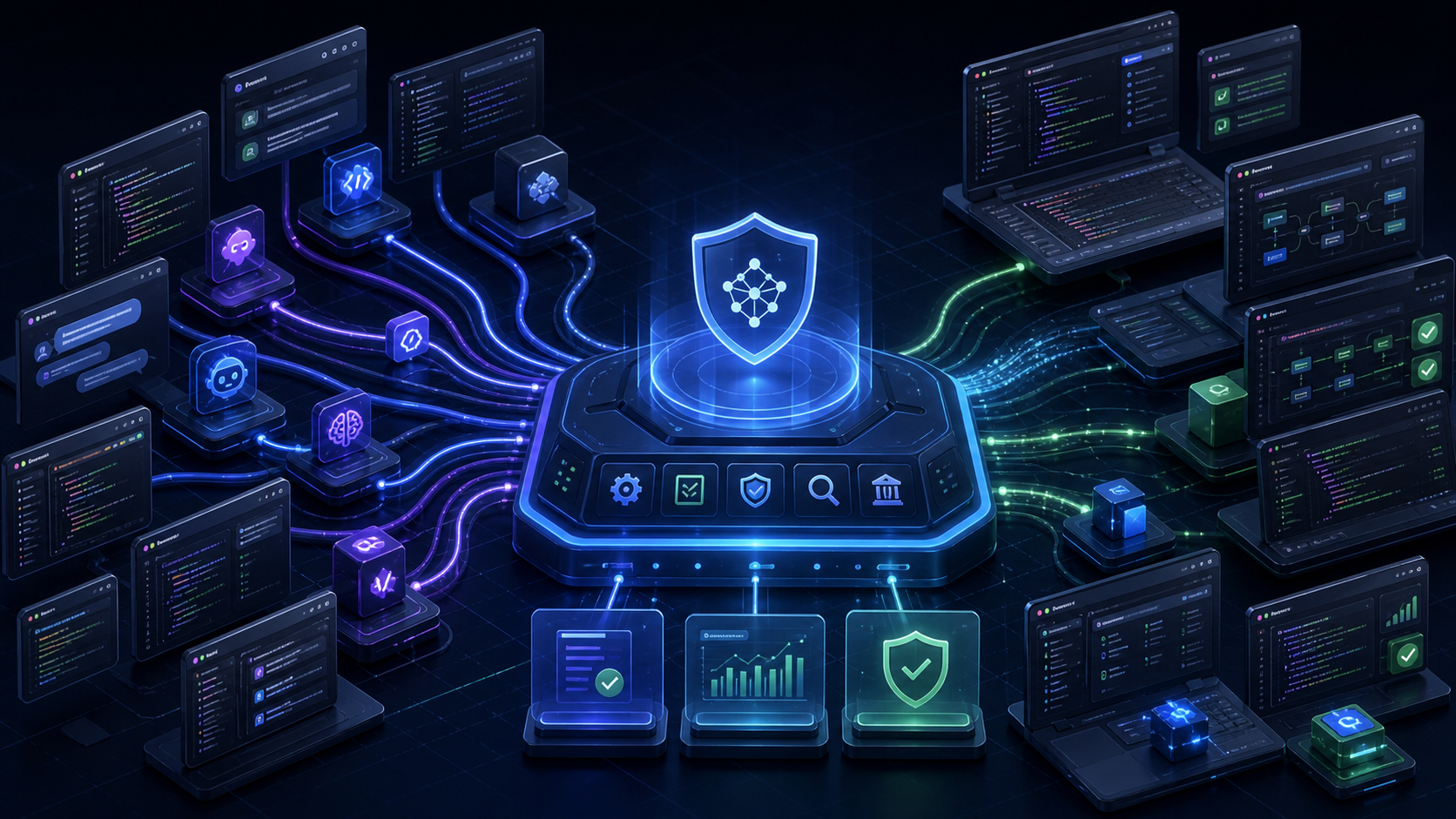
AI code governance also needs to cover:
- work selection before coding
- repository permissions
- context assembly
- execution boundaries
- validation before review
- run-level audit trails
- cost per outcome
Review tools can be part of the governance model. They are not the whole model.
Evaluation Questions
Use these questions when evaluating an AI code governance platform:
- Can approved tickets trigger controlled coding runs?
- Can we restrict which repositories and branches agents can touch?
- Can we attach repository rules and documentation before execution?
- Can we run our validation commands before PR/MR handoff?
- Can failed checks stop or repair the run automatically?
- Can reviewers see what changed, why, and what checks ran?
- Can humans keep approval and merge control in the code host?
- Can security and platform teams audit run evidence later?
- Can leadership measure accepted outcomes and cost?
If a platform cannot answer those questions, it may be an AI coding tool, but it is not yet a governance layer.
Where MergeLoom Fits
MergeLoom is built for engineering teams that want governed AI coding without replacing their existing delivery systems.
It connects ticket intake, context, execution, validation, repair, review handoff, audit trails, and outcome pricing. It works for teams that want a fast Cloud Hosted AI coding path and teams that need Self Hosted execution inside their own boundary.
To explore the workflow, start with Ticket-To-Code Automation or book a demo to map your AI code governance requirements.