AI coding adoption usually starts inside the editor. A developer tries Copilot, Cursor, Claude Code, Amazon Q Developer, or another assistant and gets value from faster local iteration. That is useful, but it is not yet an enterprise delivery system.
Enterprise AI coding orchestration begins when the question changes from “Can one developer move faster?” to “How do we let teams use AI coding without losing control of work intake, repository access, validation, review, cost, and audit evidence?”
That is the gap MergeLoom is built around. Individual tools prove demand. Orchestration turns AI coding into an operating model.
What AI Coding Orchestration Means
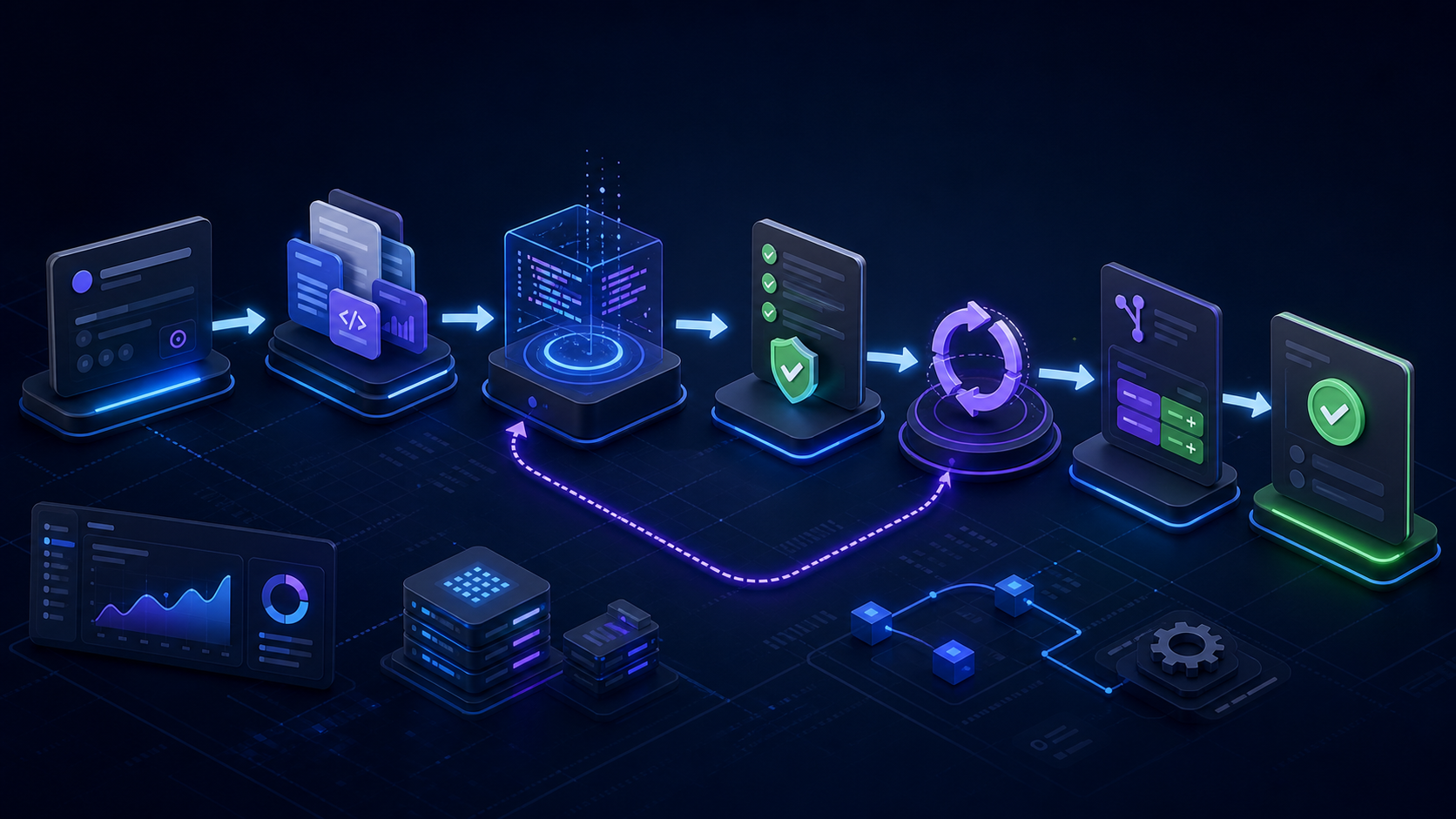
AI coding orchestration is the control layer around AI-generated software delivery.
It connects:
- approved tickets, issues, or backlog items
- repository routing and ownership rules
- system context, docs, and architecture guidance
- coding agent execution
- setup, lint, typecheck, test, build, and custom validation commands
- repair loops when checks fail
- PR/MR handoff into the normal code host
- human review and merge control
- audit trails that show what happened
- cost visibility by run and outcome
The goal is not to hide AI behind another dashboard. The goal is to make AI coding behave like controlled engineering work.
Why Tool Adoption Is Not Enough
Tools like GitHub Copilot cloud agent, Cursor, Claude Code, Amazon Q Developer, and Factory Droids all validate the same market direction: AI is moving from suggestions into agentic code changes.
That creates a new management problem.
Without orchestration, teams often end up with:
- AI work started from vague prompts instead of approved tickets
- context assembled differently by every developer
- agents with unclear repository access
- validation done inconsistently or too late
- reviewers receiving noisy branches with weak summaries
- limited visibility into which changes were AI-generated
- unclear cost per accepted PR/MR
Those problems do not mean AI coding is a bad idea. They mean the workflow is underdesigned.
The Orchestration Workflow
A practical enterprise workflow has six stages.
1. Intake From Approved Work
The run should start from a real work item: a Jira issue, GitHub Issue, GitLab Issue, Azure Boards item, Linear issue, monday.dev item, or similar source.
That matters because the ticket defines why the change exists. It also gives teams a place to enforce approval, readiness, priority, labels, ownership, and scope.
MergeLoom’s ticket-to-code automation is built around this pattern: approved work is the input, not an after-the-fact note.
2. Context Before Code
AI agents are sensitive to context quality. They need more than the ticket title.
Good orchestration provides:
- target repository and likely files
- architecture rules and local conventions
- related services, APIs, and contracts
- documentation and runbooks
- validation commands
- known constraints and out-of-scope areas
MergeLoom’s Context Engine exists because repeated ad hoc context gathering wastes time and increases risk. Teams need reusable, approved context attached to each run.
3. Bounded Execution
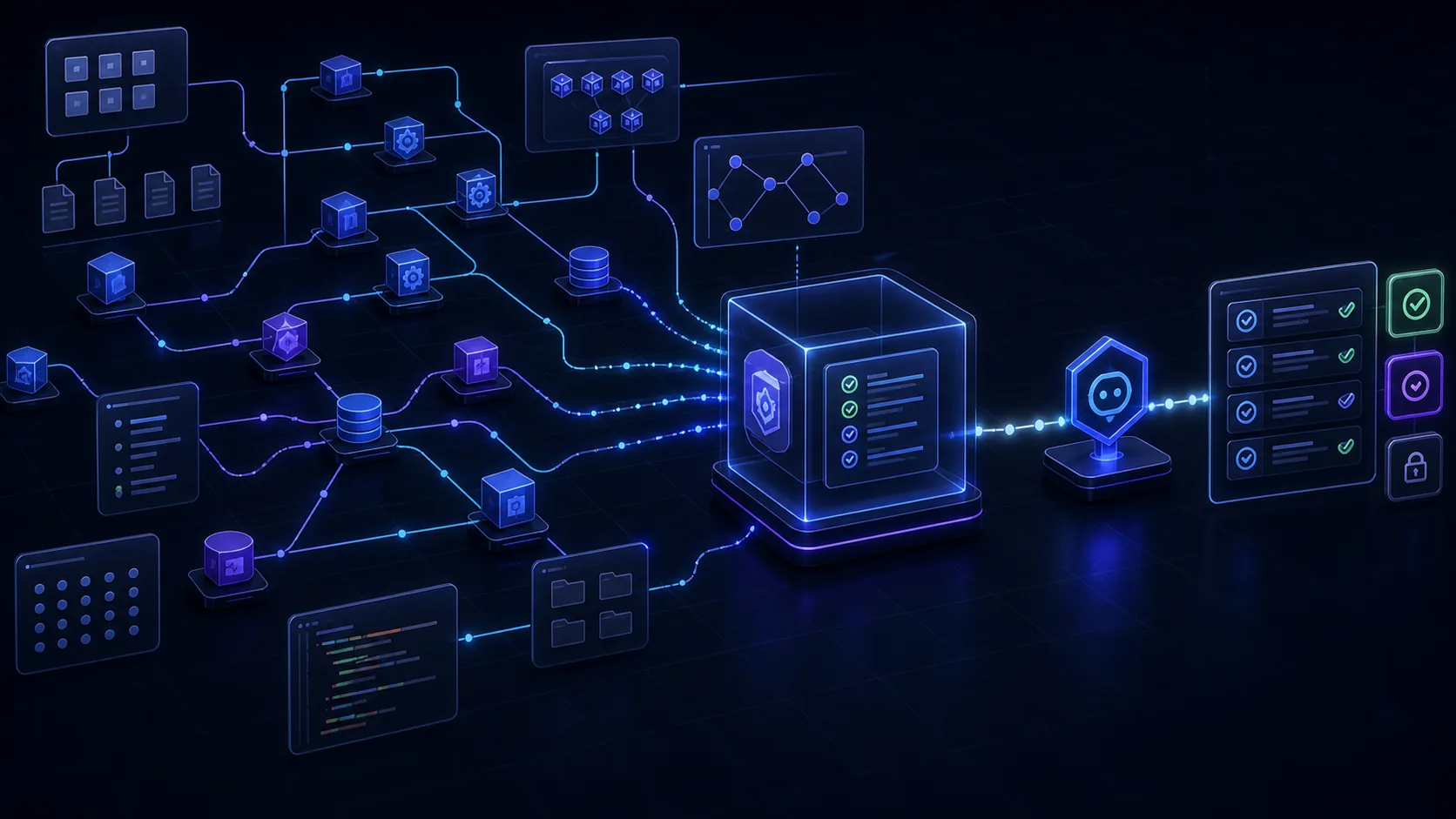
The agent should work inside a bounded scope. That includes repository access, branch rules, allowed commands, network access, retry limits, and file-change expectations.
This is where orchestration differs from individual prompting. The question is not whether the model can make a change. The question is whether the organisation knows what the agent was allowed to do.
4. Validation Before Review
Validation should run before engineers are pulled into review.
That can include:
- install or setup commands
- linting
- type checking
- unit tests
- targeted integration tests
- build checks
- repository-specific policy commands
MergeLoom’s Quality Agents use this logic: check the work, repair bounded failures where possible, and only then prepare review handoff.
5. Review Packet
The PR/MR should arrive with enough evidence for a human reviewer to make a decision.
At minimum, reviewers need:
- source ticket
- summary of what changed
- files touched and why
- checks run and results
- repair attempts
- known gaps or reviewer focus areas
- Diff Guard or scope metrics if available
Human review stays in control. The orchestration layer makes that review faster and less speculative.
6. Audit and Cost Evidence
Enterprise buyers need to know what happened after the run is complete.
Useful evidence includes:
- who requested the run
- which ticket and repository were involved
- what context was used
- which commands ran
- what changed
- what was AI-generated
- which PR/MR was opened
- estimated run cost and token usage
MergeLoom’s audit trails and attribution connect this evidence back to delivery work, not just model usage.
Who Owns Orchestration?
AI coding orchestration usually sits between engineering leadership, platform, DevOps, security, and delivery managers.
Typical ownership looks like this:
- CTO or VP Engineering: defines adoption policy, acceptable risk, and success metrics.
- Platform or DevOps: owns worker placement, repository access, commands, integrations, and operational reliability.
- Engineering managers: choose the work types suitable for automation and monitor review quality.
- Security: reviews permissions, data boundaries, secrets, and audit requirements.
- Developers: review output, improve tickets, and keep final merge control.
The common mistake is treating orchestration as only a developer productivity project. It is also a governance, platform, and delivery control project.
Metrics to Track
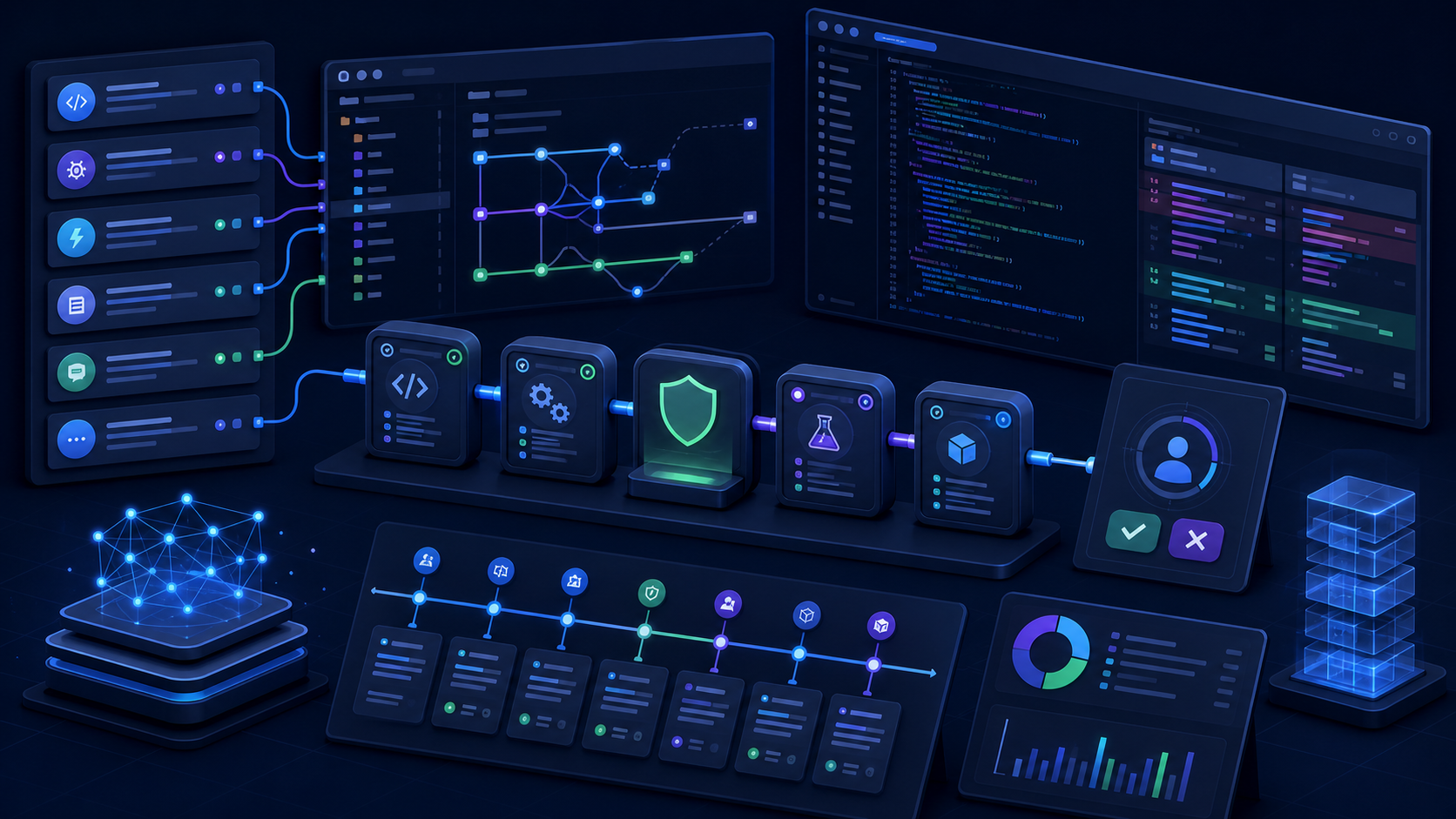
Avoid vanity metrics like lines of AI-generated code. Track the workflow.
Useful metrics include:
- approved tickets attempted by AI coding
- PR/MR runs accepted for review
- validation pass rate before handoff
- repair rate and repeated failure causes
- reviewer rework rate
- merge rate for AI-generated PRs/MRs
- lead time from approved ticket to review
- cost per accepted PR/MR
- policy violations or stopped runs
These metrics help leaders decide where AI coding is genuinely improving delivery.
When to Add Orchestration
You do not need a full orchestration layer for one developer experimenting locally.
You do need one when:
- multiple teams are using AI coding tools
- agents can open PRs/MRs
- work starts from tickets or issue trackers
- security needs traceability
- reviewers are spending time cleaning up AI output
- leaders need cost and adoption visibility
- self-hosted execution or private provider routing is required
That is the point where the operating model becomes more important than the assistant UI.
How MergeLoom Fits
MergeLoom is an orchestration platform for teams that want AI coding to move through their existing delivery controls.
It connects work intake, context, execution, validation, repair, review handoff, audit trails, and pricing around PR/MR outcomes. Teams can start with Cloud Hosted AI coding or keep execution inside their own environment with Self Hosted AI coding infrastructure.
The buyer value is simple: routine development work can move faster without asking engineering leaders to accept invisible, unvalidated, unreviewable AI changes.
Start With a Narrow Pilot
The best first pilot is not “let AI code anything.”
Start with:
- one or two repositories
- clear work types such as bug fixes, tests, docs, or small maintenance tasks
- defined validation commands
- required human review
- run evidence reviewed after each PR/MR
- a cost-per-outcome target
Then expand only when the workflow produces reviewable work consistently.
To see how this works in MergeLoom, start with Ticket-To-Code Automation or book a demo to map your current delivery workflow.