
Small Fixes Pile Up
Security, docs, dependencies, and standards drift until they hurt.
Give security hygiene, docs drift, dependency cleanup, and platform standards their own scoped agents. They open review-ready PRs/MRs, not chaos.
Beta. More codebase care, less sprint tax.
Small codebase issues are cheap early and expensive later. They just rarely beat roadmap work.
Security, docs, dependencies, and standards drift until they hurt.
Engineers lose roadmap time to repeatable cleanup.
The mandate, budget, scope, and evidence vanish after the session.
Nobody wants automation that floods reviewers.
Agent Fleets are named Codebase Agents with a mandate, scope, budget, file rules, cadence, and review boundary.
Each agent owns one recurring concern. No broad autonomous wandering.
Finds safe config and vulnerable-pattern fixes.
Repairs docs drift around changed services.
Moves small compatibility cleanup into review.
Applies repeatable engineering standards.
The fleet can be proactive without flooding the team. You set the work boundary before it runs.
Choose the repositories, include paths, exclude paths, and ownership rules.
Cap PR/MR-producing runs so reviewers never get swamped.
Keep proactive work inside credit, token, or self-hosted provider limits.
Context Engine, validation, repair, AI review, and audit evidence still apply.
Agents open focused fixes when the mandate is met. Humans still review and merge.
Small fix with validation and risk notes attached.
Docs update linked to the changed service contract.
Dependency cleanup capped to a reviewable branch.
Keep the codebase improving without pulling engineers away from product delivery.
High-confidence fixes keep moving.
Platform rules become repeatable reviewable work.
Daily budgets keep proactive work predictable.
Mandate, scope, budget, checks, and PR/MR stay linked.
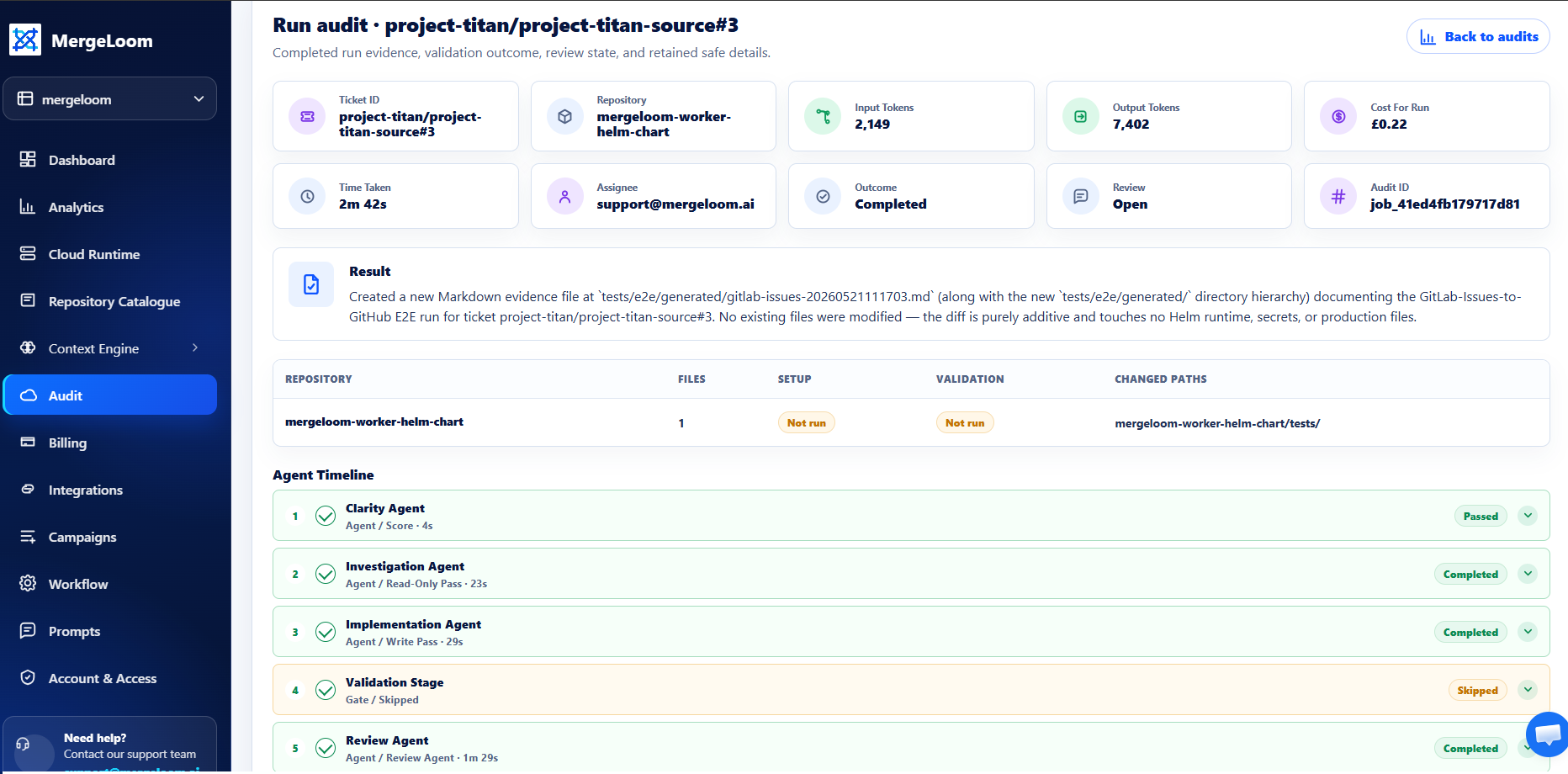
Agent-created jobs use the same MergeLoom path: scope, checks, usage, audit, and PR/MR review.
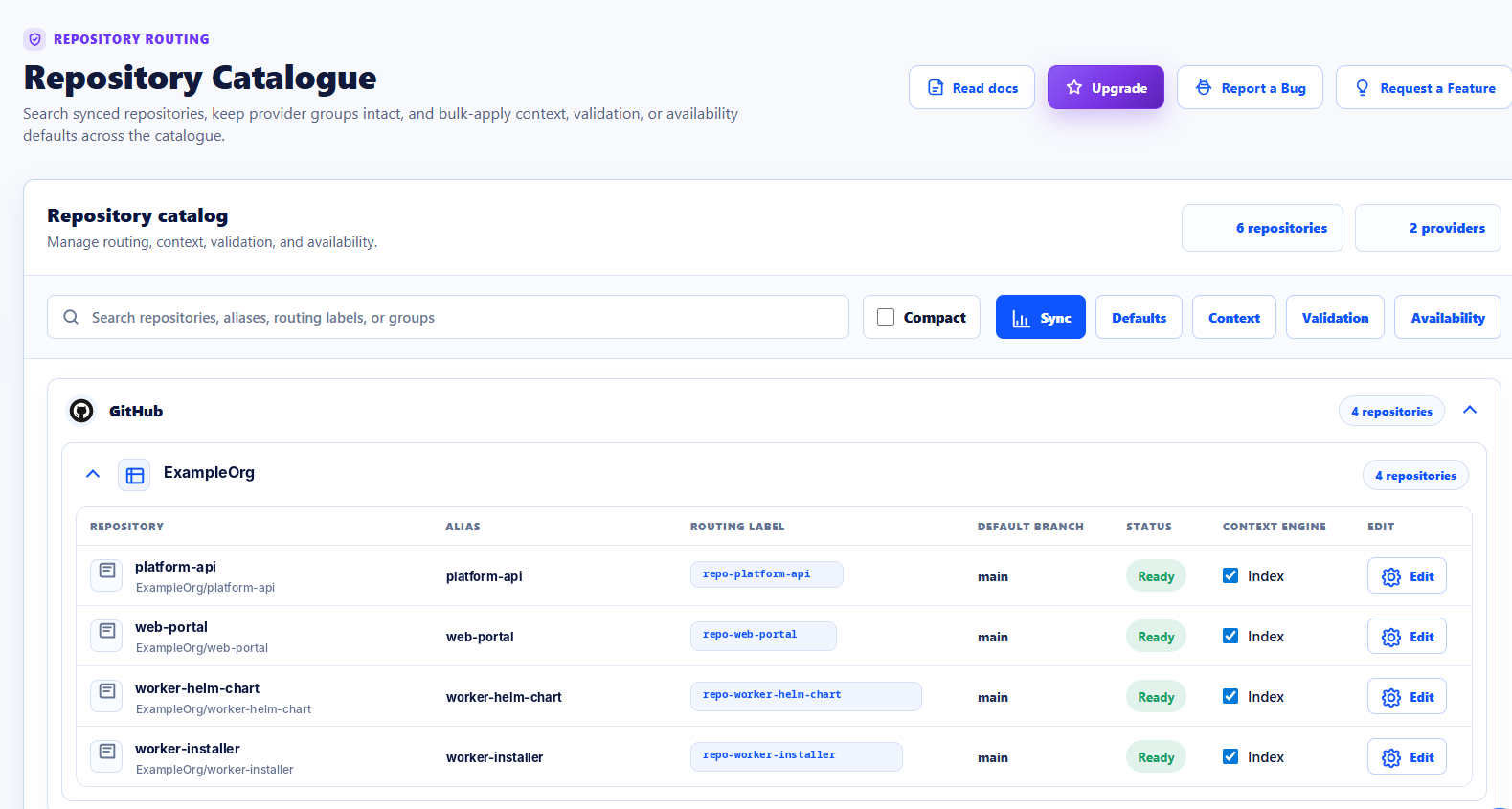
Useful automation needs limits. Agent Fleets are bounded before they create review work.
Selected repositories only. Include and exclude rules available.
Limit PR/MR-producing runs per day.
Cap Cloud credits or Self Hosted tokens.
Limit review load. Pause or resume any agent.
Security, docs, dependencies, tests, and standards keep moving in small reviewable PRs/MRs.
Keep high-confidence fixes moving.
Keep docs closer to shipped code.
Move small config and compatibility fixes.
Add focused tests around stable behavior.
Clean up recurring patterns across services.
Turn cleanup into measured output.
Scoped Codebase Agents for recurring codebase work. Each has a mandate, repo scope, file rules, budgets, and PR/MR review path.
No. Cap PR/MR-producing runs, AI usage, open reviews, repository scope, and pause/resume controls.
No. They create normal MergeLoom jobs when the mandate and scope justify reviewable work.
Scope, file rules, budgets, Quality Agents, validation, audit evidence, and human review sit above the agent mandate.
Run MergeLoom on scoped work before rolling it out. You only pay when a run opens a PR/MR for review, not for seats or tickets that stop before handoff.
Cloud
Then From £4 Per PR/MR
Self Hosted
Then From £2 Per PR/MR
Paid Outcomes
No PR/MR, No Run Charge
No PR/MR, No Run Charge · No Seat Pricing · Human Review Stays In Control