
AI coding agents are moving from individual experimentation into team workflows. That shift creates a governance problem. A developer using autocomplete inside an IDE is one thing. An agent that can read repositories, run commands, create branches, and open pull requests needs clearer rules.
This template gives engineering leaders a starting point. Adapt it to your security model, compliance requirements, and SDLC controls.
Policy Purpose
Use this section to state why the policy exists.
Example:
AI coding tools may be used to assist software delivery when their usage preserves security, code quality, review ownership, auditability, and compliance with our engineering standards. AI-generated or AI-assisted changes must remain subject to the same branch protection, testing, and human review requirements as human-authored code.
Keep the purpose practical. The policy should not read like a philosophical statement about AI. It should help teams decide what is allowed on Monday morning.
Approved Tool Categories
Define tool categories rather than listing only vendor names. This keeps the policy stable as the market changes.
| Category | Example Use | Governance Requirement |
|---|---|---|
| IDE assistants | Inline suggestions, local code explanations | Allowed for approved repositories if data handling is approved. |
| Chat tools | Debugging help, architecture discussion | Do not paste secrets, customer data, or proprietary code unless approved. |
| Coding agents | Multi-file edits, branches, PRs/MRs | Must use approved execution path, permissions, validation, and audit logs. |
| AI code review | PR/MR review comments and summaries | Must not replace required human review. |
| Workflow automation | Ticket-to-PR/MR execution | Must connect ticket, run, validation, and review evidence. |
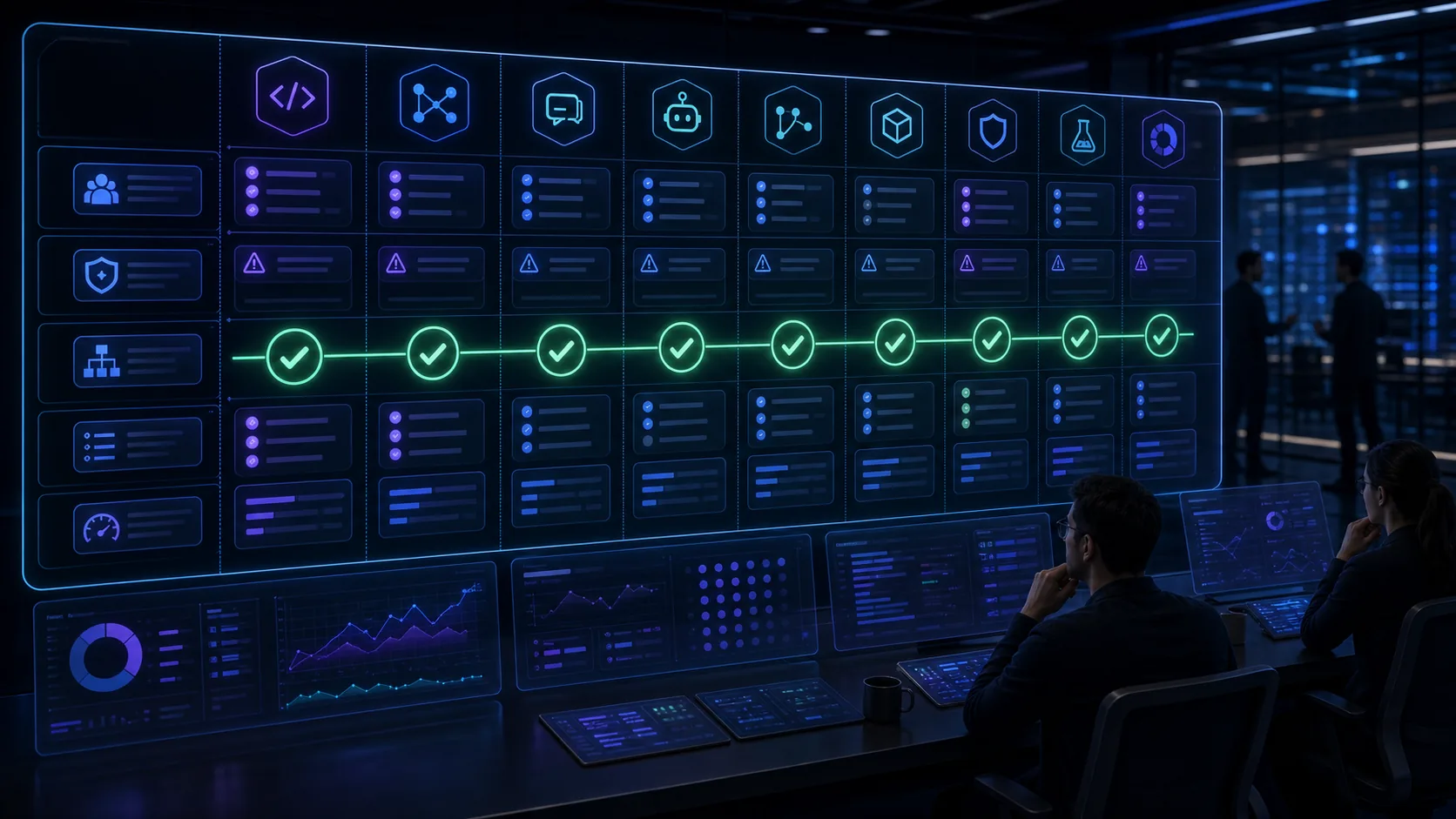
This structure helps procurement and platform teams approve the operating model, not just the brand.
Allowed Work Types
Not every ticket is suitable for an agent. Define allowed work by risk.
Good initial candidates:
- small bug fixes with reproduction steps
- test additions against known behavior
- documentation updates
- dependency or configuration chores with clear validation
- bounded UI copy or small component updates
Work that should usually require senior ownership:
- authentication and authorization changes
- payment, billing, or financial logic
- data migration and destructive database work
- cryptography, secrets, or credential handling
- architecture migrations across multiple services
- customer-specific incident remediation
The policy can still allow AI assistance for high-risk work, but it should require a named human owner, stricter review, and stronger evidence.
Repository Access Rules
AI agents should not receive broad repository access by default. Define how access is granted, scoped, reviewed, and revoked.
Policy language:
- Agents may only access repositories approved for the specific workspace, project, or run.
- Write permissions must be limited to branch creation and PR/MR handoff unless a stronger permission is explicitly approved.
- Secrets must not be exposed to prompts, logs, summaries, or external tools.
- Private package registries, build systems, and cloud credentials must follow least-privilege access.
- Repository rules, validation commands, and ownership metadata must be kept close to the code.
For teams using a controlled worker, MergeLoom’s self-hosted AI coding infrastructure can keep execution inside the customer’s environment while preserving audit evidence.
Validation Requirements
Every AI-generated branch should run validation before it reaches review.
Minimum policy:
- Run repository setup commands required for the target project.
- Run linting, type checking, targeted tests, and build commands where available.
- Record command output or enough pass/fail evidence for review.
- If validation fails, either repair within scope or stop the run with evidence.
- Do not ask human reviewers to debug a branch that the agent could not validate unless that is explicitly stated in the PR/MR.
This is where Quality Agents or similar pre-review gates matter. Reviewers should focus on judgment, not routine cleanup.
Human Review and Merge Control
Your policy should be direct: AI-generated code does not bypass review.
Example:
All AI-generated or AI-assisted production changes must be reviewed through the normal pull request or merge request workflow. Human reviewers remain responsible for approving the change. AI review comments, summaries, or validation outputs may support review but do not replace required approval.
This reduces confusion. The agent can draft, validate, repair, and summarize. The engineering team still owns merge decisions.
Audit Evidence
Define the evidence that must be retained for each agentic coding run.
Useful fields:
- initiating user or system
- source ticket or issue
- target repository and branch
- execution environment
- approved provider/model path where available
- context sources and repository rules used
- validation commands and outcomes
- created PR/MR URL
- review and merge outcome
- cost or usage metrics when available
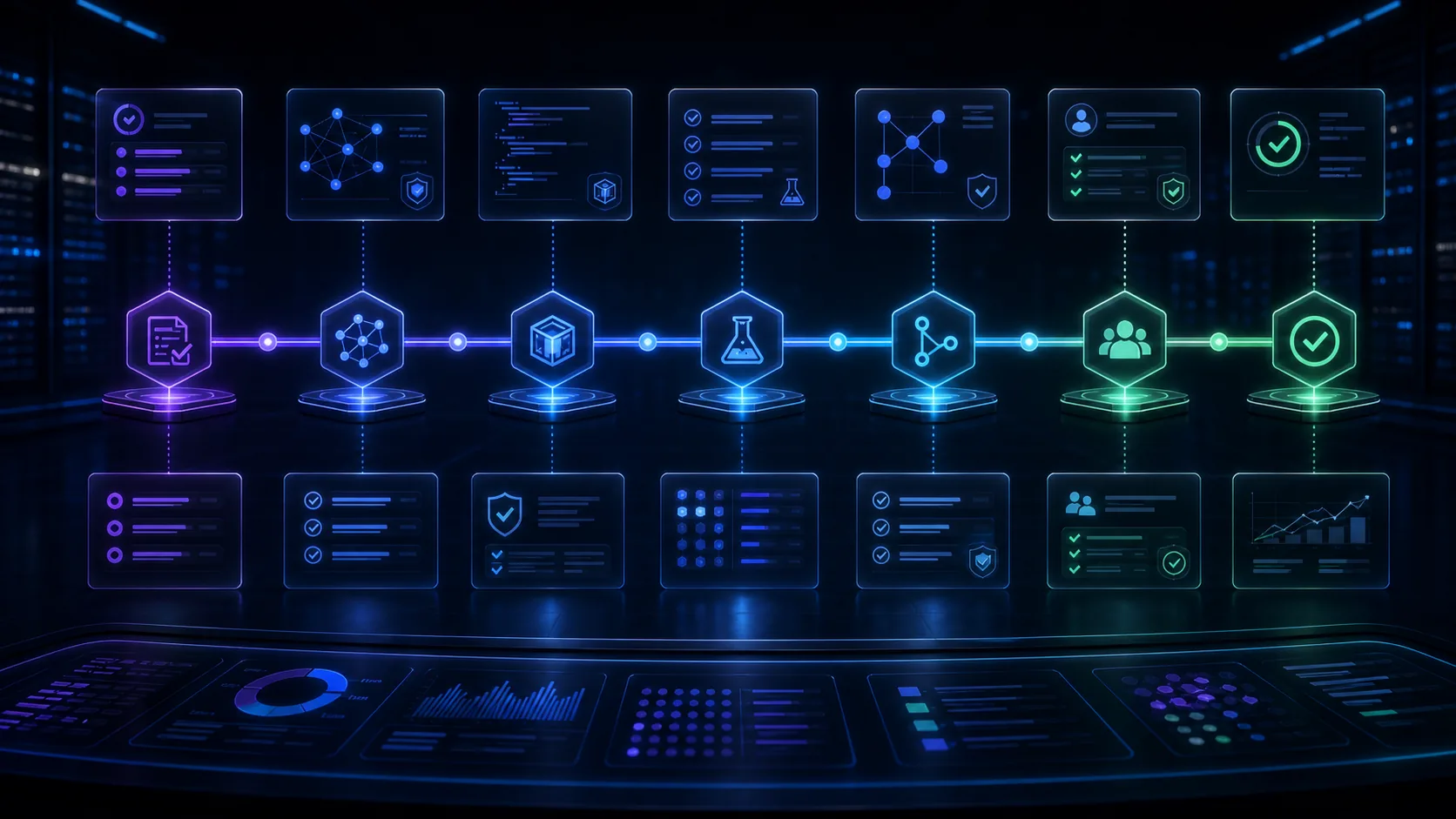
The NIST AI Risk Management Framework is useful background for broader AI risk management. For software delivery, the operational question is whether your engineering team can produce the run evidence when needed.
Security Controls
Add a concise security section that covers:
- prompt injection and untrusted repository content
- secret handling
- dependency changes
- network access
- tool permissions
- logs and retention
- incident response for unsafe generated code
The OWASP Top 10 for LLM Applications and OWASP MCP guidance are useful references for agentic systems that can call tools and interact with code.
Rollout and Exceptions
Good governance includes a path for exceptions. Otherwise, teams route around it.
Define:
- who can approve a new AI coding tool
- who can approve a new repository for agent access
- who can approve high-risk work
- how exceptions are recorded
- when approvals expire
Review the policy monthly during rollout, then quarterly once stable. Track accepted PRs/MRs, review rework, validation failures, security findings, and developer feedback.
Practical Policy Checklist
Before rollout, confirm that you can answer:
- Which AI coding tools are approved?
- Which repositories may agents read or write?
- Which work types are allowed?
- Which validation commands are required?
- Which evidence is retained?
- Who reviews AI-generated code?
- Who approves exceptions?
- How is unsafe output reported and corrected?
If those answers are unclear, do not scale the workflow yet. Start with a small controlled pilot and strengthen the policy from real evidence.
FAQ
Question: Should AI-generated code be labelled in every commit?
Short answer: Labelling can help, but it is not enough. Teams also need run evidence that connects ticket, user, context, validation, and PR/MR outcome.
Question: Does this policy ban developers from using AI locally?
Short answer: Not necessarily. It defines which uses are allowed and which production changes must move through a controlled, reviewable workflow.
Question: Who should own AI coding governance?
Short answer: Platform engineering usually owns the workflow, security owns risk requirements, and engineering leadership owns acceptable work types and review standards.