AI coding risk is not one thing. It is a bundle of software delivery risks that become sharper when agents can read repositories, change files, run commands, and open PRs/MRs.
The right response is not panic or blind adoption. It is a control model.
AI coding risk management means defining where agents can work, what context they can use, which checks must run, how humans review output, and what evidence remains.
The Main Risk Categories
Engineering leaders should manage seven categories of risk.
- repository access
- secret exposure
- prompt injection
- context quality
- code quality and validation
- review ownership
- auditability and cost
These risks are manageable when they are explicit.
Repository Access Risk
Agents should not receive broad repository access by default.
Controls:
- approve repositories before use
- scope tokens to the run or workspace
- separate read context from write access
- block direct protected branch writes
- require PR/MR handoff
- review access regularly
For teams with stricter boundaries, consider customer-hosted execution. MergeLoom’s Self Hosted AI coding infrastructure is built for teams that need execution inside their environment.
Secret Exposure Risk
AI coding agents may run commands, inspect files, and summarize output. That can expose secrets if the workflow is careless.
Controls:
- do not pass production secrets into prompts
- redact command output
- use short-lived credentials where possible
- separate validation credentials from production credentials
- restrict environment variables visible to agents
- avoid logging raw secret-bearing output
This is a platform design issue, not only a developer education issue.
Prompt Injection Risk
Prompt injection matters when agents read untrusted content.
Untrusted content can include:
- issues
- comments
- PR/MR descriptions
- README files from dependencies
- external web pages
- logs
- generated artifacts
Controls:
- treat external instructions as untrusted
- keep system rules separate from task content
- limit tool permissions
- require validation and human review
- log suspicious instruction conflicts
Prompt injection is not solved by asking the model to be careful. It needs permission boundaries and review.

Context Quality Risk
Bad context produces bad code.
Common issues:
- stale docs
- missing architecture rules
- wrong repository selected
- unclear service ownership
- undocumented validation commands
- prompt-only constraints that never reach the run record
Controls:
- define approved context sources
- refresh docs and repository rules
- attach context to the run record
- stop when required context is missing
- collect reviewer feedback on context gaps
MergeLoom’s Context Engine is designed to reduce this risk by making context controlled and reusable.
Code Quality Risk
AI-generated code can be plausible but wrong.
Controls:
- run repository-specific validation before review
- require tests for behavioural changes
- limit diff size for routine tickets
- use repair loops only inside scope
- preserve validation output for reviewers
- keep branch protection and CI
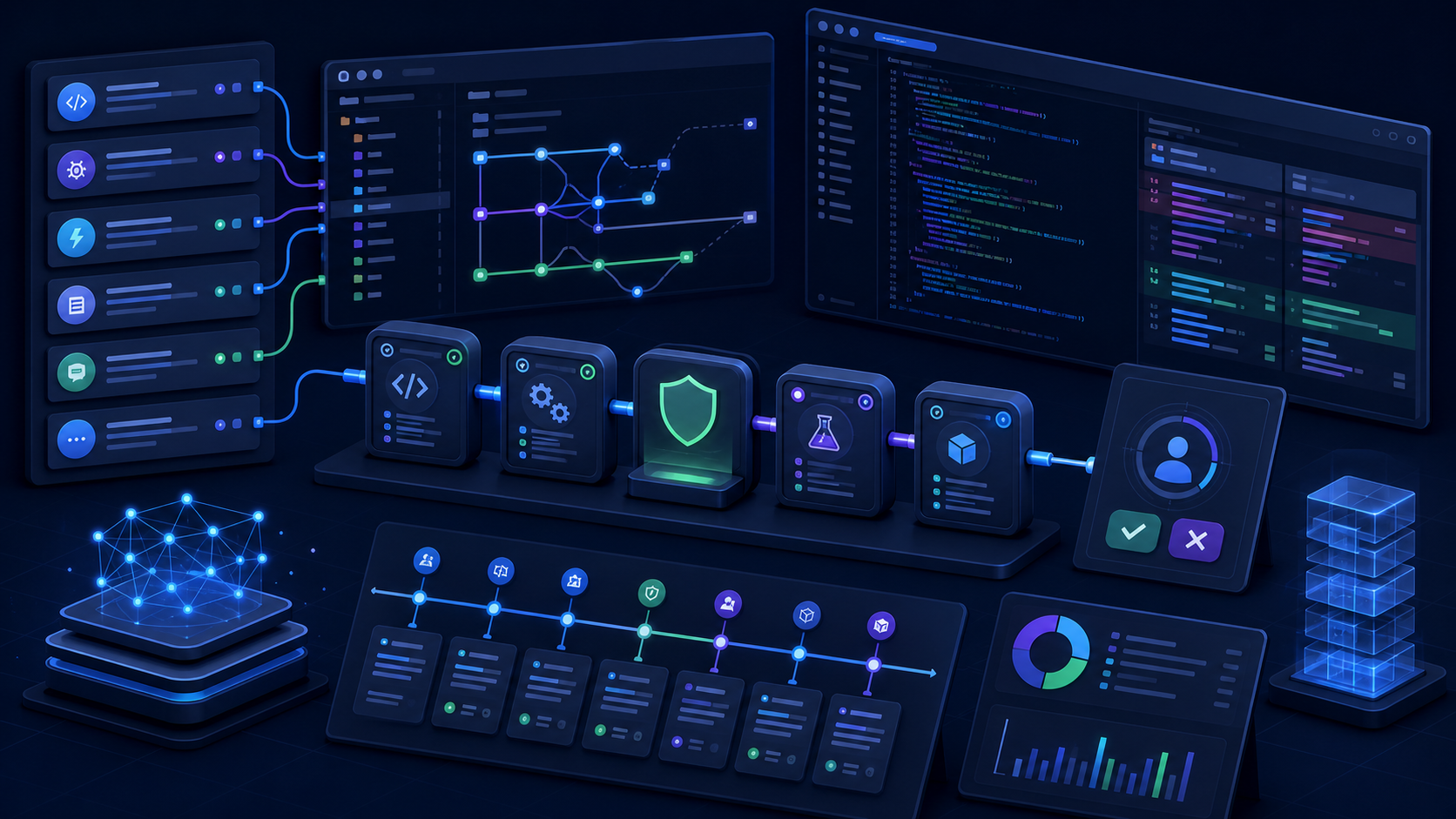
MergeLoom’s Quality Agents run checks, repair bounded failures, and attach evidence before PR/MR handoff.

Review Ownership Risk
AI can make reviewers move too quickly if the PR/MR looks clean.
Controls:
- keep human approval mandatory
- route high-risk changes to named owners
- show reviewer focus areas
- flag validation gaps clearly
- do not let the agent approve its own output
Humans should review the evidence and the diff. The goal is better review, not absent review.
Auditability Risk
If you cannot reconstruct what happened, you cannot manage the risk.
Capture:
- source ticket
- requester
- repository and branch
- context sources
- commands run
- validation and repair output
- files changed
- PR/MR link
- review and merge outcome
MergeLoom’s AI coding audit trails guide explains this evidence model.
Cost Risk
AI coding can waste money if agents repeatedly fail, reprocess context, or create PRs/MRs that never get accepted.
Controls:
- track cost per accepted PR/MR
- stop vague tickets early
- reuse approved context
- measure validation failure patterns
- compare run cost to reviewer time saved
MergeLoom’s Reduce AI Costs page covers the product’s outcome-focused cost model.
Rollout Plan
Start narrow.
- Choose one repository or team.
- Select low-risk work types.
- Define validation commands.
- Require human review.
- Capture audit evidence.
- Review every run for the first month.
- Expand only after accepted outcomes are consistent.
This approach gives leaders evidence instead of optimism.
Where MergeLoom Fits
MergeLoom manages AI coding risk by routing approved work through controlled context, validation, repair, review handoff, audit trails, and human merge control.
It is designed for engineering teams moving from unmanaged AI coding experiments into governed software delivery.
Start with AI Code Governance Platform or book a demo to map the risks in your current AI coding rollout.