
AI coding agents fail when they have to infer the system from a narrow prompt. They may still produce plausible code, but it can miss local conventions, related services, ownership boundaries, validation commands, or product constraints.
Good codebase context gives the agent enough system knowledge to make a bounded change without turning the prompt into a giant pasted archive.
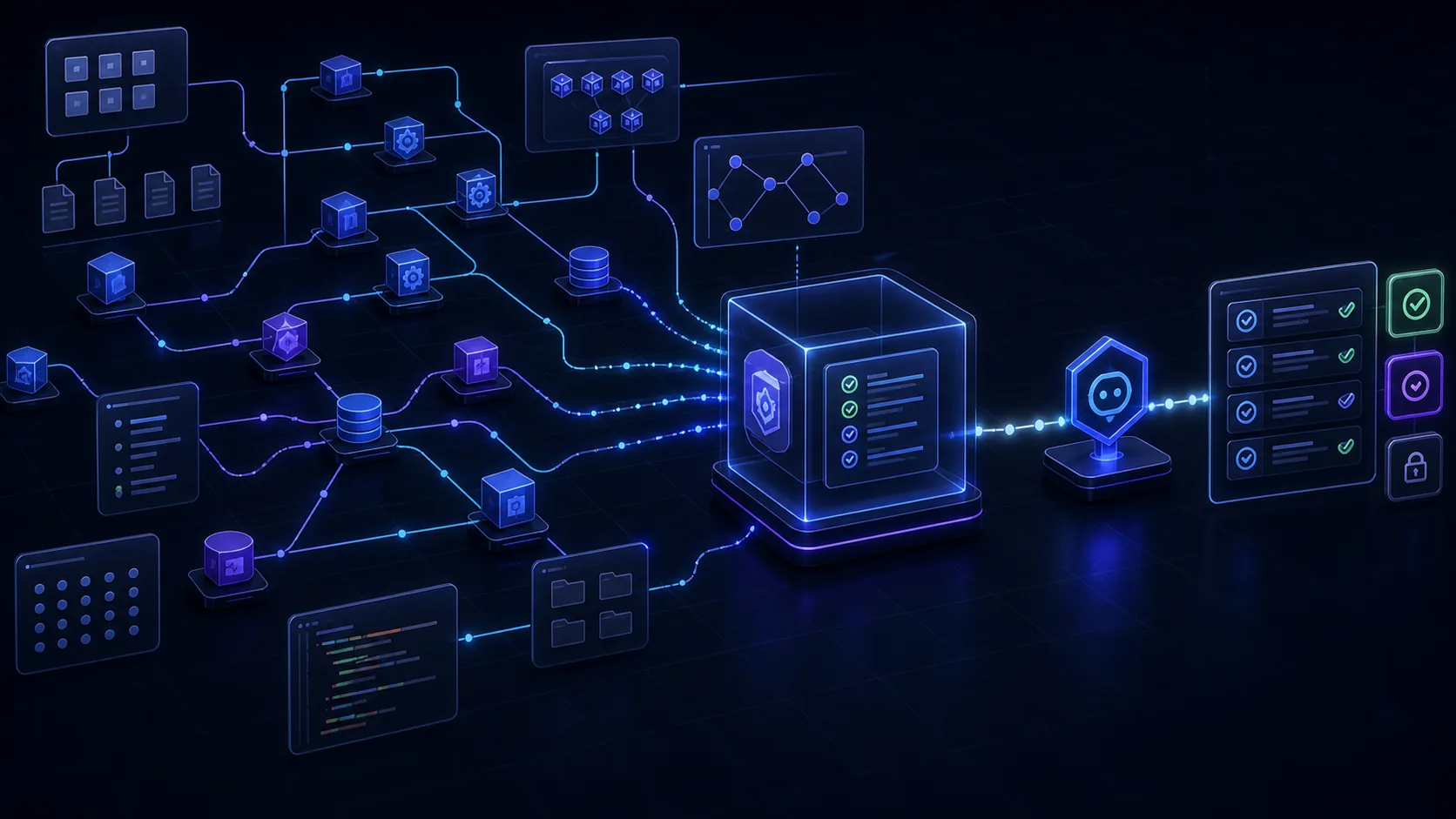
The Minimum Context Set
Start with the core context any agent needs.
- Ticket or issue: problem, acceptance criteria, constraints, and reviewer focus.
- Repository rules: coding standards, architecture rules, package commands, and forbidden paths.
- Target files: likely modules, routes, services, tests, and config.
- Validation commands: setup, lint, typecheck, tests, build, and custom checks.
- Ownership: code owners, reviewer team, and sensitive areas.
- Prior examples: similar PRs/MRs and patterns to follow.
This set should be available before implementation, not reconstructed after a weak PR/MR appears.
Repository Rules
Rules should live close to the repository. Many teams use AGENTS.md, CONTRIBUTING.md, docs folders, or internal platform metadata.
Useful rules include:
- how to run tests
- project structure
- style and naming conventions
- framework-specific patterns
- database migration rules
- security constraints
- review and branch expectations
- commands that must not be run by automation
Keep rules concise. A ten-page rule file that nobody maintains becomes stale context.
Architecture Context
Architecture context helps agents understand system impact.
Provide:
- service boundaries
- API contracts
- shared packages
- event flows
- database ownership
- background jobs
- deployment constraints
- feature flag rules

This is especially important for multi-repository products. A single repository view may miss the service that consumes an API, the shared package that owns a type, or the worker that processes an event.
Validation Context
Validation should not be guessed.
Document:
- install/setup command
- targeted test command
- full test command where reasonable
- lint command
- type check command
- build command
- schema/code generation command
- manual checks that cannot be automated
If commands are expensive, say when to use them. If commands are flaky, say what evidence is expected.
Context Freshness
Stale context is dangerous because it sounds authoritative while being wrong.
Track:
- source file path
- commit or indexed version
- last refresh time
- confidence or freshness signal
- which run used the context
MergeLoom’s Context Engine uses approved sources and refresh budgets so context can be reused without blindly reprocessing the whole system on every run.
Scoped Context Packs
More context is not always better. Huge prompts are expensive and can distract the agent.
A good context pack is:
- specific to the ticket
- source-linked
- bounded by repository permissions
- fresh enough for the run
- small enough for the model to use effectively
- visible enough for reviewers to inspect
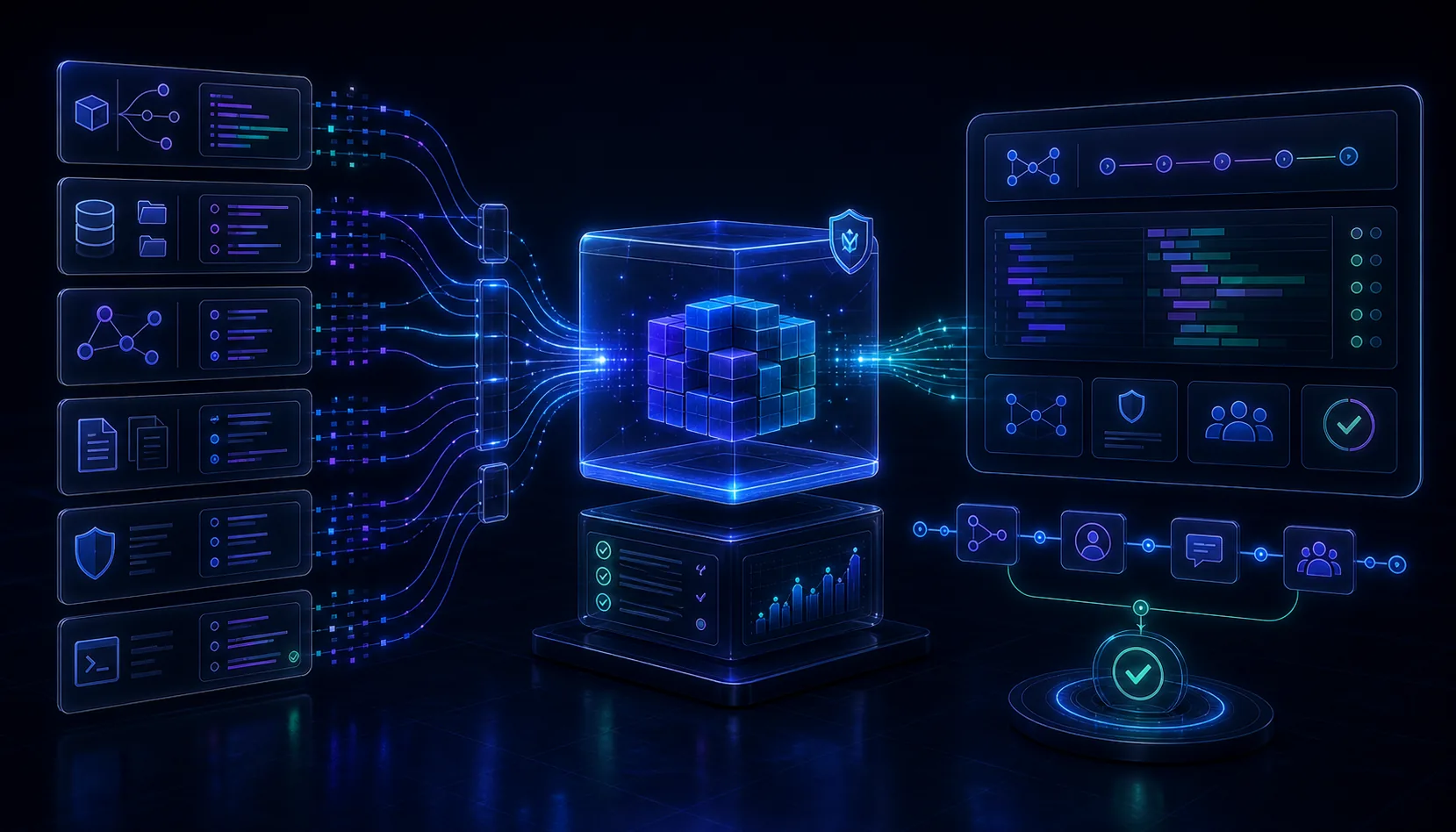
Think of context as evidence, not stuffing.
What Reviewers Need to See
The PR/MR should show enough context evidence for reviewers to trust the path.
Useful PR/MR evidence:
- ticket or issue source
- repository rules used
- related files inspected
- validation commands run
- known context gaps
- why specific files changed
This does not need to be a giant log. It should answer the reviewer’s first questions quickly.
Context Anti-Patterns
Avoid:
- pasting random large files into prompts
- letting agents search every repository by default
- storing undocumented tribal knowledge only in chat
- using stale architecture docs without source links
- hiding context decisions from the PR/MR
- relying on one developer’s prompt style as the system standard
AI coding becomes more reliable when context is part of the platform, not an individual habit.
FAQ
Question: Is codebase context just RAG?
Short answer: Retrieval can help, but engineering context also needs source links, repository permissions, validation commands, architecture relationships, and reviewer-facing evidence.
Question: Should agents read the entire codebase?
Short answer: Usually no. They should receive scoped context relevant to the ticket, plus the ability to investigate bounded areas when needed.
Question: How often should context refresh?
Short answer: Refresh when relevant files, APIs, rules, docs, or related services change. High-change repositories need more frequent refresh than stable libraries.