
This article focuses on the operating details behind comparing GitLab-embedded agents with workflow governance across tickets, context, validation, and audit. In the buying decision, the team should be able to explain why a run started, what code it touched, what checks ran, and why a reviewer can trust the handoff.
The goal is not to remove reviewers. It is to give them smaller GitLab Duo comparison changes, clearer context, and evidence that the right checks happened. That means treating scope, validation, and review handoff as first-class parts of GitLab Duo Agent Platform evaluation.
For neutral category context on MergeLoom vs GitLab Duo Agent Platform, this article references GitLab Duo Agent Platform docs. Plans, deployment options, and feature availability for GitLab Duo Agent Platform can change, so use vendor documentation when making a purchasing decision.
MergeLoom is not affiliated with GitLab Duo Agent Platform or the other tools discussed here. This GitLab Duo Agent Platform comparison is meant to clarify workflow fit, not to attack products that may still be useful inside the right operating model.
Look Beyond Code Generation
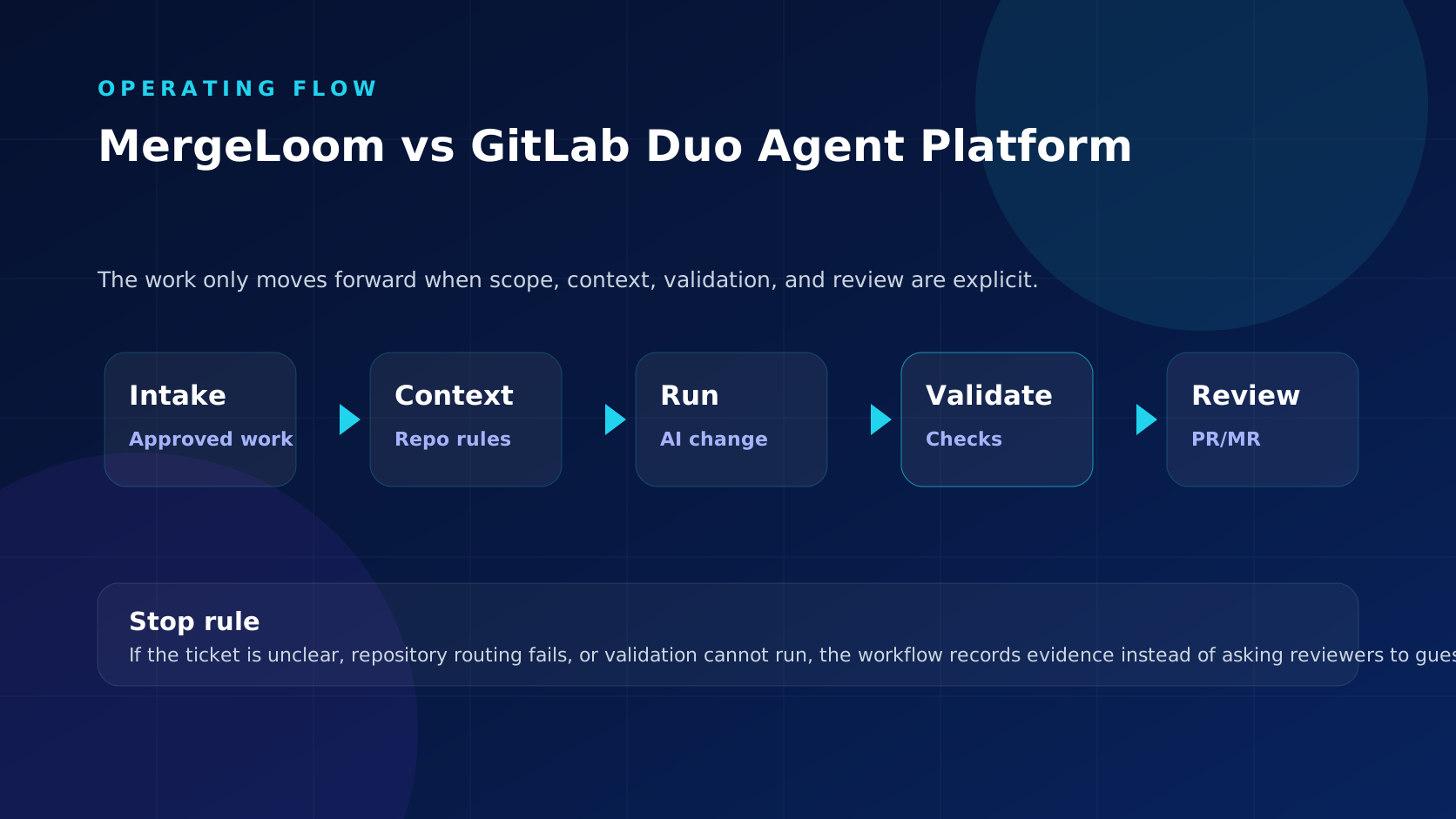
This is not only a model comparison. In this MergeLoom GitLab duo guide, the important question is what each tool owns in the path from approved work to accepted software change.
Use this evaluation lens:
- Where work starts for GitLab Duo Agent Platform: issue, editor, PR/MR, chat, or a separate agent session.
- The GitLab Duo comparison: check whether approval is visible before work begins and after review.
- How repository context is selected and how sensitive context is bounded.
- Which validation checks run before a reviewer is asked to inspect the output.
- What evidence appears in the PR/MR for human review and audit.
- Who retains approval, merge authority, and responsibility for the final change.
Decide Based On Stack Fit And Governance
- GitLab Duo Agent Platform may be a strong fit when the main need is individual developer assistance, suite-native AI, code review comments, or editor-based work.
- MergeLoom becomes relevant when teams need GitLab Duo Agent Platform evaluation to include approved tickets, repositories, validation gates, and review handoffs.
- A mixed stack can make sense: GitLab Duo Agent Platform can stay useful for local assistance while MergeLoom standardizes controlled ticket-to-code work.
- The GitLab Duo comparison review check: base the buying decision on stack fit, control needs, data boundaries, and reviewer trust.
In MergeLoom vs GitLab Duo Agent Platform, Compare governed AI coding workflows, workflow documentation, and validation and review controls are useful follow-up pages because they separate tool capability from governed delivery, deployment control, and validation before review.
How To Make This Specific Enough To Run
GitLab Duo Agent Platform evaluation is most useful when it changes the default behavior of the team. Instead of asking someone to reinterpret MergeLoom vs GitLab Duo Agent Platform from memory, the evaluation brief should capture the boundary, validation expectation, and review owner.
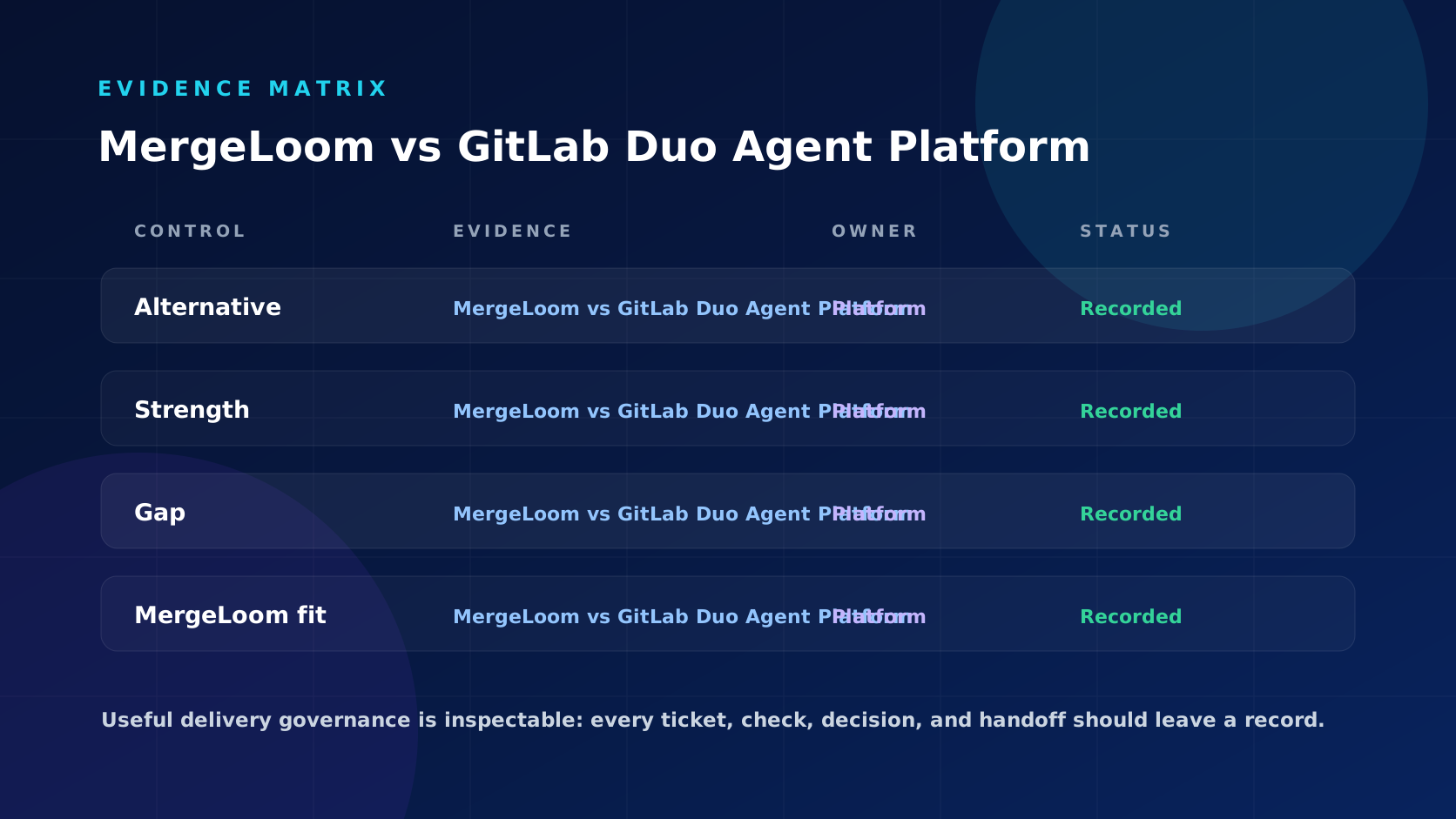
- Intent boundary: the work item should state the outcome expected from comparing GitLab-embedded agents with workflow governance across tickets, context, validation, and audit.
- Implementation boundary: GitLab Duo Agent Platform evaluation should constrain repository access, branch scope, and affected components.
- Validation boundary: the governance-fit check should make skipped checks as visible as passing checks. Reviewers should see this before approval for the GitLab Duo comparison.
- Review handoff: the GitLab MR should let a reviewer trace source work to commits and validation evidence. Add this to the operating record for the GitLab Duo comparison.
- Pause boundary: the run should stop when the evaluated tool cannot show review evidence in the team stack rather than producing a weak handoff. The owner should confirm this ahead of execution for the GitLab Duo comparison.
That level of specificity lets CTOs, Heads of Platform, procurement teams, and technical evaluators expand GitLab Duo Agent Platform evaluation deliberately instead of treating every generated branch as equally trustworthy.
Anti-Patterns To Avoid
GitLab Duo comparison is weak when the evaluation stops at feature lists instead of the real delivery path.
The warning signs usually look like this:
- The GitLab Duo comparison intake record points at work but not at the code boundary or validation expectation.
- The GitLab Duo comparison handoff check: a reviewer cannot connect the branch, checks, and source request without reconstructing the path manually.
- The GitLab Duo comparison owner check: the GitLab MR asks for approval before the governance-fit check has produced useful evidence.
- The same clarification questions appear in review because the governance lens was not made concrete earlier.
- Repair attempts for GitLab Duo comparison continue after ownership, scope, or policy should have forced a pause.
- Savings claims around GitLab Duo comparison ignore review loops, rejected diffs, and follow-up cleanup.
Use Compare governed AI coding workflows for the broader workflow decision around the deployment choice, workflow documentation for setup detail, and validation and review controls for validation or audit evidence.
Governance Questions Worth Answering
Before more repositories are added, the operating owner should document these answers:
- Eligibility signal: which ticket, issue, label, or approval proves comparing GitLab-embedded agents with workflow governance across tickets, context, validation, and audit is ready?
- Service boundary: what does the evaluation brief say about the affected component and excluded areas?
- Context policy: which approved sources can influence the generated change for the review model?
- Validation proof: which checks must be visible before the GitLab MR is approved or rejected by the GitLab reviewer? Escalate if the record cannot answer it. Reference: the GitLab Duo comparison.
- Audit detail: what evidence should explain failed checks, reruns, and human decisions?
- Control owner: who can narrow, stop, or expand the category decision when the evidence is incomplete?
With those answers in place, this comparison becomes a managed operating path rather than a set of informal prompt habits.
Where The Platform Layer Helps
The evaluation is clearest when buyers separate tool capability from the operating model needed for comparing GitLab-embedded agents with workflow governance across tickets, context, validation, and audit. The right stack can include multiple tools, but MergeLoom keeps the governed delivery workflow consistent across them.
The practical next step after GitLab Duo comparison is Compare governed AI coding workflows. Teams that need more implementation detail around GitLab Duo comparison should also review workflow documentation and validation and review controls, then compare the related pages MergeLoom vs GitHub Copilot Coding Agent, Cursor Alternative For Enterprise Ticket-To-Code Workflows, How To Set Up Jira Workflow Statuses.
Rollout Checklist
- Ownership map: write down what GitLab Duo Agent Platform, MergeLoom, Jira, GitLab, CI, and review each own before comparing features.
- Evaluation task: test the tool decision against approved work, not only ad hoc prompts or demo tasks.
- Control review: check deployment fit, data boundary, validation, audit, and human approval requirements. Track this with the review packet for the GitLab Duo comparison.
- Stack decision: keep GitLab Duo Agent Platform where it helps while standardizing the governed workflow around intake and review evidence.
- Evidence standard: prefer accepted PRs/MRs over vendor claims or isolated productivity anecdotes. Keep this visible before review for the GitLab Duo comparison.
Bottom Line
The useful buying question for GitLab Duo comparison is whether the tool fits the team’s actual intake, repository, validation, and approval path.
Compare governed AI coding workflows when the evaluation needs workflow evidence, not only feature lists for GitLab Duo Agent Platform.