
Self-hosted AI coding agents are attractive for enterprises because they promise more control over code, credentials, network paths, and execution logs. But self-hosting is not automatically safer. It simply moves more responsibility into your environment.
The right question is not “cloud or self-hosted?” It is: where does code execute, what can the agent access, what evidence is retained, and who approves the output?

What Self-Hosted Should Mean
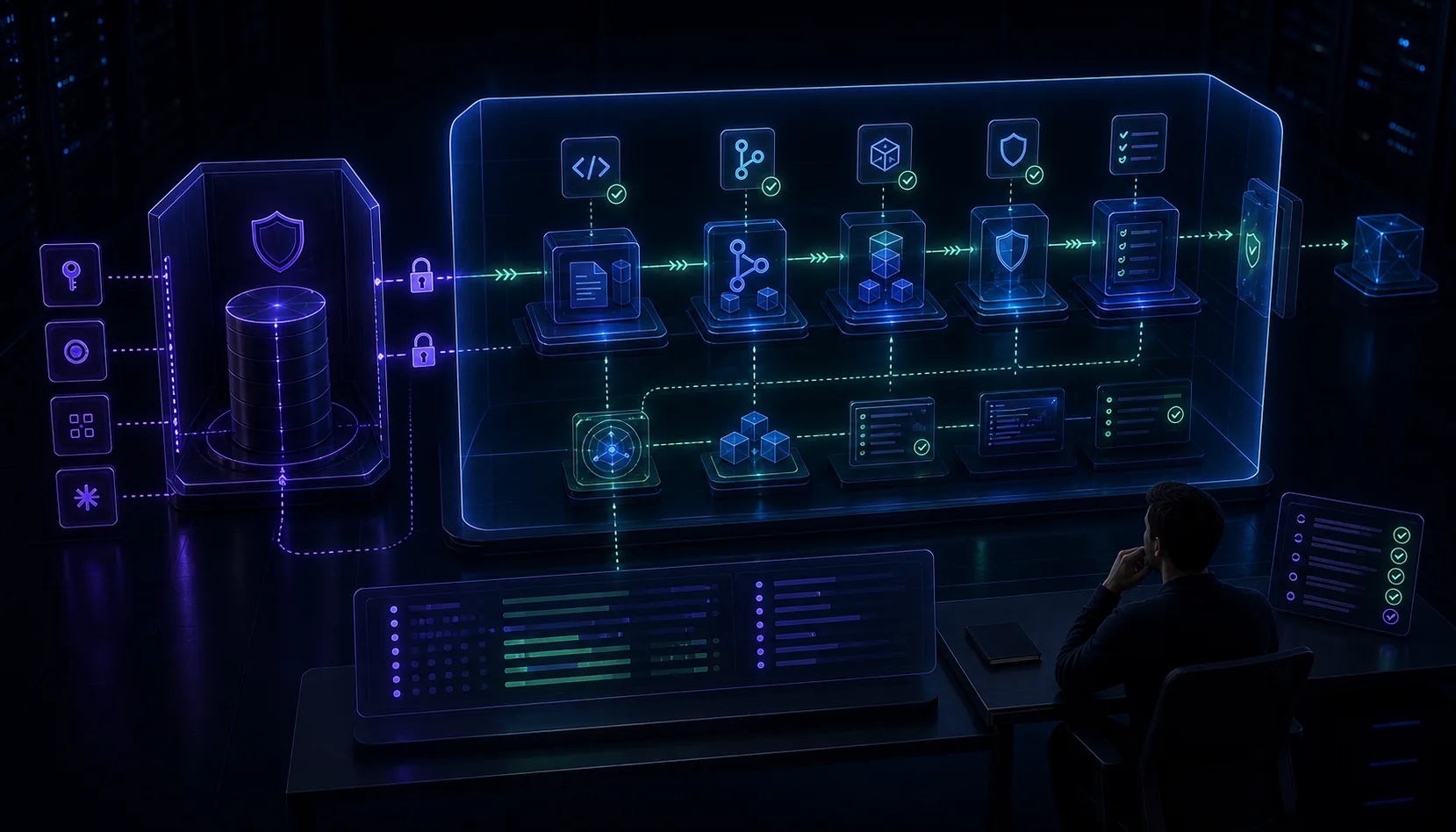
For AI coding, self-hosted usually means the execution worker runs inside infrastructure controlled by the customer.
That worker may handle:
- repository checkout
- branch creation
- context assembly
- tool execution
- test, lint, typecheck, and build commands
- provider/model calls through approved routes
- artifact and audit log capture
- PR/MR handoff back to the code host
This differs from a purely cloud coding agent where repository access and execution happen mostly in the vendor environment.
The Control Advantages
Self-hosting can help when your organization needs:
- private network access to internal services during validation
- tighter control over repository credentials
- custom secret handling
- approved AI provider routing
- local audit log retention
- stronger data boundary evidence for procurement or compliance
- the ability to inspect and manage worker runtime behaviour
MergeLoom’s Self Hosted model is built for teams that need that boundary while still producing normal PRs/MRs for human review.
The Responsibilities You Inherit
Self-hosting also means you own more operational details.
Plan for:
- worker deployment and updates
- network policy
- secret injection
- provider credentials
- runtime logs
- storage and cleanup of repository checkouts
- monitoring and alerting
- incident response if an agent behaves unexpectedly
Do not choose self-hosting because it sounds safer. Choose it when your team can operate the boundary well.
Worker Boundary Checklist
Define the worker boundary before pilot work starts.
| Boundary Question | Decision to Document |
|---|---|
| Where is code checked out? | Worker filesystem, repository cache, cleanup policy. |
| Which repositories can be read? | Approved repository list and scope rules. |
| Which branches can be written? | Branch naming, protected branch restrictions, PR/MR-only handoff. |
| Which commands can run? | Setup, validation, test, build, custom policy commands. |
| Which network paths are allowed? | Package registries, internal services, provider endpoints. |
| Where are logs stored? | Local retention, access controls, redaction policy. |
| Which provider/model path is allowed? | Approved credentials, routing, data handling, fallback rules. |
These decisions should be visible to engineering, security, and platform teams.
Secrets and Credentials
AI coding agents should not receive broad, durable credentials.
Use:
- short-lived tokens where possible
- repository-scoped access
- read-only access for context repositories unless write is required
- separate credentials for package registry reads and PR/MR creation
- no secrets in prompts, summaries, or PR/MR descriptions
- log redaction for command output
If a validation command needs production-like credentials, reconsider whether that command belongs in the agent path.
Provider Choice
Self-hosted execution does not always mean self-hosted models. Many teams run the worker privately while calling approved external providers through controlled egress. Others use private model endpoints or cloud provider AI services.
Document:
- approved providers and models
- where prompts and outputs are logged
- whether provider data retention is disabled or contractually restricted
- which repositories or data classes may be sent
- fallback behaviour if a provider is unavailable

The provider decision is part technical, part procurement, and part compliance.
Validation and Review
Self-hosting does not remove the need for validation. It often makes validation more useful because the worker can access internal packages, services, and test infrastructure.
Require:
- repository-specific validation commands
- bounded repair loops when checks fail
- clear stop conditions for failed runs
- PR/MR summaries with validation evidence
- normal human review and branch protection
The strongest operating model is private execution plus public discipline: the output still reaches the normal code review process.
Pilot Plan
Start small.
- Choose one or two repositories with reliable tests.
- Define allowed ticket types.
- Deploy the worker with minimal repository permissions.
- Run read-only context tests first.
- Enable branch creation and PR/MR handoff.
- Measure accepted PRs, validation failures, review time, and operational burden.
- Expand only after the boundary is understood.
Self-hosting should increase trust, not complexity hidden behind a private network.
FAQ
Question: Are self-hosted AI coding agents required for regulated companies?
Short answer: Not always. Some regulated teams can use cloud-hosted tools with the right contracts and controls. Self-hosting is useful when the execution boundary, credentials, or private network access must stay under direct control.
Question: Does self-hosting mean no code leaves our environment?
Short answer: Only if your provider/model path is also internal or configured that way. Many self-hosted workers still call external model providers, so document data flow clearly.
Question: What is the biggest self-hosting mistake?
Short answer: Giving the worker broad repository, network, and secret access because it is "inside the boundary." Least privilege still applies.