
The practical question behind token spend vs delivery cost is whether a team can handle separating model usage from the full cost of accepted engineering work without creating review debt. For the accepted-work view, the implementation path has to preserve the systems already used for planning, source control, CI, approval, and audit.
In the pilot, MergeLoom keeps the AI step inside the delivery path engineering teams already trust: ticket, branch, checks, PR/MR, and review. The aim is to make token spend delivery cost repeatable enough for platform teams without hiding ambiguity from reviewers.
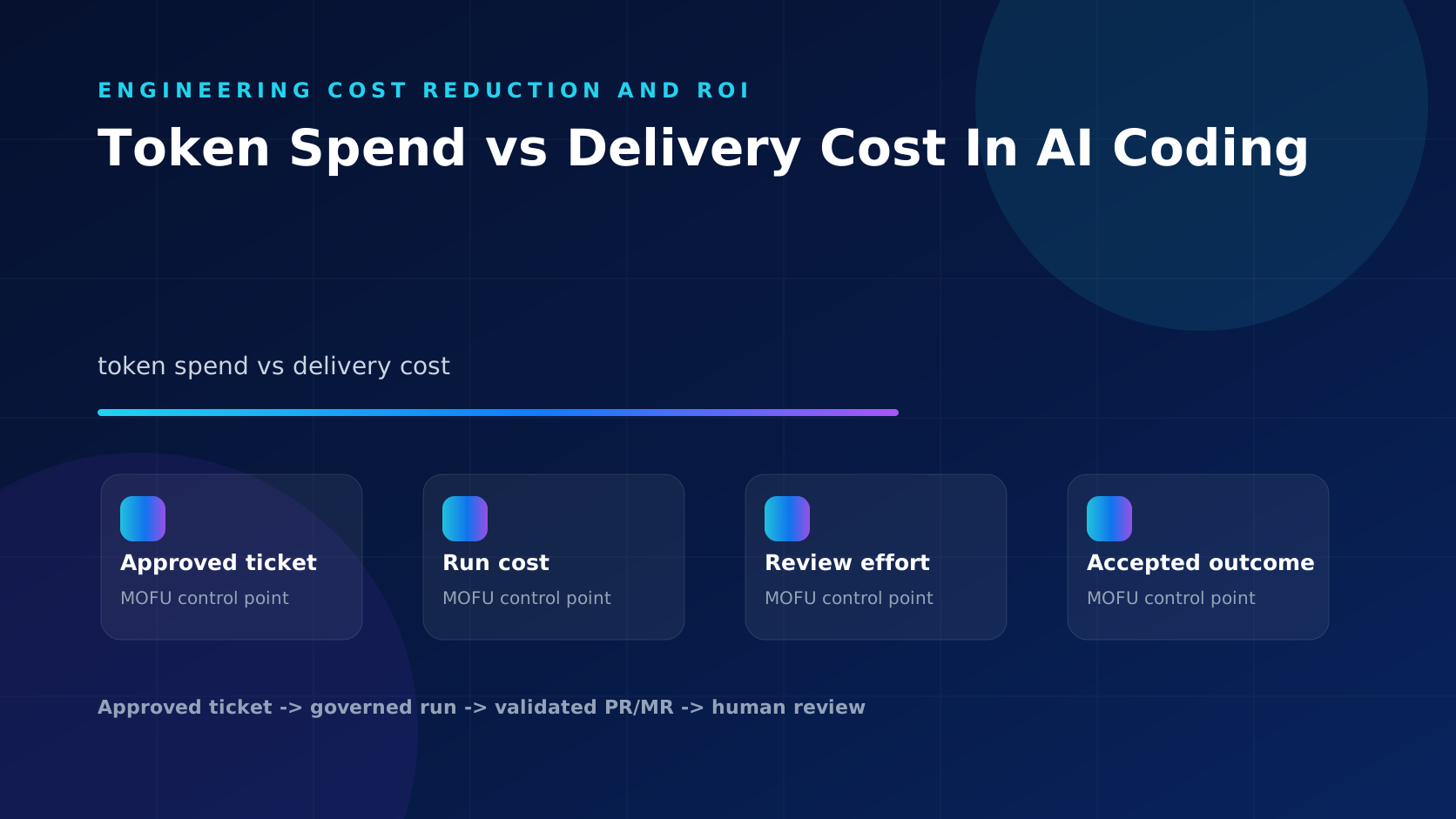
Make The Unit Of Value Concrete
The financial question is not whether AI can produce a diff. The question is whether work measured through the token spend delivery cost helps the team lower the cost of accepted, reviewable output while preserving quality gates and human approval.
A useful model should include:
- Intake time spent making token spend delivery cost clear enough to execute.
- Context assembly for token spend delivery cost across tickets, repository rules, docs, and prior decisions.
- Provider, model, worker, and CI usage attached to the run.
- Validation failures, bounded repair attempts, and stop decisions for token spend delivery cost.
- Reviewer time across first review, requested changes, and final approval of token spend delivery cost.
- The token spend delivery guide: accepted PR/MR outcome, rejected work, rollback work, and post-merge follow-up tied to the accepted-work model.
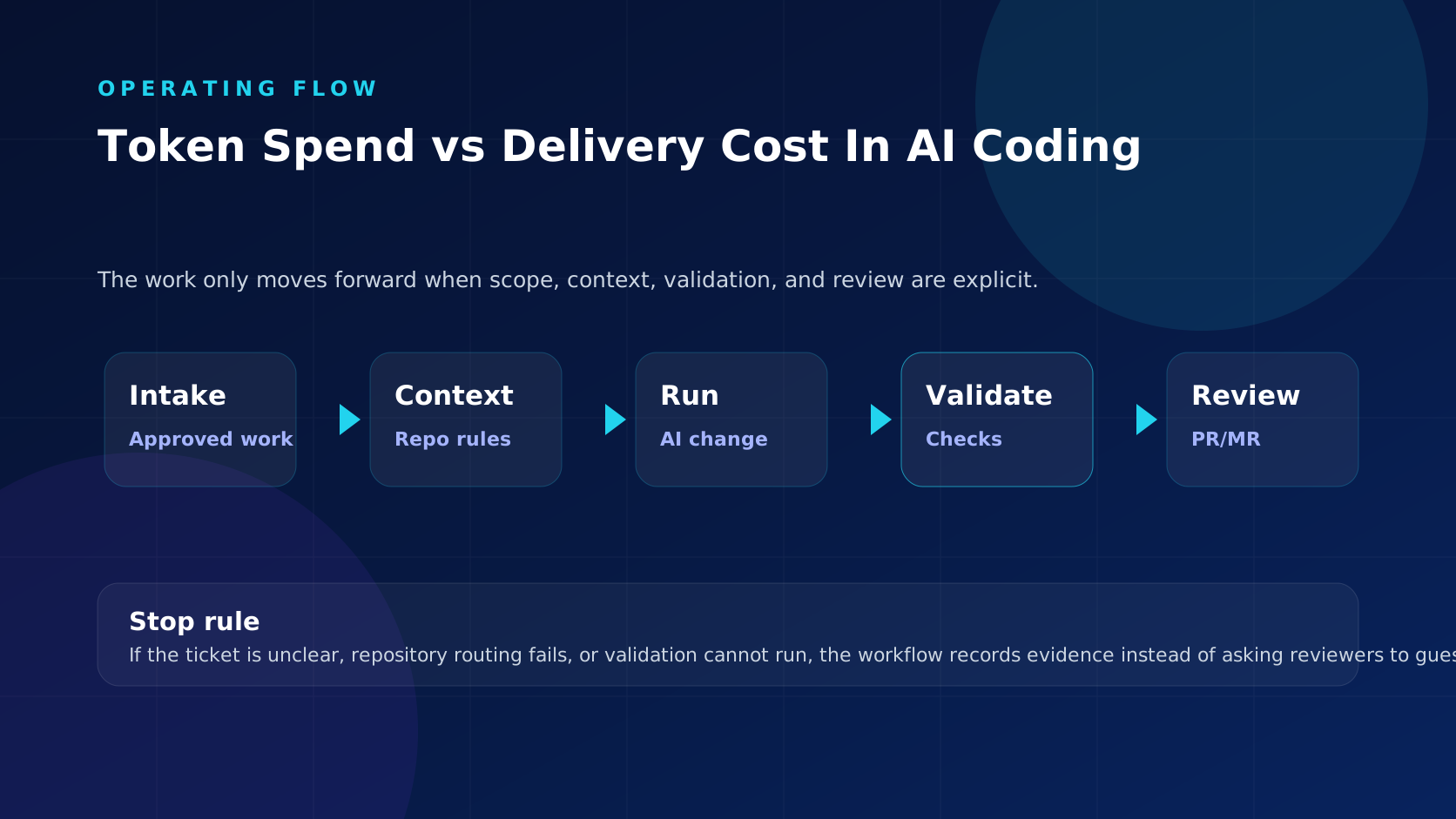
Watch The Hidden Review Budget
In the accepted-work view, AI coding pilots can look inexpensive when they count prompts, model calls, or generated lines. For the budget view, the cost picture changes when the team includes review rounds, failed checks, branch cleanup, and work that never gets merged.
- A low token bill can still hide expensive reviewer cleanup for the reporting view.
- The token spend delivery guide review check: a fast generated branch for the finance view has little value if the change is too broad to review.
- The token spend delivery guide rollout check: a failed validation loop for the outcome model consumes CI minutes, platform attention, and confidence.
- The token spend delivery guide delegation check: a missing audit trail for the run budget forces managers to reconstruct what happened after the fact.
- The token spend delivery guide evidence check: a tool subscription is only one part of the delivery-cost view; accepted software change is the defensible unit.
In Token Spend vs Delivery Cost In AI Coding, the better comparison is Explore cost-controlled AI coding, pricing and usage details, and audit trails and attribution together: cost control, pricing or usage visibility, and audit evidence that shows whether the work became an accepted PR/MR.
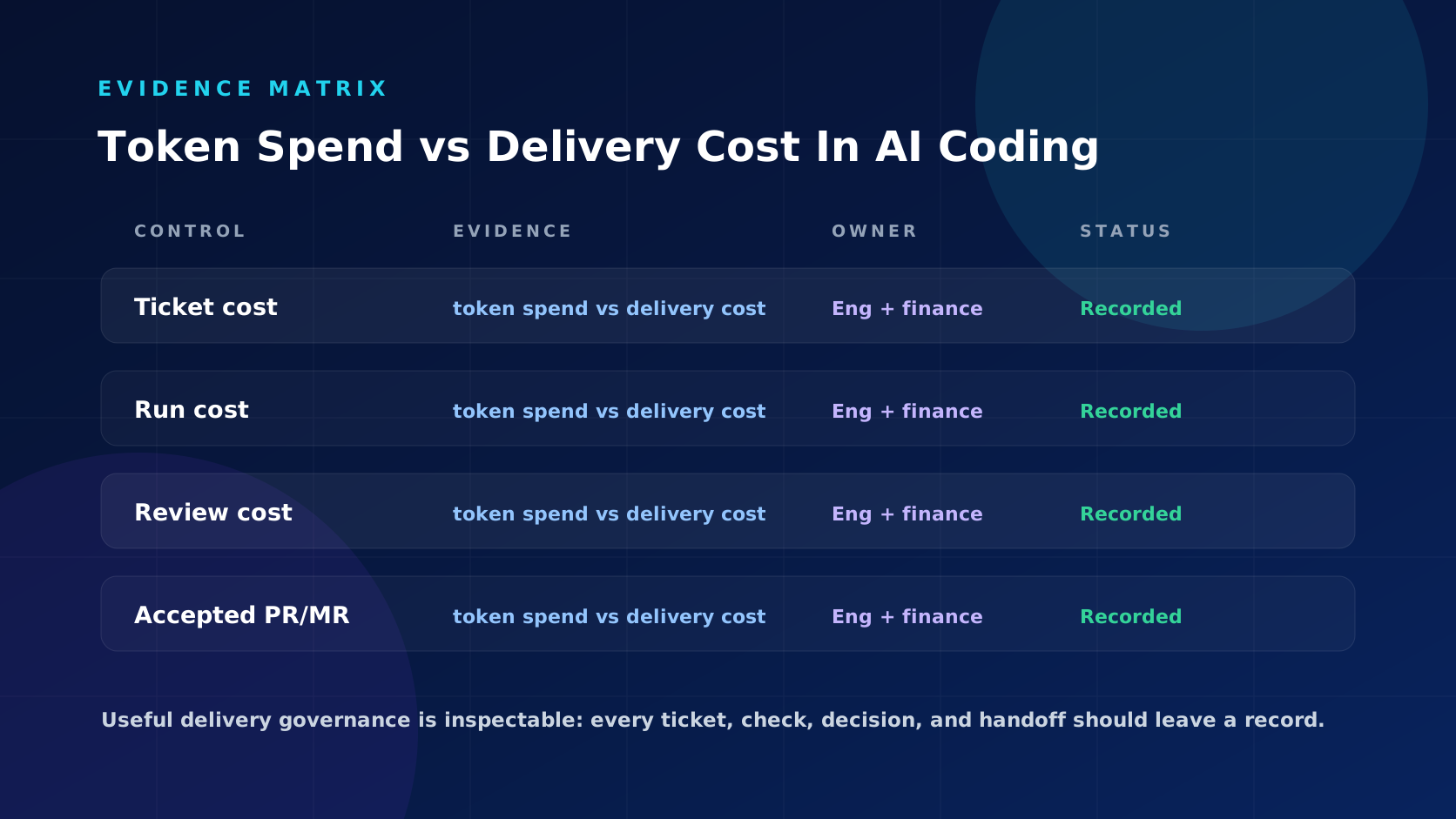
What To Decide For This Use Case
The value of the planning model depends on how well the team can separate eligible work from ambiguous work. When the request is separating model usage from the full cost of accepted engineering work, the first control is a visible stop condition before automation creates a branch.
- Planning boundary: the source record should narrow separating model usage from the full cost of accepted engineering work before a worker opens a branch.
- Execution boundary: the cost model should keep file scope, branch naming, and repository ownership explicit.
- Validation boundary: the accepted-outcome check should show which commands or CI jobs were attempted and what failed. Capture this before review begins for the token spend delivery guide.
- Reviewer boundary: the accepted-outcome report should make review ownership and unresolved risk easy for the engineering leader tracking accepted outcomes to find. Use this to keep the handoff narrow for the token spend delivery guide.
- Stop boundary: the pilot should halt when scope, ownership, or validation cannot be explained.
Those boundaries make the metric easier to govern across teams because the exception path is visible before the change reaches merge authority.
Anti-Patterns To Avoid
The cost model breaks down when generated output is treated as savings before accepted work is measured.
The operating owner should look for these patterns:
- The measurement path intake record points at work but not at the code boundary or validation expectation.
- The token spend delivery guide scaling check: a reviewer cannot connect the branch, checks, and source request without reconstructing the path manually.
- The token spend delivery guide: the accepted-outcome report asks for approval before the accepted-outcome check has produced useful evidence.
- The same clarification questions appear in review because the accepted-work model was not made concrete earlier.
- Repair attempts for the budget view continue after ownership, scope, or policy should have forced a pause.
- Savings claims around the reporting view ignore review loops, rejected diffs, and follow-up cleanup.
Teams should connect the finance view to Explore cost-controlled AI coding, pricing and usage details, and audit trails and attribution before expanding the queue; otherwise automation can drift away from evidence.
Governance Questions Worth Answering
A team is ready to broaden the workflow only when the operating owner can answer these questions consistently:
- Ready state: what does the team need to see before separating model usage from the full cost of accepted engineering work leaves the backlog or queue?
- Ownership: which team, reviewer, or component owner is accountable for the outcome model?
- Context limit: which information is required for the run budget, and which secrets or side discussions are excluded?
- Validation plan: which command, pipeline, or review step must be complete before the accepted-outcome report is trusted? Keep this visible before review for the token spend delivery guide.
- Evidence location: where will logs, CI output, repair attempts, and final decisions be stored? Reviewers should see this before approval for the token spend delivery guide.
- Stop rule: what condition tells the engineering leader tracking accepted outcomes that the delivery-cost view should not continue?
The answers make the planning model more repeatable and reduce the chance that unclear work turns into an oversized branch.
Where The Platform Layer Helps
The cost model is useful only when cost, validation evidence, and accepted outcomes are interpreted together for separating model usage from the full cost of accepted engineering work. The team still owns the budget decision; MergeLoom keeps spend and delivery evidence close enough to compare.
Teams standardizing the pilot can use Explore cost-controlled AI coding, pricing and usage details, and audit trails and attribution as the internal path from intake to governance. Related reads: AI Coding Cost Per Ticket What Engineering Leaders Should Count, Cost Per Accepted PR/MR The Metric AI Coding Teams Need, Claude Code Workflow Layer For Enterprise Teams.
Rollout Checklist
- Start the metric with a small queue where accepted PR/MR outcomes can be measured.
- The token spend delivery guide delegation check: track provider spend, worker runtime, CI minutes, review time, and rejected work together.
- Separate activity metrics from accepted changes in the pilot dashboard.
- The token spend delivery guide evidence check: set a repair budget so failed runs for the measurement path do not consume unlimited review and CI time.
- The token spend delivery guide handoff check: expand the accepted-work model only after cost per accepted outcome is visible enough to defend.
Bottom Line
Judge the economics by accepted work, review load, validation cost, and audit evidence. The model only makes sense when delivery improves without hiding cleanup work.
Explore cost-controlled AI coding to connect the budget view cost to accepted outcomes, review load, and audit evidence.