
This guide focuses on how teams should handle using AI for maintenance work while protecting behavior and reviewer focus. CTOs, VP Engineering, platform teams, Jira admins, and GitLab admins should start with approved work and end with a branch, PR/MR, validation evidence, and a human decision for maintenance queue automation.
MergeLoom keeps maintenance queue automation connected to approved work, governed runs, validation, and reviewable PR/MR output. For maintenance queue automation, the useful questions are where the work starts, how it is bounded, and what evidence reaches review.
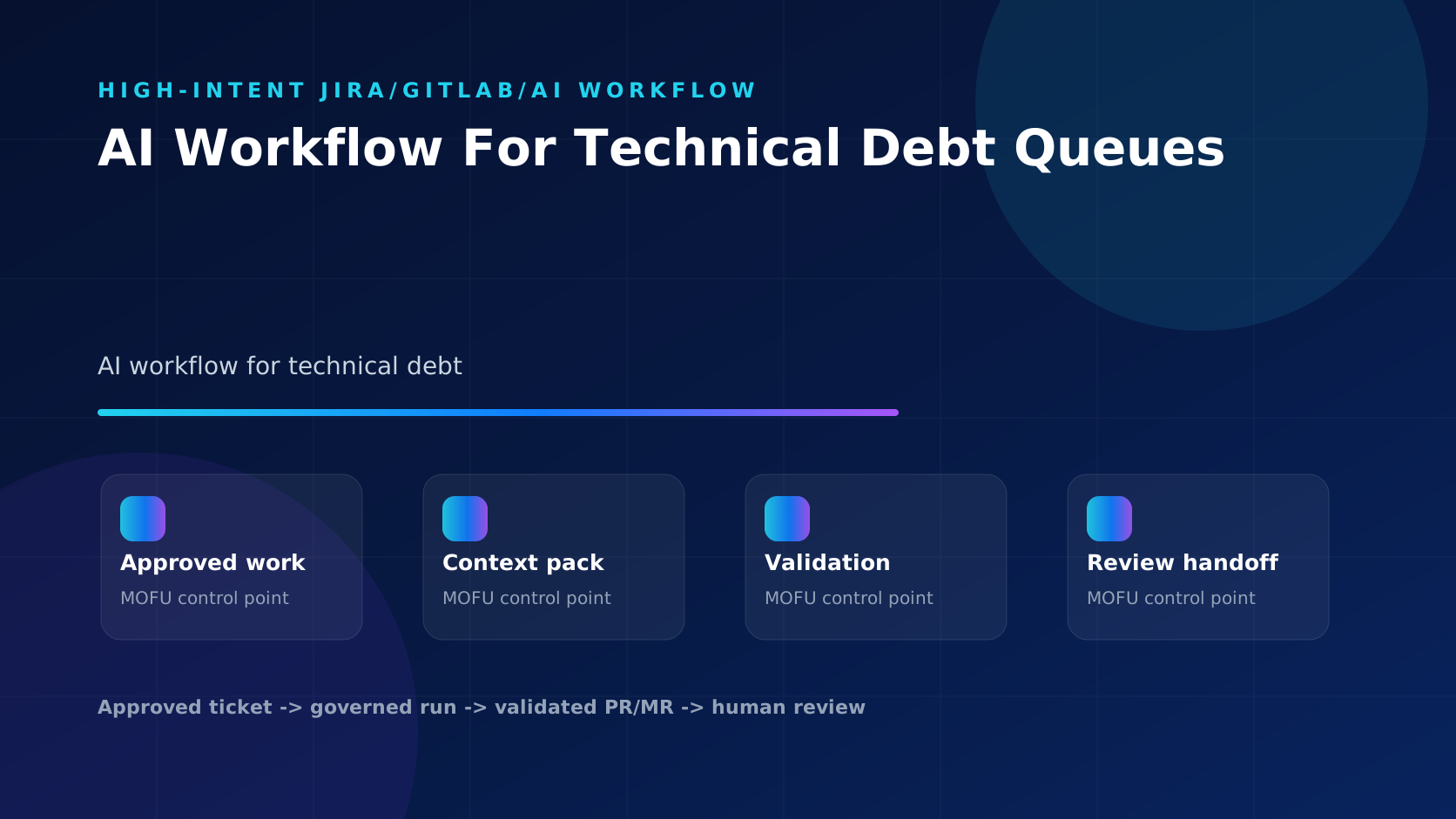
Treat Intake As Part Of Delivery
For the ticket-to-code route, the work starts before an agent checks out a repository. A useful work item gives the worker a narrow task and gives reviewers a clear reason to trust or reject maintenance queue automation. Without that intake quality, the AI step inherits ambiguity and pushes it downstream.
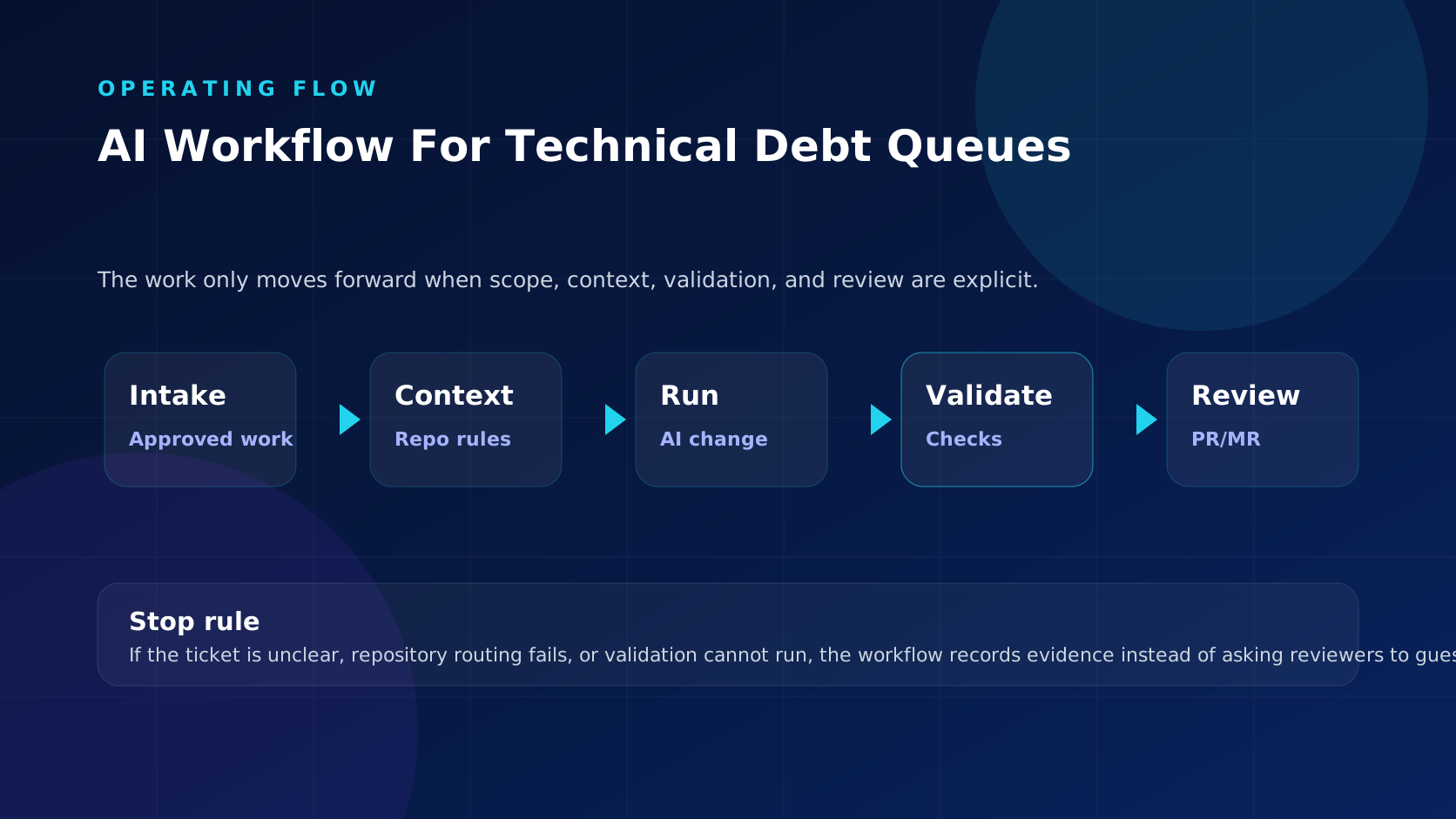
The operating sequence for maintenance queue automation should be:
- Move work about maintenance queue automation only from an approved Jira or GitLab state, not from a loose prompt.
- Check that the work item explains the delivery path and names the affected repository or service.
- Attach repository rules, validation commands, branch conventions, and reviewer expectations that match the change.
- Create a bounded branch whose title, commits, and PR/MR description preserve the source ticket key for the ticket path.
- Run the configured tests, linting, build steps, or project-specific checks before requesting human attention on the MR path.
- Record failed checks, repair attempts, skipped checks, and unresolved questions in a review packet for the automation path.
- Let reviewers approve, request changes, or reject the implementation queue through the normal code-host workflow.
Put Guardrails Around The Handoff
The control model should be boring enough to repeat and specific enough to stop a bad run. That balance keeps the workflow useful for platform teams without hiding edge cases from reviewers.
- Eligibility: which approved status, label, or field lets work on the scoped request enter the run queue. Track this with the review packet for the technical debt queues guide.
- Repository routing: which component, service, or codebase owns changes for the branch handoff. Keep this visible before review for the technical debt queues guide.
- Context boundary: which docs, prior decisions, and repository instructions can influence the run. Reviewers should see this before approval for the technical debt queues guide.
- Validation gate: which CI jobs or local commands must finish before review starts.
- Repair limit: how many bounded retries are allowed before the run stops or escalates.
- Review authority: who approves, rejects, or narrows the change before merge authority is used. Add this to the operating record for the technical debt queues guide.
Teams that already have Jira and GitLab practices should use Explore ticket-to-code automation for the commercial workflow path and workflow documentation for the run-level mechanics that keep the handoff reviewable.
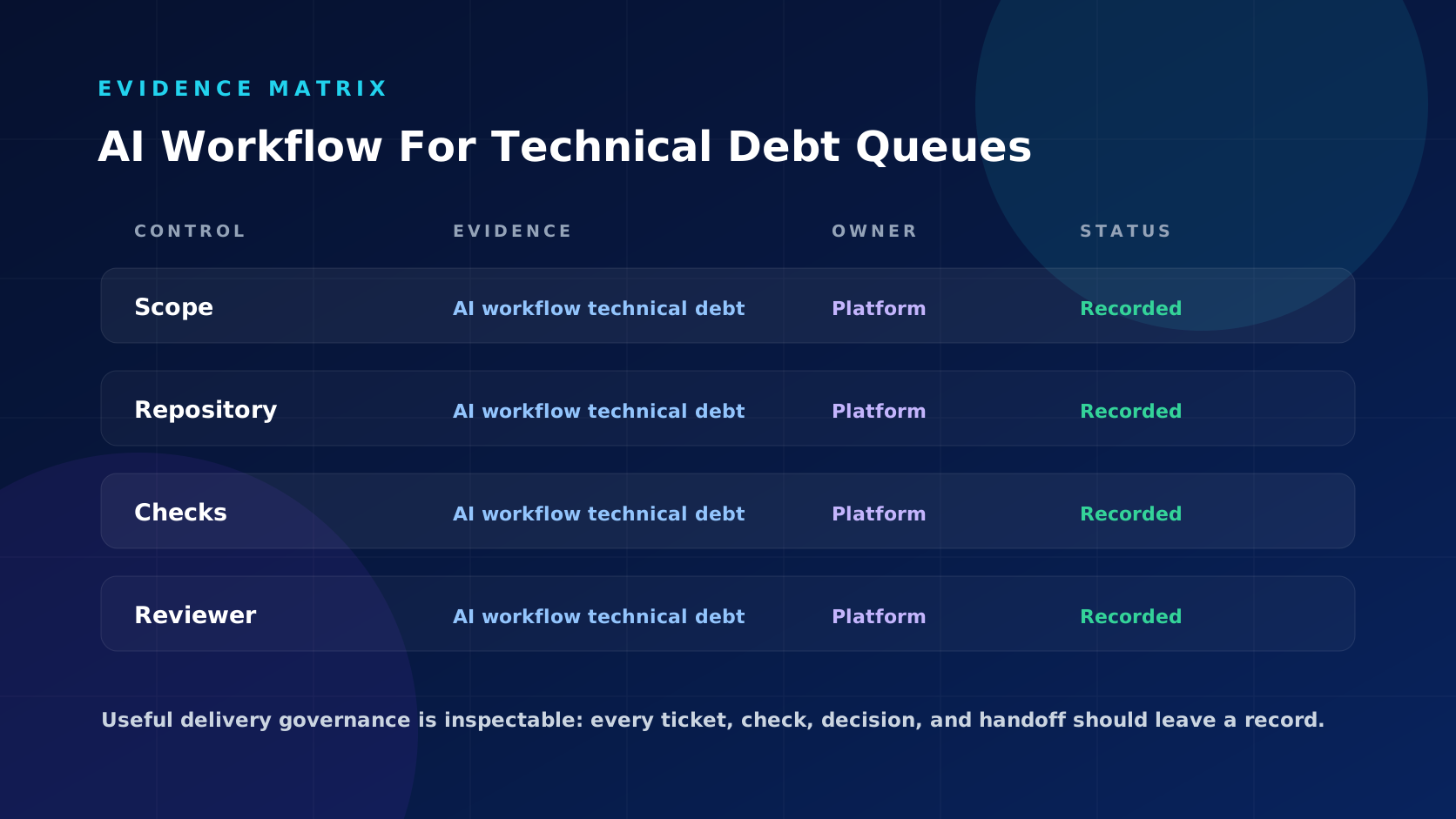
Where This Fits In The Operating Model
This workflow should be tested against a real queue, not a demo prompt. For this page, the work is using AI for maintenance work while protecting behavior and reviewer focus, so the source work item has to prove that the request is scoped before any worker touches the repository.
- Planning boundary: the source record should narrow using AI for maintenance work while protecting behavior and reviewer focus before a worker opens a branch.
- Execution boundary: the handoff should keep file scope, branch naming, and repository ownership explicit.
- Validation boundary: the readiness gate should show which commands or CI jobs were attempted and what failed.
- Reviewer boundary: the PR/MR should make review ownership and unresolved risk easy for the human reviewer to find.
- Stop boundary: the governed run should halt when scope, ownership, or validation cannot be explained.
The result for the review path is not more process for its own sake. It is a smaller decision surface for the human reviewer, with enough context to approve, reject, or rerun the work.
Anti-Patterns To Avoid
This workflow gets risky when code generation outruns eligibility, repository routing, validation, and review.
The operating owner should look for these patterns:
- The technical debt intake record points at work but not at the code boundary or validation expectation.
- The technical debt queues guide evidence check: a reviewer cannot connect the branch, checks, and source request without reconstructing the path manually.
- The PR/MR asks for approval before the readiness gate has produced useful evidence.
- The same clarification questions appear in review because the delivery path was not made concrete earlier.
- Repair attempts for technical debt continue after ownership, scope, or policy should have forced a pause.
- Savings claims around technical debt ignore review loops, rejected diffs, and follow-up cleanup.
Teams should connect the change to Explore ticket-to-code automation, workflow documentation, and validation and review controls before expanding the queue; otherwise automation can drift away from evidence.
Governance Questions Worth Answering
A team is ready to broaden the workflow only when the operating owner can answer these questions consistently:
- Ready state: what does the team need to see before using AI for maintenance work while protecting behavior and reviewer focus leaves the backlog or queue?
- Ownership: which team, reviewer, or component owner is accountable for the ticket path?
- Context limit: which information is required for the MR path, and which secrets or side discussions are excluded?
- Validation plan: which command, pipeline, or review step must be complete before the PR/MR is trusted?
- Evidence location: where will logs, CI output, repair attempts, and final decisions be stored? Capture this before review begins for the technical debt queues guide.
- Stop rule: what condition tells the human reviewer that the automation path should not continue?
The answers make the implementation queue more repeatable and reduce the chance that unclear work turns into an oversized branch.
Where The Platform Layer Helps
The scoped request is where MergeLoom acts as the governed layer between approved work and reviewable PR/MR output for using AI for maintenance work while protecting behavior and reviewer focus. The planning system still owns intent for technical debt, the code host still owns review, and MergeLoom keeps the automated step accountable to both.
Explore ticket-to-code automation covers technical debt as a primary workflow path; workflow documentation and validation and review controls explain the controls that keep the handoff inspectable. Continue with Jira Automation For Software Teams Practical Workflow Ideas, How To Link Jira Issues To GitLab Merge Requests, Platform Team Cost Control For AI Agents for related operating questions.
Rollout Checklist
- Choose one use case with clear scope and a predictable repository boundary.
- Define the Jira or GitLab state that marks work ready for a governed run.
- Require branch names, commits, and PR/MR descriptions to carry the source work key.
- Run configured checks before review and record any checks that could not run.
- Keep final approval and merge authority with the normal code-host workflow.
Bottom Line
For this use case (using AI for maintenance work while protecting behavior and reviewer focus), the workflow should keep approved work, repository context, validation, and review tied together. The outcome for technical debt should be a smaller and clearer PR/MR, not an invisible shortcut around engineering controls.
Explore ticket-to-code automation for a governed technical debt path from approved work to reviewable PR/MR output.