
Teams searching for AI workflow for test coverage are usually trying to make turning test backlog items into validated PRs without scope drift operational rather than experimental. CTOs, VP Engineering, platform teams, Jira admins, and GitLab admins need the work item, repository, context sources, checks, and reviewers for coverage backlog automation to stay connected from intake to merge.
MergeLoom is designed around the handoff from approved work to reviewable output for coverage backlog automation, with validation and audit evidence along the way. The buyer should be able to see the source work, repository boundary, checks, and final human decision for coverage backlog automation.
Map The Work Before The Agent Runs
For the delivery handoff, the work starts before an agent checks out a repository. Before execution, the team should be able to point at the source request, repository route, validation plan, and owner responsible for coverage backlog automation. Without that intake quality, the AI step inherits ambiguity and pushes it downstream.
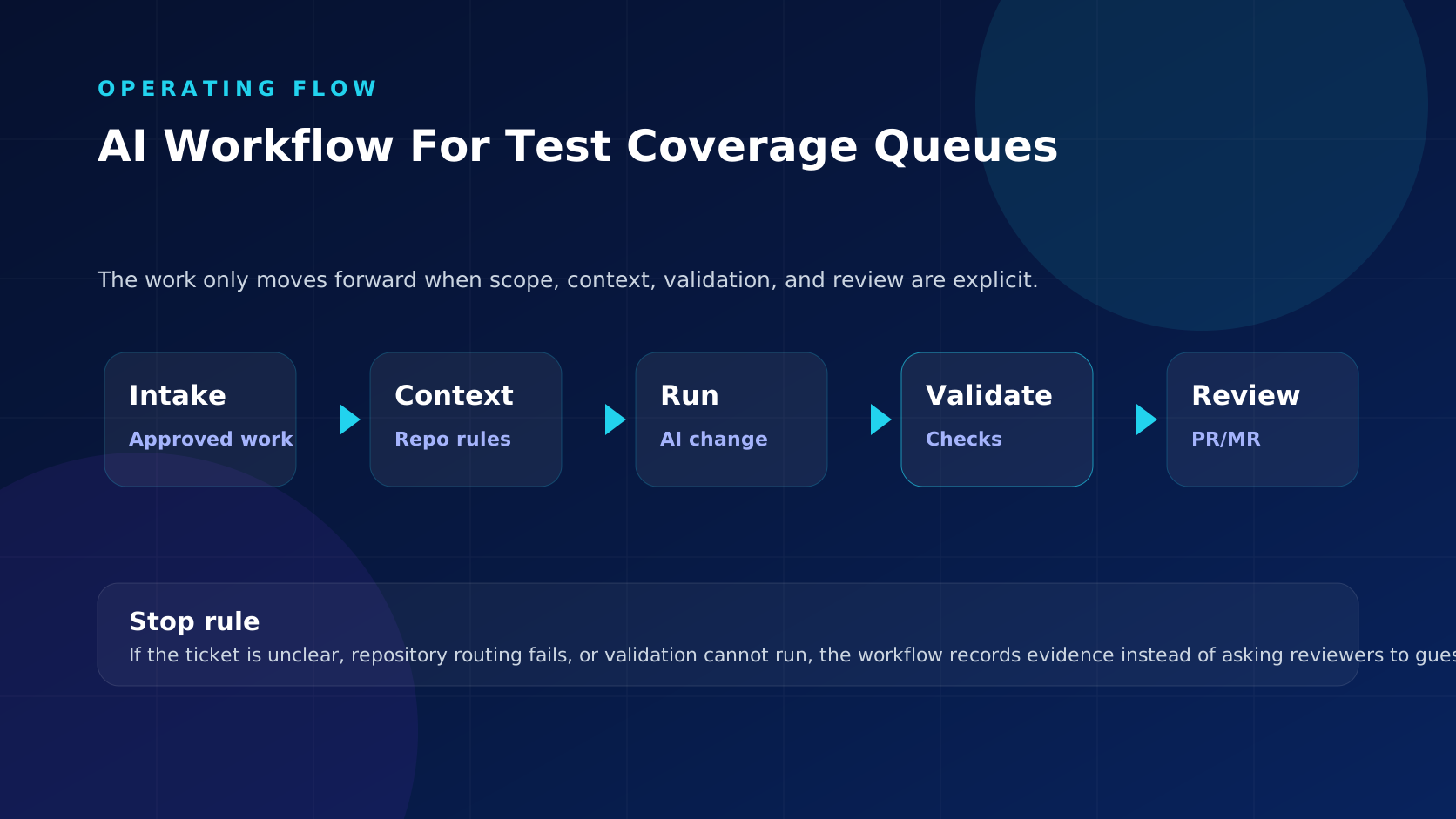
The operating sequence for coverage backlog automation should be:
- Move work about coverage backlog automation only from an approved Jira or GitLab state, not from a loose prompt.
- Check that the work item explains the change and names the affected repository or service.
- Attach repository rules, validation commands, branch conventions, and reviewer expectations that match the ticket path.
- Create a bounded branch whose title, commits, and PR/MR description preserve the source ticket key for the MR path.
- Run the configured tests, linting, build steps, or project-specific checks before requesting human attention on the automation path.
- Record failed checks, repair attempts, skipped checks, and unresolved questions in a review packet for the implementation queue.
- Let reviewers approve, request changes, or reject the scoped request through the normal code-host workflow.
Controls That Make The Output Reviewable
The safest version of this workflow is explicit about the moment a ticket becomes eligible and the moment a reviewer receives evidence. Anything between those points should be bounded by repository rules.
- Eligibility: which approved status, label, or field lets work on the branch handoff enter the run queue.
- Repository routing: which component, service, or codebase owns changes for this workflow.
- Context boundary: which docs, prior decisions, and repository instructions can influence the run. Track this with the review packet for the test coverage queues guide.
- Validation gate: which CI jobs or local commands must finish before review starts.
- Repair limit: how many bounded retries are allowed before the run stops or escalates.
- Review authority: who approves, rejects, or narrows the change before merge authority is used. Keep this visible before review for the test coverage queues guide.
Explore ticket-to-code automation frames the buyer problem, while workflow documentation keeps the implementation grounded in intake state, repository routing, validation output, and human review.
A Practical Version Of This Workflow
For turning test backlog items into validated PRs without scope drift, the operating model starts with one concrete handoff. The source work item identifies the work, the validation gate decides whether the run can continue, and the PR/MR carries the evidence back to the people who approve changes.
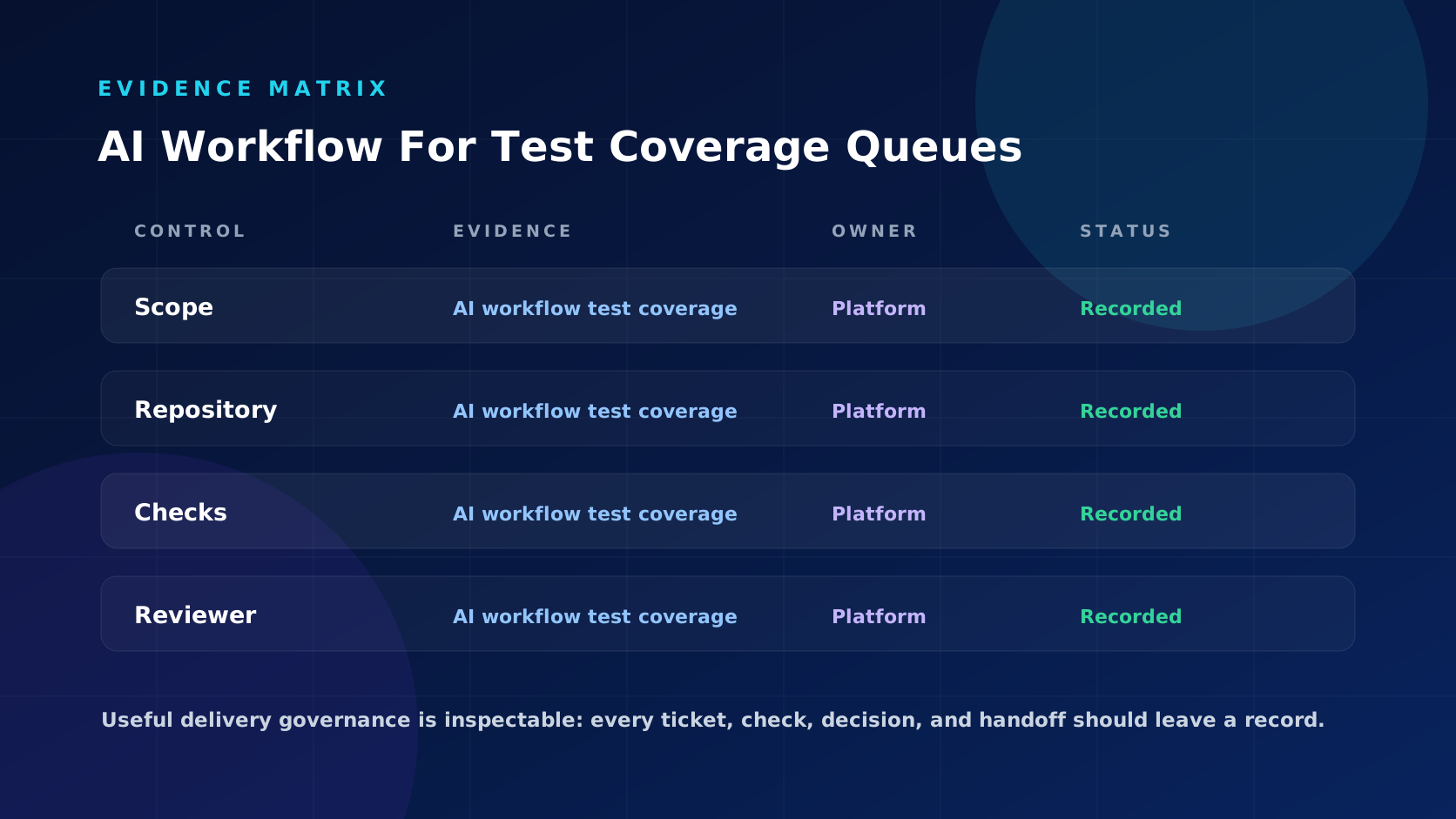
- Work-record boundary: the source work item should tell the next reviewer what test backlog items becoming validated PRs without scope drift is meant to change.
- Repository boundary: the handoff should not cross services, modules, or dependencies that the request did not authorize.
- Validation boundary: the validation gate should provide the first quality signal before review attention is spent.
- Audit boundary: the PR/MR should retain failed checks, repair attempts, and decisions beside the diff.
- Control boundary: the human reviewer should be able to reject or rerun the work when required validation cannot be reproduced.
When this discipline is missing, the governed run usually shifts cost from implementation to review. The page should therefore be read as an operating checklist, not only an SEO topic.
Failure Modes To Watch
Test coverage breaks down when the AI step becomes a side workflow instead of a governed delivery step.
These review-load signals are worth catching early:
- The source work item names test coverage but leaves repository scope, expected behavior, or reviewer focus ambiguous.
- The branch history does not connect test coverage back to the approved source record and ticket key.
- The test coverage queues guide rollout check: the PR/MR explains code changes while hiding validation output, skipped checks, or unresolved questions.
- Reviewers ask for context that should have been captured before execution.
- The test coverage queues guide delegation check: repair work continues after required validation cannot be reproduced instead of pausing for an owner decision.
- Cost reporting counts activity around the review path but misses failed checks, rejected work, or manual cleanup.
A practical rollout for the delivery path uses Explore ticket-to-code automation to frame the operating model, then checks workflow documentation and validation and review controls for intake and validation details.
Decisions To Make Before Rollout
Use these questions as the scale-readiness check for the change:
- Queue rule: which work state makes test backlog items becoming validated PRs without scope drift eligible, and which state blocks the run?
- Repository match: how does the team prove the source work item is routed to the right service or project?
- Context boundary: which repository knowledge is necessary for the ticket path, and which context is deliberately excluded?
- Gate evidence: what does the validation gate need to produce before the change reaches the human reviewer?
- Repair evidence: how should retries, failed checks, and rejected attempts be visible in the PR/MR?
- Merge authority: who keeps the final approval decision when required validation cannot be reproduced?
A team that can answer those questions can expand the MR path more deliberately and pause work before it creates avoidable review load.
Where MergeLoom Fits
The automation path gives test backlog items becoming validated PRs without scope drift a controlled route from work intake to validation evidence and review. The branch, checks, and PR/MR for test coverage should still explain the original request; MergeLoom keeps that evidence connected.
Use Explore ticket-to-code automation as the next conversion path for the delivery handoff. Pair it with workflow documentation for implementation context and validation and review controls for validation or audit detail. Related follow-ups: Jira Automation For Software Teams Practical Workflow Ideas, How To Link Jira Issues To GitLab Merge Requests, Cloud vs Self-Hosted AI Coding Cost.
Rollout Checklist
- Choose one use case with clear scope and a predictable repository boundary.
- Define the Jira or GitLab state that marks work ready for a governed run.
- Require branch names, commits, and PR/MR descriptions to carry the source work key.
- Run configured checks before review and record any checks that could not run.
- Keep final approval and merge authority with the normal code-host workflow.
Bottom Line
The practical standard for test coverage is simple: reviewers should see the request, the boundary, the checks, and the unresolved questions before approval.
Explore ticket-to-code automation when your team is ready to move test coverage out of ad hoc prompts and into controlled delivery.