
Amazon Q Developer is one of the clearest signals that AI development assistance is becoming part of mainstream engineering tooling. AWS positions it across coding, testing, documentation, security, AWS guidance, cloud operations, and code review.
That breadth is useful for teams that build on AWS or want AI support close to developer workflows. It also means governance matters. The more surfaces an AI assistant touches, the more important it becomes to define where work starts, what context is trusted, what checks run, and what reviewers see before merge.
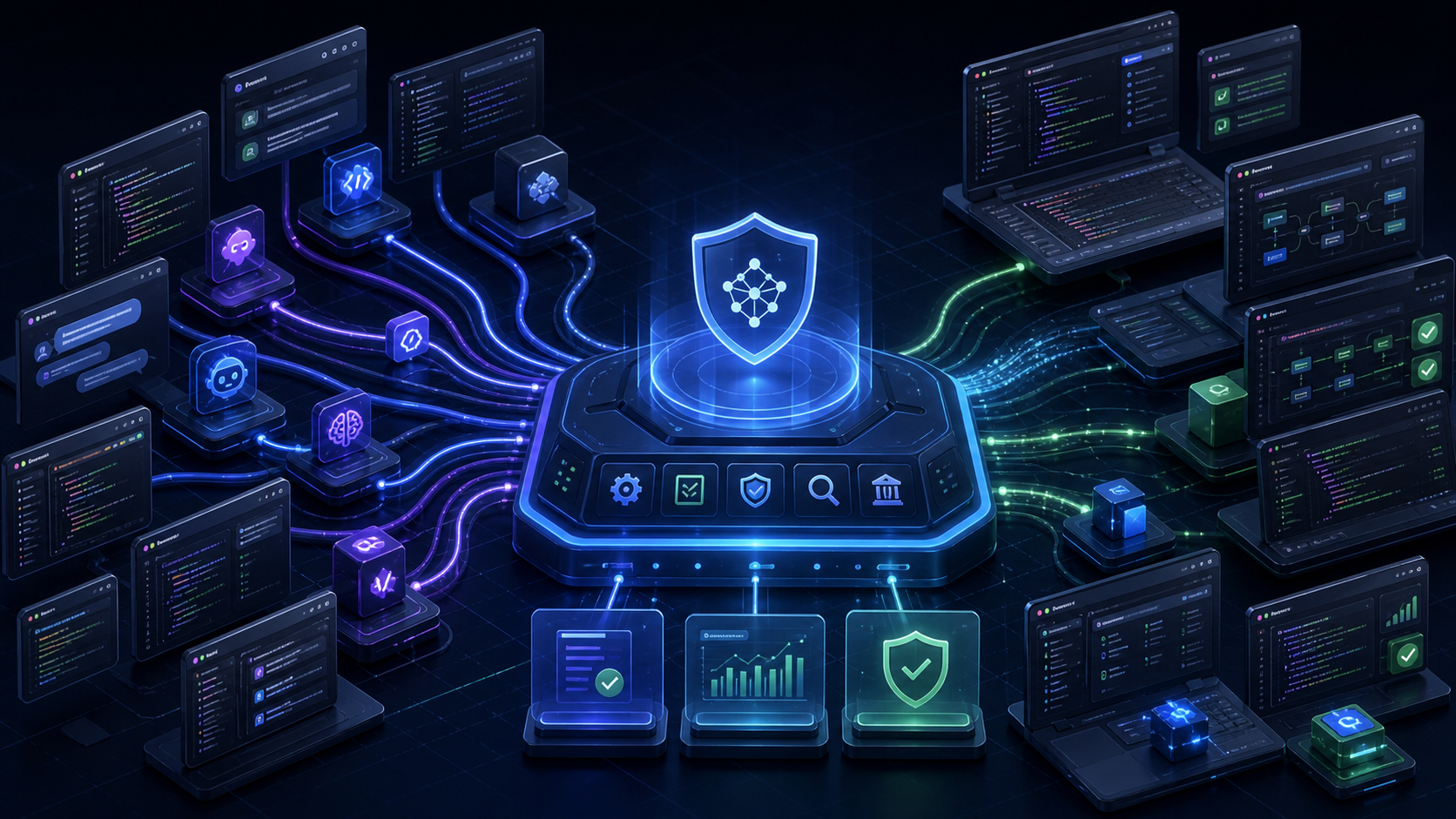
MergeLoom fits into that operating model as the workflow layer around AI coding: approved ticket intake, reusable context, controlled execution, validation before PR/MR handoff, audit trails, cost per accepted outcome, and human review.
What Amazon Q Developer Covers
AWS’s Amazon Q Developer documentation overview describes support for documentation generation, vulnerability scanning, test generation, automated code reviews, infrastructure as code generation, AWS guidance, cloud resource management, and troubleshooting.
For GitHub review workflows, the Amazon Q Developer GitHub code review docs describe automatic code review on new pull requests, review summaries, threaded findings, suggested fixes, and slash commands such as /q review.
Those capabilities can improve developer flow, especially when teams already depend on AWS infrastructure and want AI help inside code and cloud contexts. The governance gap is how the organization controls the full delivery path.
Start With An AI Work Policy
Before scaling any AI developer assistant, define which work is appropriate.
Good early candidates include:
- test generation for established behavior
- documentation updates
- small bug fixes with clear reproduction steps
- minor IaC changes with review from infrastructure owners
- bounded refactors with strong validation
- routine PR review assistance
Work that needs tighter control includes:
- identity and access management changes
- networking and production infrastructure changes
- data migration logic
- payment or billing behavior
- security incident response
- unclear product requirements
MergeLoom’s AI coding risk management guide covers this kind of rollout model.
Approved Tickets Beat Ad Hoc Requests
AI coding work is easier to govern when it starts from approved tickets instead of loose prompts.
A ticket gives the agent workflow a bounded request:
- business intent
- acceptance criteria
- affected service or repository
- priority and approval state
- risk notes
- review expectations
This is important when Amazon Q Developer is used alongside GitHub, AWS accounts, IDEs, and cloud resources. The organization needs a single source of intent so the PR, validation evidence, and eventual merge can be traced back to approved work.

MergeLoom’s ticket-to-code automation is built around that pattern. The work item starts the run, and the resulting PR or MR carries the context and evidence forward.
Control Repository Context
AI coding assistants can explain code, generate tests, and suggest changes. In enterprise systems, they also need reliable context:
- which services own which APIs
- where repository instructions live
- which validation commands matter
- which cloud resources are relevant
- which docs are approved
- which files or directories are sensitive
Without controlled context, teams risk inconsistent output and avoidable review work. One developer may provide rich guidance; another may provide a short prompt; a third may rely on stale documentation.
MergeLoom’s Context Engine gives teams a reusable context layer before execution. That helps standardize AI runs across repositories and reduces repeated discovery.
Validate Before Pull Request Review
Amazon Q Developer can participate in code review after a PR exists. Engineering leaders should also define what must happen before a PR is considered review-ready.
For AI-generated changes, useful pre-review validation includes:
- formatting and lint checks
- type checks
- unit tests
- relevant integration tests
- build commands
- IaC validation where infrastructure changed
- security scanning where appropriate
If checks fail, the workflow should attempt a bounded repair or stop with evidence. Reviewers should not receive a PR where the first task is discovering whether basic checks were run.
MergeLoom’s Quality Agents are designed for this pre-review path: clarity, investigation, validation, repair, review, Diff Guard, and handoff evidence.
Keep Review Ownership Human
AI review can catch useful issues, summarize diffs, and suggest fixes. It should not replace human accountability.
Human reviewers still own:
- product fit
- architecture judgment
- security risk
- operational impact
- cloud cost impact
- merge approval
The AI workflow should prepare a better review packet. That packet should include the source ticket, summary, files changed, commands run, validation output, known gaps, and review focus areas.

Audit Beyond Tool Usage
AI usage metrics are not enough. Engineering leaders need delivery metrics.
Track:
- approved work delegated
- runs started and stopped
- validation pass rate
- PRs opened
- PRs merged
- review rework
- cloud or model cost per accepted outcome
- exceptions and policy overrides
MergeLoom’s audit trails and attribution attach evidence to the ticket-to-code run so teams can reconstruct what happened from intake through validation and PR/MR handoff.
For cost control, the Reduce AI Costs page explains why accepted outcomes are a better unit than raw AI activity.
Where MergeLoom Fits With Amazon Q Developer
Amazon Q Developer can be valuable where teams want AWS-aware assistance, developer productivity support, security suggestions, test generation, and code review help.
MergeLoom is useful when the organization needs a delivery workflow around AI output:
- work starts from approved tickets
- context is controlled before execution
- validation runs before PR/MR handoff
- audit trails are retained
- cost is tied to accepted outcomes
- humans keep review and merge authority
The two ideas can coexist. Amazon Q Developer can support developers and reviews while MergeLoom governs the path from approved work to review-ready code.
Bottom Line
Amazon Q Developer gives engineering teams a broad AI assistant across code, review, security, testing, and AWS guidance. To scale that responsibly, teams still need workflow governance around the work itself.
If you want AI coding tied to approved tickets, validation evidence, audit trails, and human review, start with Ticket-To-Code Automation or book a MergeLoom demo to map the controls around your current AWS and Git workflows.
Disclaimer: Amazon Q Developer is a product of Amazon Web Services. MergeLoom is not affiliated with Amazon or AWS.