AI-generated pull requests are becoming normal. Coding agents can now plan changes, edit files, run commands, and open PRs or MRs.
The problem is not whether AI can create a pull request. The problem is whether the pull request is controlled enough for a serious engineering team to review, trust, and merge.
A controlled AI-generated PR/MR has a clear source, a bounded scope, validation evidence, reviewer context, and an audit trail.
What Makes an AI Pull Request Controlled?
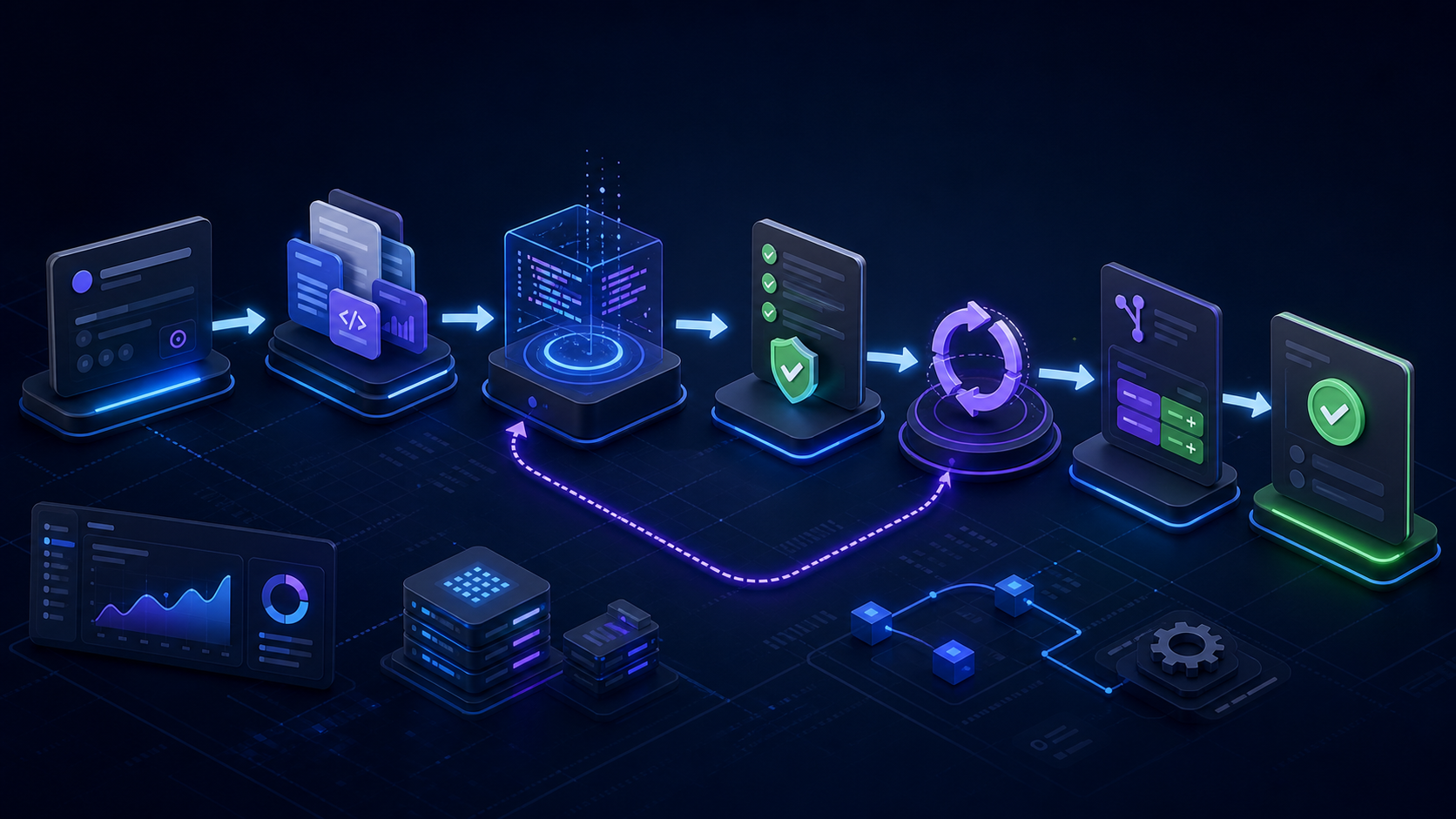
A controlled AI-generated pull request has five properties.
- Approved source: it starts from a ticket, issue, or task that was ready for implementation.
- Bounded scope: the run knows what to change and what not to change.
- Trusted context: repository rules, docs, and architecture guidance are attached before coding.
- Validation evidence: relevant commands run before review.
- Human approval: engineers review and merge through the normal code host.
Without these properties, AI PRs can add review load instead of reducing it.
Step 1: Start From Approved Work
The work item should include:
- problem statement
- expected outcome
- acceptance criteria
- target repository or component
- constraints
- validation commands
- reviewer focus areas
This gives the agent a contract and gives reviewers a basis for judgment.
If your tickets are not ready for AI coding, start with the Ticket Template for AI Coding Agents.
Step 2: Route to the Right Repository
AI work should not rely on the model guessing where the change belongs.
The workflow should define:
- repository routing rules
- branch naming
- write permissions
- owner or reviewer hints
- which repositories are read-only context sources
MergeLoom’s work intake integrations and Context Engine help connect tickets to repositories and supporting context.
Step 3: Attach Context Before Coding
Context should be deliberate.
Attach:
- repository instructions
- architecture docs
- API contracts
- test instructions
- known constraints
- similar prior changes
The agent should investigate before editing. That reduces off-scope changes and makes the eventual PR easier to review.
Step 4: Run Validation
A controlled PR/MR should not ask a human to discover basic failures.
Run the checks that matter for the repository:
- dependency setup
- formatting
- lint
- type checks
- unit tests
- builds
- custom validation scripts
If validation cannot run, the PR/MR should say so clearly.
MergeLoom’s Quality Agents run validation before handoff and preserve the output.
Step 5: Repair or Stop
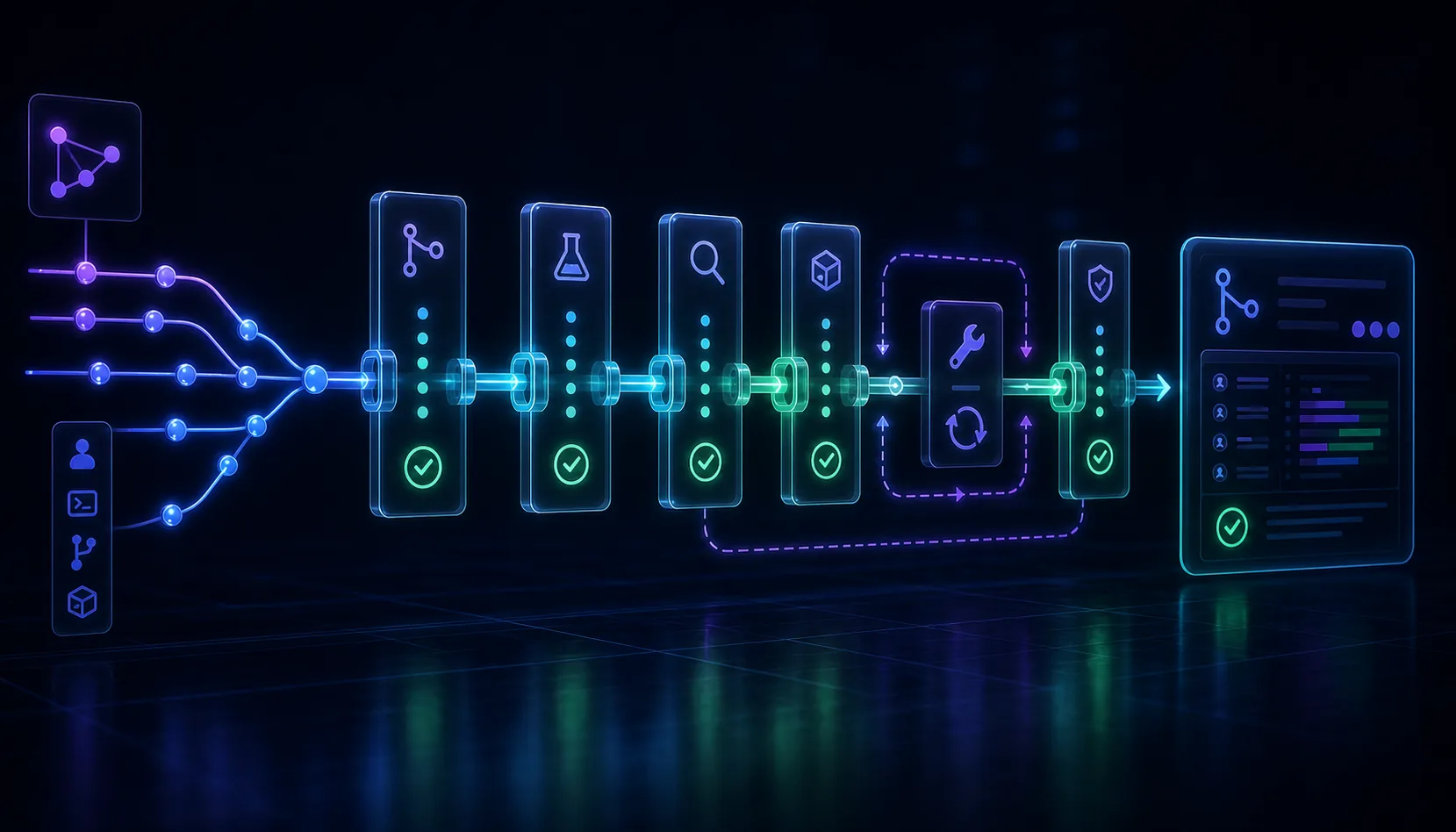
If validation fails, the workflow should make a controlled decision.
It can:
- repair the failure inside scope
- rerun the relevant checks
- stop and report the failure
- ask for human input when the issue exceeds scope
What it should not do is hide the failure behind a confident summary.
Repair attempts are part of the audit trail. They help reviewers understand whether the final branch is stable or fragile.
Step 6: Prepare the Review Packet
The PR/MR description should help the reviewer immediately.
Include:
- source ticket
- summary of the change
- acceptance criteria addressed
- commands run
- validation results
- files changed and why
- known gaps
- reviewer focus areas
This is where many AI-generated PRs fail. They produce code but not review-ready evidence.
Step 7: Keep Human Review in Control
AI should not approve its own work.
Keep:
- branch protection
- required checks
- CODEOWNERS
- human reviewer approval
- normal merge rules
The controlled workflow is successful when humans spend less time finding basic issues and more time judging the important ones.

Step 8: Track the Outcome
After review, track whether the PR/MR was:
- merged
- closed without merge
- returned for major changes
- reworked by a human
- blocked by validation gaps
- linked to follow-up work
This helps teams improve ticket quality, validation commands, context sources, and agent scope over time.
Common Failure Modes
Watch for:
- AI-generated PRs from vague tickets
- large diffs with no scope explanation
- missing tests
- validation failures hidden in logs
- PR descriptions that read like model output rather than review evidence
- no link back to the source issue
- no record of what context was used
These problems are workflow problems. They can be fixed with better intake, context, validation, and handoff controls.
Where MergeLoom Fits
MergeLoom is built to produce controlled AI-generated PRs/MRs from approved tickets.
The workflow connects intake, context, execution, validation, repair, Diff Guard, audit trails, and human review. Engineers keep the final approval path, but they receive a cleaner branch with evidence attached.
Start with Ticket-To-Code Automation to see the full path, or book a demo to map controlled AI-generated PRs/MRs against your current workflow.