
AI coding creates a DevOps measurement problem. It can shorten the path from ticket to branch, but it can also increase review load, produce unstable changes, or hide cost in failed runs.
Platform and DevOps leaders need metrics that show whether AI agents improve the delivery system instead of just creating more activity.
Keep the Core DORA View
DORA metrics are still the baseline:
- Lead time for changes: how long work takes from start to production.
- Deployment frequency: how often production changes ship.
- Change failure rate: how often changes cause incidents, rollbacks, or hotfixes.
- Time to restore service: how quickly teams recover when something breaks.
AI coding should improve flow without increasing failure. If lead time improves but change failure rate rises, the workflow is not healthy.
Add AI Workflow Metrics
DORA does not tell you why an AI coding workflow is working or failing. Add leading indicators.
Track:
| AI Workflow Metric | What It Shows |
|---|---|
| Ticket clarity failure rate | How often work is blocked before coding. |
| Context gap rate | How often agents miss repository or system knowledge. |
| Validation pass rate | Whether generated branches meet technical checks. |
| Repair success rate | Whether agents can fix bounded failures before review. |
| Accepted PR/MR rate | Whether reviewers approve generated output. |
| Scope drift rate | Whether agents change more than the ticket requested. |
These metrics tell platform teams where to improve the workflow: ticket quality, context, validation, or review handoff.
Watch Review Load Closely
Review capacity is the constraint many teams miss. AI can create more PRs faster than humans can review them.
Track:
- average review time for AI-generated PRs/MRs
- review rounds per AI PR/MR
- requested-change rate
- senior reviewer involvement
- review queue size
- time from PR/MR opened to first review
If review load grows faster than accepted outcomes, AI is creating local speed and system drag.
Measure Validation Before Review
For DevOps teams, validation is where AI coding becomes operational rather than experimental.
Useful validation metrics:
- percentage of runs with required commands configured
- percentage of runs where commands executed successfully
- most common validation failures
- time spent in repair loops
- runs stopped before PR/MR due to failed validation
- validation gaps accepted by reviewers
MergeLoom’s repository rules and validation are designed to make these checks part of the run rather than informal reviewer effort.
Track Incident Signals by Source
Do not wait for a major incident before segmenting change source.
Track incidents by:
- manual change
- AI-assisted local change
- controlled agent run
- generated tests or docs only
- dependency or config change
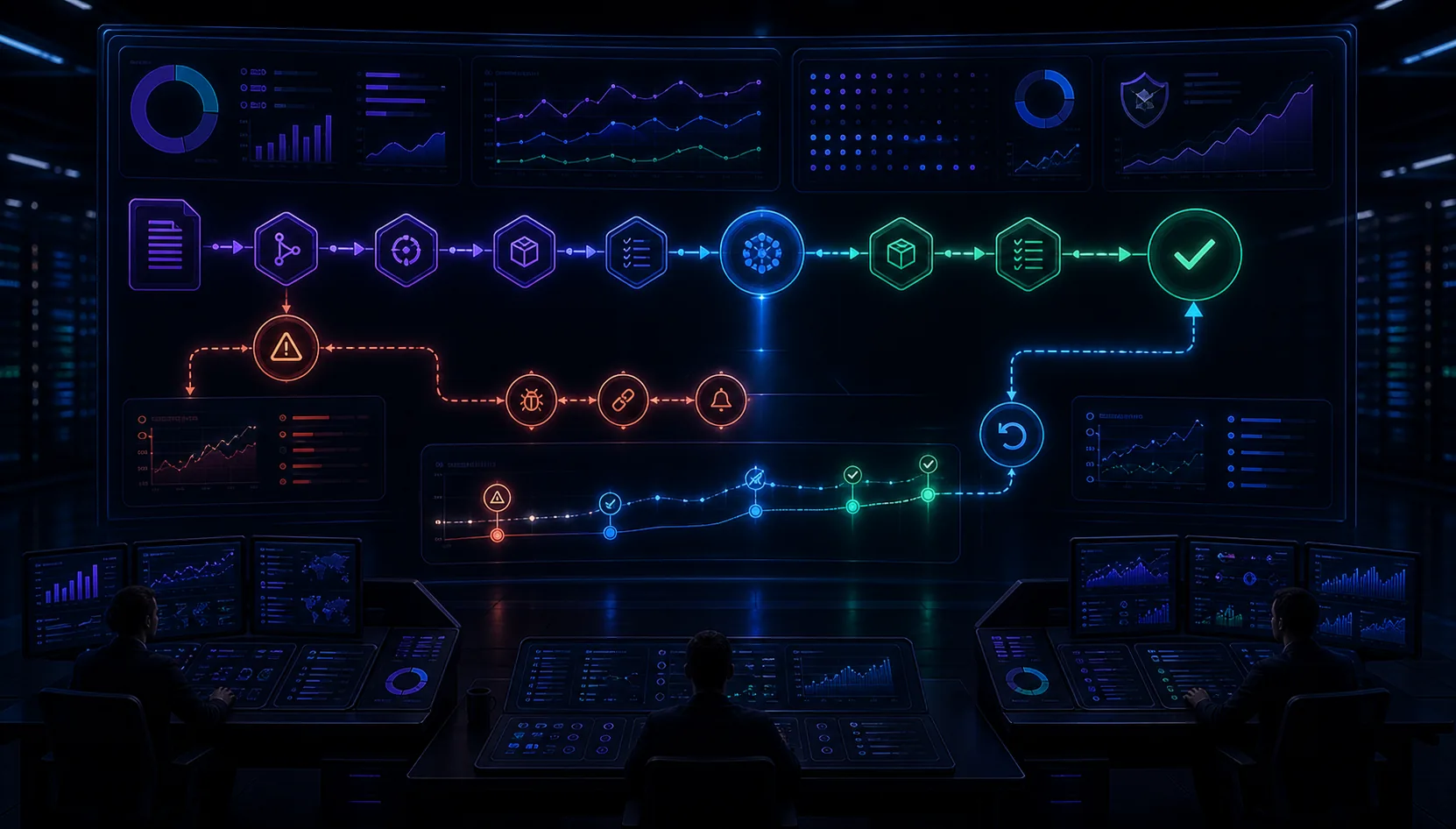
This does not mean blaming AI or developers. It means understanding which workflows produce stable changes.
Include Cost Per Outcome
DevOps dashboards often miss cost until finance asks. Add cost per accepted PR/MR early.
Include:
- agent/platform cost
- model/provider spend
- worker or CI runtime cost
- review time
- rework time
- failed run cost
Cost matters because AI coding can look productive while burning engineering attention.
Suggested Dashboard
For a pilot, build a weekly dashboard with:
- AI-eligible tickets approved
- agent runs started
- runs blocked by unclear tickets
- runs stopped by validation
- PRs/MRs opened
- accepted PRs/MRs
- review time and rounds
- change failure rate for accepted AI PRs/MRs
- cost per accepted PR/MR
Keep this dashboard small enough that platform, security, and engineering leadership can discuss it every week.
When to Scale
Scale AI coding only when:
- accepted PR/MR rate is stable
- review time is not increasing sharply
- validation failures are understood
- change failure rate is not rising
- cost per accepted outcome is defensible
- engineers trust the workflow enough to review normally
That is a better readiness model than seat adoption or prompt volume.
FAQ
Question: Are DORA metrics enough for AI coding?
Short answer: No. Keep DORA metrics, but add AI-specific signals such as validation pass rate, accepted PR/MR rate, review time, and cost per outcome.
Question: Which metric catches AI review fatigue earliest?
Short answer: Watch review rounds, review time, requested-change rate, and first-review delay for AI-generated PRs/MRs.
Question: Should failed agent runs count against productivity?
Short answer: Yes. They consume model spend, runtime, and sometimes human triage, so they belong in cost and workflow-health reporting.