
A search for diff scope guardrails for AI agents usually signals a buyer concern about keeping generated changes inside the ticket and reviewable size, not only code generation. A credible rollout for diff scope guardrails agents treats AI coding as a delivery workflow, not a side channel around Jira, GitLab, CI, or review.
That is the difference between an AI coding trial and a workflow that platform teams can govern across diff scope guardrails agents. For the governance workflow, the operating model has to be visible enough for engineering leaders to expand or stop deliberately.
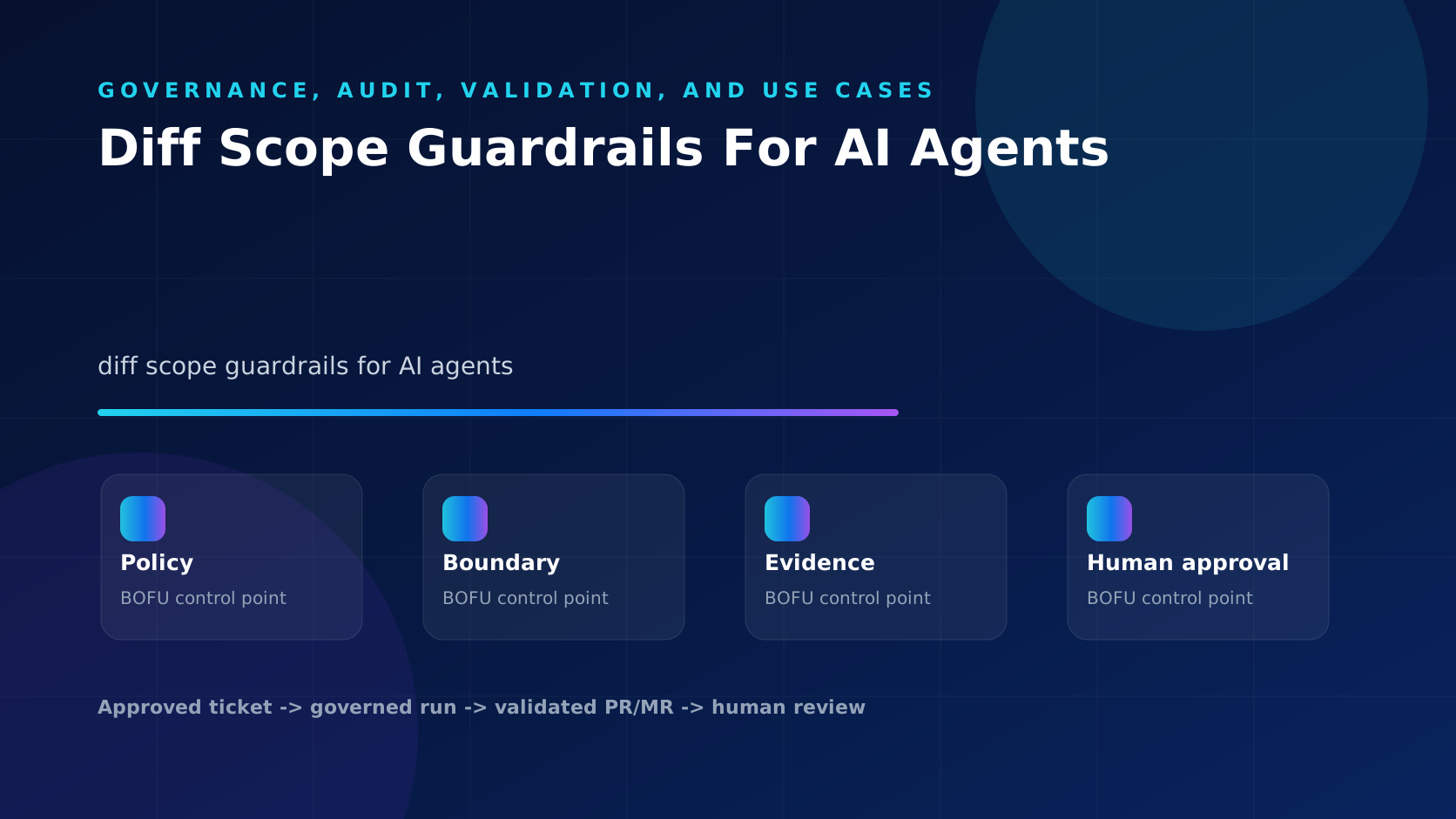
Decide What Is Allowed Before It Runs
Governance has to be concrete enough for platform teams to operate. A useful policy maps the intake rules, repository permissions, validation gates, and review ownership for diff scope guardrails agents.
The minimum control surface should include:
- Approved intake: who can request diff scope guardrails agents and which system records that request.
- Repository permission: which branches, files, and worker actions are allowed for diff scope guardrails agents.
- Context boundary: which tickets, docs, code, comments, and secrets are allowed or excluded from diff scope guardrails agents.
- Provider routing: which model or provider can handle the repository class behind the security review.
- Validation gate: which checks must pass for the control, and what happens when they fail.
- Human authority: who can approve, reject, rerun, pause, or merge work produced through the policy.
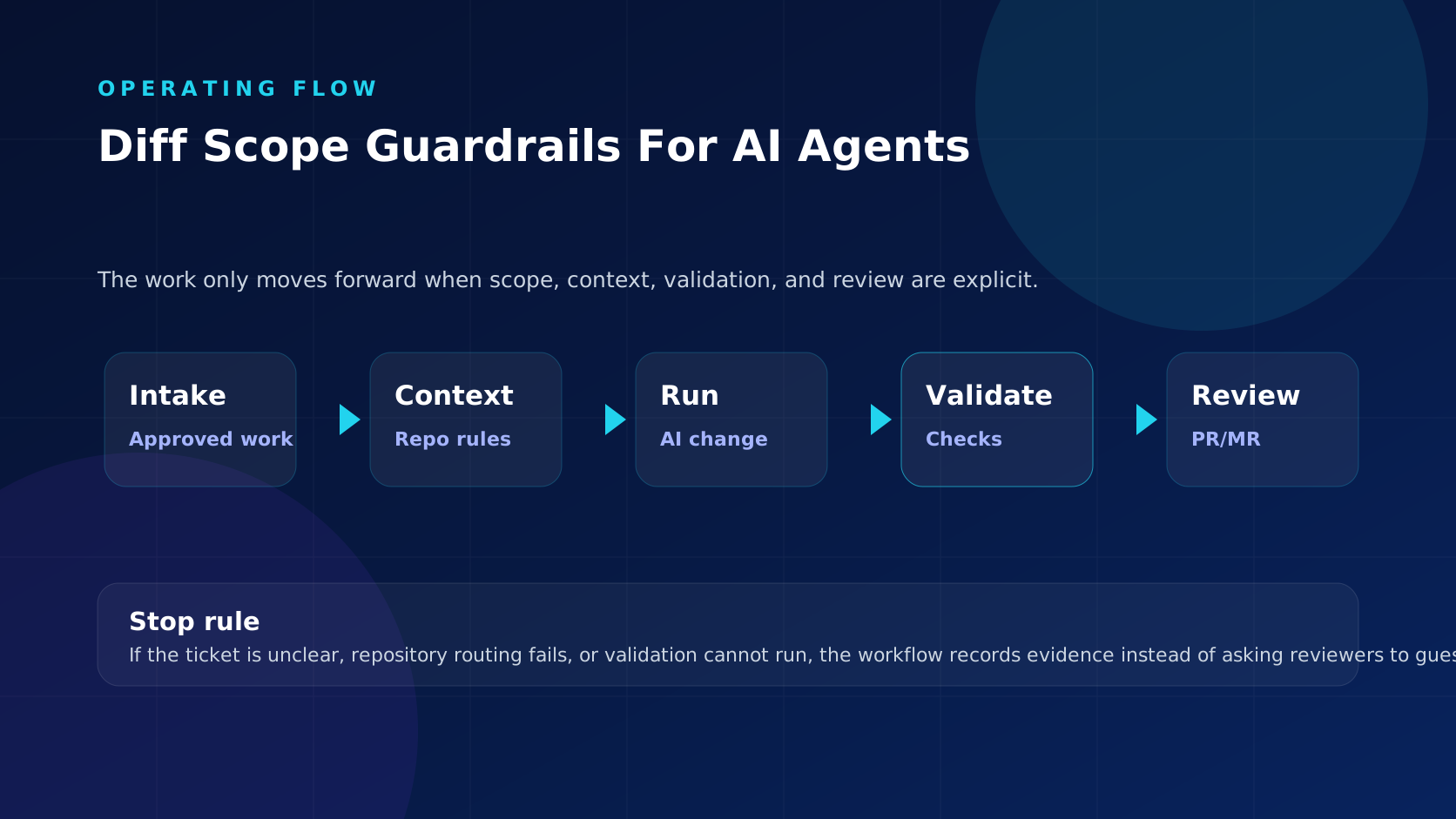
Audit The Path, Not Just The Diff
If a team cannot reconstruct a run, it cannot govern the run. The evidence trail for the audit path should answer what started, what changed, what checked, what failed, what was repaired, and who accepted or rejected the result.
- The source ticket or issue that authorized the governance workflow.
- The repository, branch, commit range, and PR/MR created during the evidence trail.
- The context sources used for the review record and the sources explicitly excluded.
- The validation commands, CI jobs, skipped checks, and repair attempts tied to the access rule.
- The reviewer decision, requested changes, acceptance, rejection, or escalation route tied to the risk control.
In Diff Scope Guardrails For AI Agents, the related control surfaces are Review AI coding governance controls, workflow documentation, and validation and review controls: audit evidence, data boundaries, and validation before review.
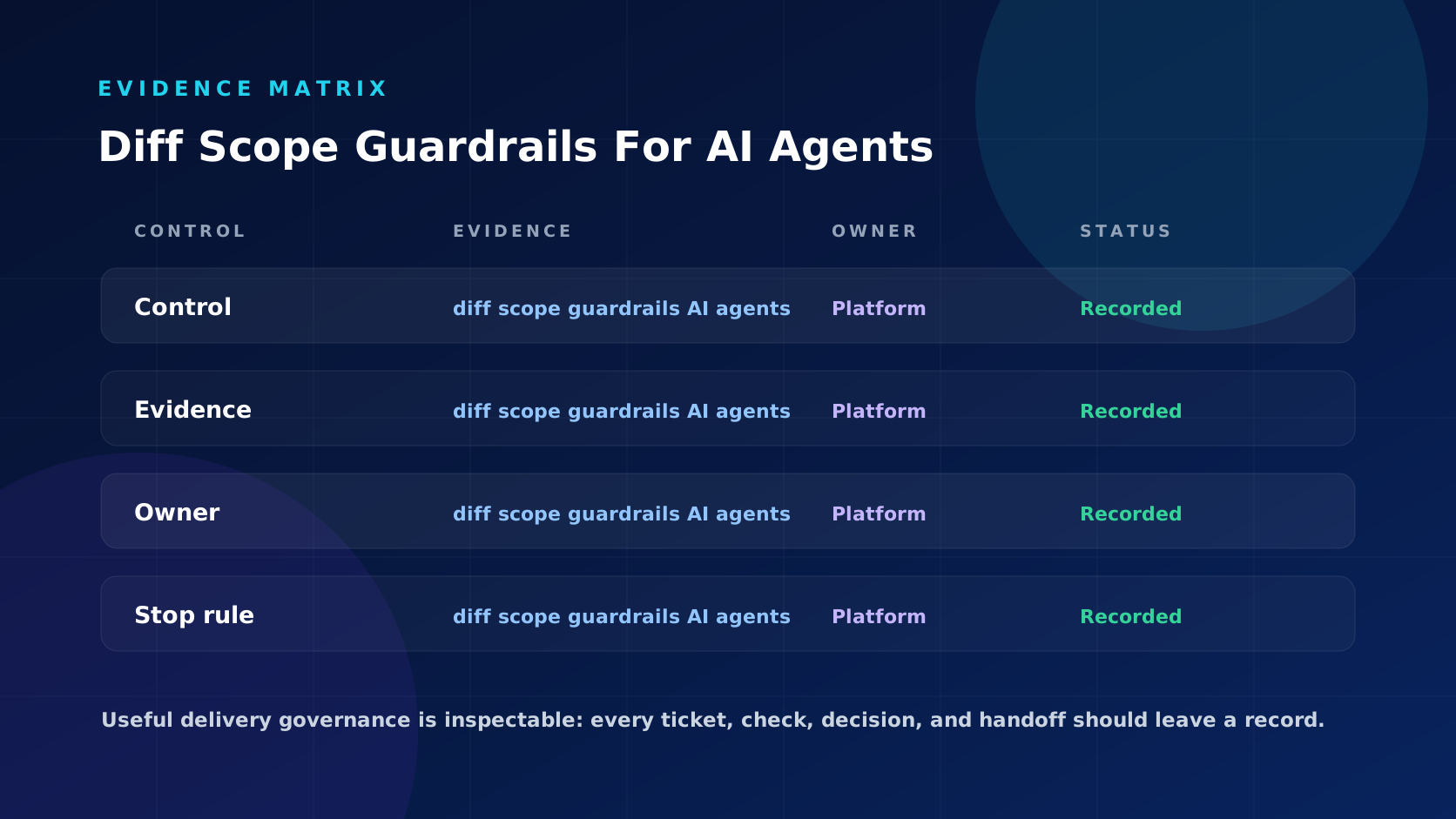
The Implementation Boundary
With the operating policy, the implementation boundary matters more than the model name. The team should know which system starts the run, which repository is in scope, and which evidence must appear in the audit record.
- Source boundary: the policy record should show what prompted keeping generated changes inside the ticket and reviewable size and what success means.
- Execution boundary: the inspection path should state repository rules before an agent can write changes.
- Gate boundary: the policy gate should prevent unvalidated work from becoming reviewer workload.
- Review handoff: the audit record should put commits, checks, and human decisions in one place.
- Escalation boundary: the human reviewer should have a documented path when scope or ownership is ambiguous. Track this with the review packet for the diff scope guardrails guide.
It also keeps Review AI coding governance controls connected to the operational details in workflow documentation for the approval rule, which is where many AI coding pilots lose the evidence reviewers need.
Risk Signals In Early Pilots
The security review becomes hard to defend when the run boundary and decision record are invisible.
These review-load signals are worth catching early:
- The policy record omits the owner, service boundary, or acceptance signal needed for the control.
- The generated branch for the policy changes files that were never named in the source request.
- The diff scope guardrails guide review check: the audit record lacks the validation summary, failed-check notes, or open questions reviewers need.
- The human reviewer cannot tell which context sources were used or excluded.
- A failed run keeps retrying after the evidence says it should stop.
- The diff scope guardrails guide rollout check: the dashboard treats provider use, CI time, and review effort as separate stories instead of one accepted-work record.
Review AI coding governance controls explains where the audit path fits commercially; workflow documentation and validation and review controls explain how prepared work stays bounded enough for review.
Readiness Checks Before Scaling
The workflow becomes easier to defend when CTOs, security leads, platform teams, compliance stakeholders, and engineering leaders can answer these points directly:
- Run trigger: what approved work record starts keeping generated changes inside the ticket and reviewable size, and who can approve that trigger?
- Repo selection: how is the correct repository, branch, or component chosen for the governance workflow?
- Context controls: which source materials should be attached to the run record before execution? Add this to the operating record for the diff scope guardrails guide.
- Validation controls: which checks, gates, or manual review steps are mandatory for the audit record?
- Decision record: how will approval, rejection, rerun, or escalation be visible after review? The owner should confirm this ahead of execution for the diff scope guardrails guide.
- Risk response: what should happen when scope or ownership is ambiguous during the evidence trail?
That discipline keeps the review record from expanding faster than the team’s ability to inspect, validate, and approve the result.
The MergeLoom Role In The Stack
The access rule helps make keeping generated changes inside the ticket and reviewable size auditable by recording scope, access, validation, and approval decisions. Governance remains a team responsibility; MergeLoom keeps the evidence trail available for inspection.
Review AI coding governance controls is the commercial path connected to the risk control; workflow documentation and validation and review controls provide the supporting operational controls. Use AI Coding Governance Policy Template For Enterprise Teams, AI Coding Audit Trail Checklist, Customer-Hosted AI Coding Workflow For Sensitive Repositories for related reading.
Rollout Checklist
- Assign an owner, exceptions, and operating reviews.
- Define allowed repositories, data boundaries, providers, credentials, and context sources for the operating policy.
- Record the inspection path evidence in a location security and engineering leaders can inspect.
- Test the approval rule stop rules with unclear, failed, and out-of-scope work before broad rollout.
- Review audit samples before expanding to more sensitive repositories.
Bottom Line
The operating goal is a record that explains what was allowed, what ran, what failed, and who made the decision.
Review AI coding governance controls when the team needs audit evidence around the security review instead of informal AI coding activity.