Enterprise AI coding pilots often start with a simple question: can the agent write useful code?
That question is too narrow.
For engineering leaders, the better question is whether the organisation can route approved work to an AI coding agent, provide the right context, validate the output, preserve evidence, and keep human review in control.
A pilot should prove the workflow, not only the demo.
Define the Pilot Goal
Start by choosing one primary goal. Avoid mixing too many objectives in the first pilot.
Good pilot goals include:
- reduce routine ticket backlog in one service
- validate whether AI-generated PRs/MRs can meet team standards
- measure cost per accepted PR/MR
- test audit evidence for AI-assisted changes
- learn which work types are poor candidates for agents
Weak goals are usually vague, such as “adopt AI coding” or “make developers faster.” Those goals are hard to evaluate because they do not define what good output looks like.
For most enterprise teams, the first pilot should focus on routine, bounded work that already has clear acceptance criteria.
Choose a Narrow Scope
The safest pilot scope is one team, one to three repositories, and a small set of work types.
Good candidates:
- small bug fixes with clear reproduction steps
- low-risk UI copy or configuration changes
- test additions for existing behaviour
- minor refactors inside owned modules
- dependency updates with strong validation coverage
Poor first candidates:
- large architecture changes
- security-sensitive flows
- unclear product behaviour
- work that needs production data
- changes that span many owners
The pilot should create enough runs to learn from patterns, but not so many that the team loses review discipline.
Start From Approved Work Intake
AI coding should not begin from unmanaged prompts in chat windows. The pilot should start from approved work items.
That can be Jira, GitHub Issues, GitLab Issues, Azure Boards, Linear, monday.dev, or another system your team already uses.
Each pilot ticket should include:
- the user-visible problem or requested change
- acceptance criteria
- target repository or service
- known test command, if relevant
- review owner or owning team
- risk notes, such as data, auth, payments, or security impact
MergeLoom’s Ticket-To-Code Automation is built around this pattern: approved work enters the workflow before an agent starts changing code.
Prepare Repository Context
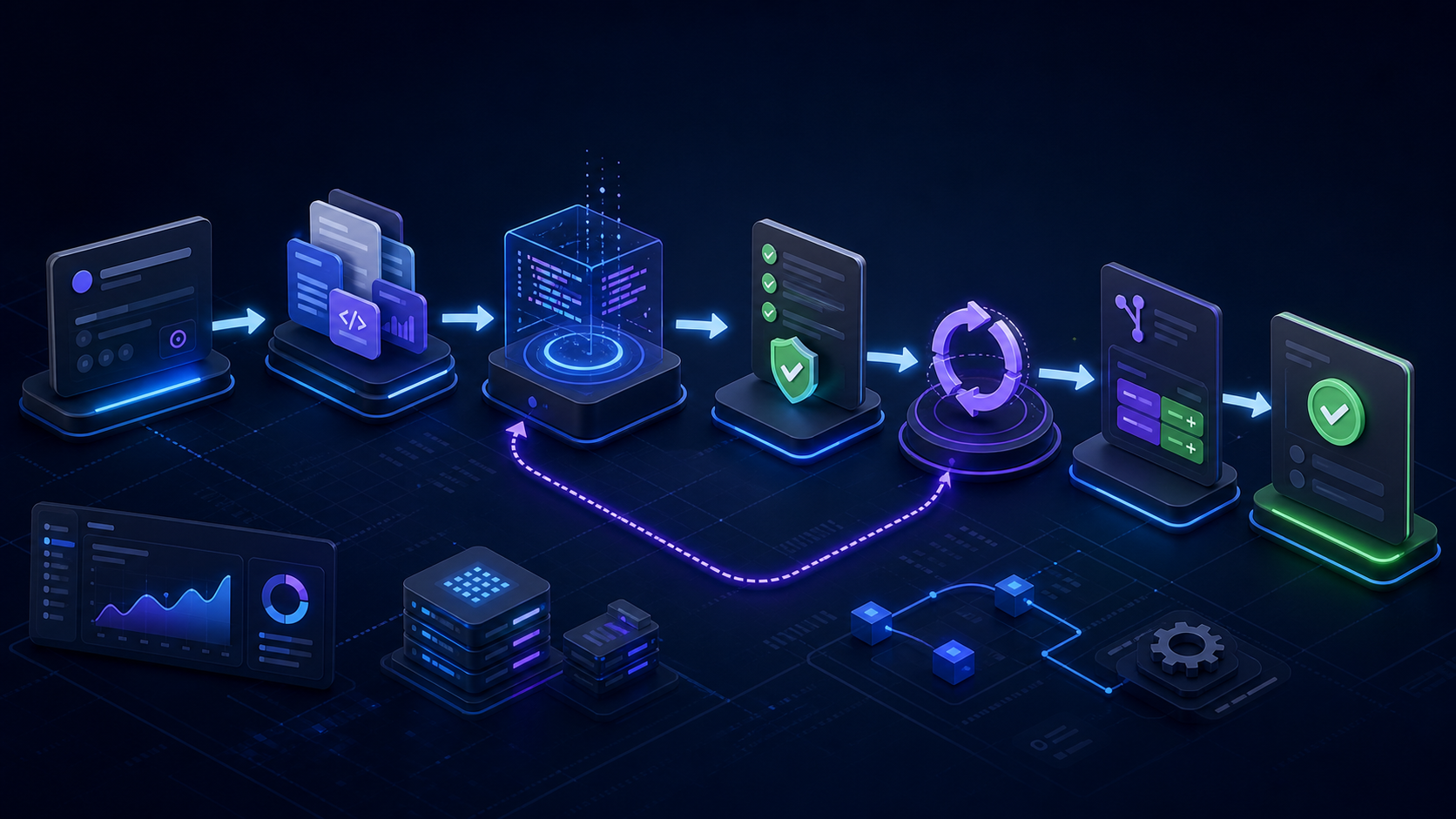
Agents perform better when they receive the right context before implementation.
For each pilot repository, prepare:
- setup commands
- test, lint, typecheck, and build commands
- architecture notes
- service ownership rules
- common patterns to follow
- directories the agent should avoid
- rules for generated files, migrations, lockfiles, and public APIs
Do not rely on each ticket author to restate this context. Put it in a reusable place and attach it to every run.
MergeLoom’s Context Engine supports this by giving teams a controlled way to reuse repository rules, docs, and system context.
Define Validation Before the First Run
Validation should be part of the pilot design, not added after the first bad PR/MR.
Define what must pass before handoff:
- formatting
- linting
- type checking
- targeted tests
- build checks
- custom repository policy checks
- diff scope checks
Also define when the run should stop. A stopped run is a good result if the ticket is unclear, the repository cannot be identified, the tests cannot run, or the diff grows beyond the approved scope.
For more detail, read the guide to AI code validation before PR.
Keep Human Review in the Normal Code Host
The pilot should not bypass GitHub, GitLab, Azure Repos, or your existing review process.
Require normal branch protection, CODEOWNERS, reviewer routing, and human approval. The agent can prepare the branch and evidence. Humans still decide whether the change is acceptable.
The PR/MR should include:
- source ticket link
- summary of intended change
- files changed
- validation commands and results
- repair attempts, if any
- known gaps or skipped checks
- review focus areas
This keeps reviewers focused on judgment instead of reconstructing what happened.
Measure Accepted Outcomes
Do not judge the pilot by generated lines of code or number of agent runs.
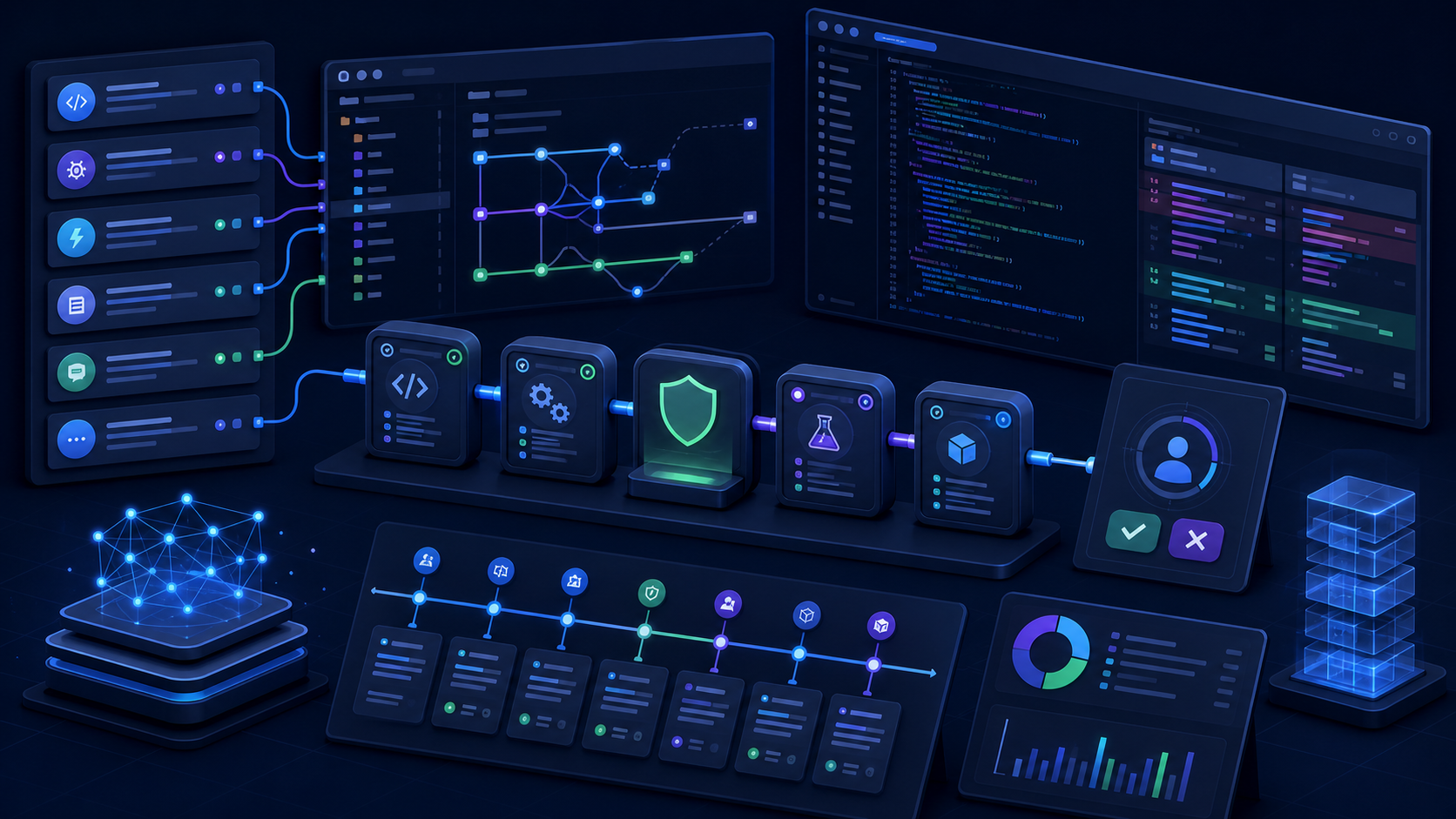
Track:
- tickets accepted into the pilot
- runs stopped before coding
- PRs/MRs opened
- PRs/MRs merged
- validation failure causes
- review comments by category
- rework after review
- cost per accepted PR/MR
Cost per accepted outcome is more useful than token spend alone because it includes failed runs, rejected PRs/MRs, and reviewer burden.

Review the Pilot Weekly
Run a weekly review with engineering, platform, and security stakeholders.
Ask:
- Which work types produced useful PRs/MRs?
- Which tickets were too vague?
- Which validation failures repeated?
- Which context was missing?
- Did reviewers trust the evidence?
- Was any audit trail incomplete?
- Should the next phase expand, pause, or tighten scope?
This review turns the pilot into an operating model.
Where MergeLoom Fits
MergeLoom helps enterprise teams run AI coding pilots as controlled delivery workflows. It connects approved intake, reusable context, validation, repair, review handoff, audit trails, and outcome economics.
If you are planning a pilot, start with AI Code Governance Platform or book a demo to map the pilot around your current repositories and review process.