
Jira to pull request automation is becoming a serious engineering workflow topic because coding agents can now take work directly from an issue and produce a review artifact. That is useful, but it also changes the failure mode. A weak ticket no longer just slows a developer down. It can create a weak branch, a noisy pull request, and more review work for the team.
The goal is not to let an AI agent roam the backlog. The goal is to create a controlled workflow where approved work enters through Jira, gets enough context to make a bounded change, runs the right checks, and returns to normal human review.

What a Jira to Pull Request Workflow Should Do
A good workflow turns an approved ticket into a pull request without breaking the controls your engineering team already depends on.
At minimum, it should preserve:
- Ticket scope: the agent works from a ticket that has acceptance criteria, constraints, and a clear owner.
- Repository fit: the agent receives relevant repository rules, architecture notes, and validation commands before editing.
- Review discipline: the output lands as a PR/MR for human review, not as an automatic merge.
- Traceability: the ticket, branch, checks, cost, reviewer, and final PR/MR stay connected.
GitHub’s Copilot coding agent for Jira and Atlassian’s Rovo Dev work show that this workflow category is now mainstream. The buyer question is no longer whether an agent can start from an issue. The question is whether the operating model around that agent is strong enough for production code.
Start With an AI-Ready Jira Ticket
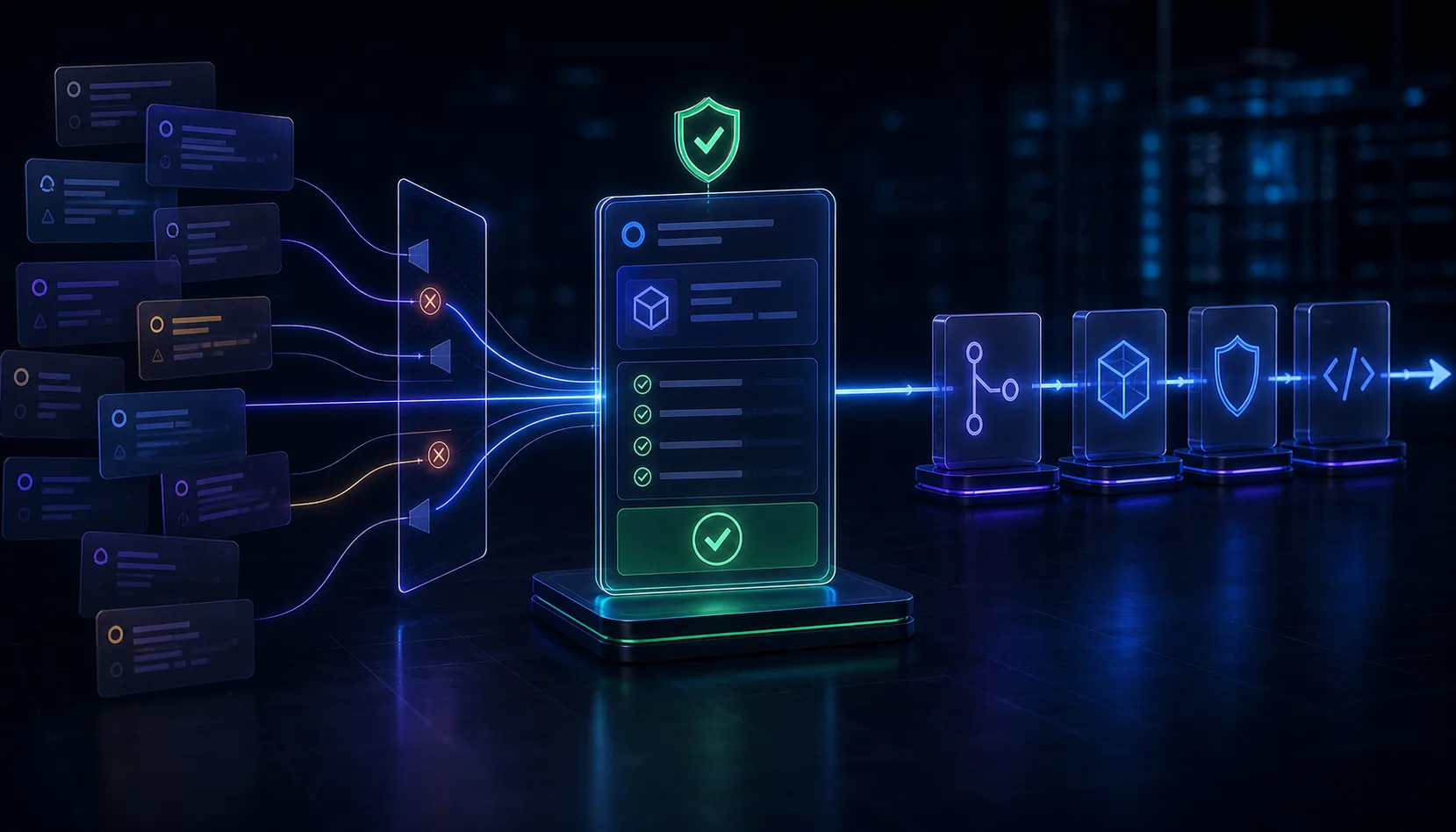
The workflow breaks when Jira tickets are written as memory aids instead of implementation contracts. “Fix dashboard bug” is not enough. The agent needs the same cues a good engineer would need.
A useful ticket includes:
- Problem statement: what is broken or missing, written from the user’s point of view.
- Acceptance criteria: observable outcomes that reviewers can verify.
- Repository target: the likely service, app, package, or docs area.
- Constraints: what must not change, what patterns must be followed, and what risky paths are out of scope.
- Validation expectations: tests, linting, type checks, build commands, or manual checks that matter for this work.
For a deeper template, see the companion guide on writing tickets for AI coding agents.
Define the Workflow Gate
Do not let every Jira issue become agent-ready. Add an explicit gate such as a status, label, Jira automation rule, or board column that means “ready for AI implementation.”
That gate should usually require:
| Gate | Why It Matters |
|---|---|
| Product owner or engineering owner approval | Prevents unapproved backlog items from creating branches. |
| Clear acceptance criteria | Gives the agent and reviewer the same target. |
| Repository selected | Avoids broad codebase exploration with unclear authority. |
| Risk level set | Helps decide whether the ticket is safe for automation. |
| Validation commands known | Prevents review from becoming the first quality gate. |
This gate is also where teams can exclude tickets that need deep product judgment, security-sensitive design, architectural migration planning, or customer-specific context that is not captured in the ticket.
Load Repository Context Before Coding
Issue text alone is not enough. A coding agent also needs the system around the ticket.
Useful context includes repository guidance, AGENTS.md or equivalent rules, service ownership, related APIs, route definitions, design conventions, data model constraints, test commands, and docs. Without this context, the agent may still produce code, but the change is more likely to feel alien to the codebase.
MergeLoom’s Context Engine is built around this problem: approved repositories, docs, rules, and relationships are assembled before a run so agents are less dependent on ad hoc prompting.
Run Checks Before Review
The pull request should not be the first place a broken change is discovered. A useful Jira-to-PR workflow runs validation before handoff.
Start with the same commands a human would run locally:
- install or setup command
- lint command
- type check command
- unit test or targeted test command
- build command for affected app/package
- custom repository checks for migrations, schemas, generated files, or policy rules
If validation fails, the agent can attempt bounded repair. If it cannot repair the failure, the workflow should stop with evidence rather than pushing a broken PR for reviewers to untangle.
Keep the PR Reviewable
Automation is only useful when the output is easy to review. That means the pull request should include:
- a concise summary of what changed
- a link back to the Jira issue
- acceptance criteria mapped to changed behavior
- validation output and known gaps
- files changed and risky areas called out
- clear reviewer instructions for anything that still needs human judgment
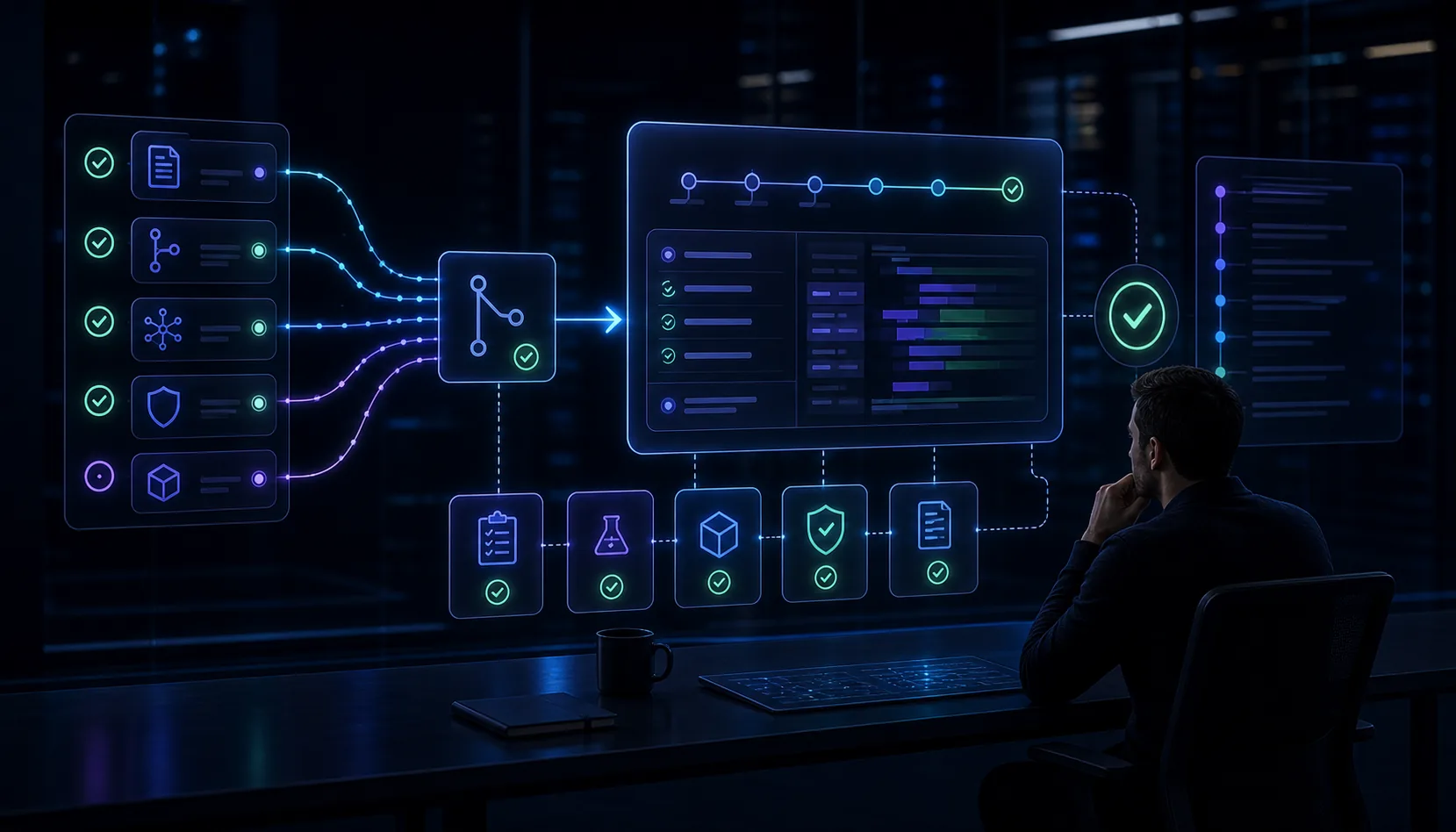
The PR should still go through normal branch protection and reviewer approval. MergeLoom’s ticket-to-code automation follows this model: the product prepares review-ready PRs/MRs, while humans keep merge control.
Audit Trail Checklist
Engineering leaders should require enough evidence to answer these questions later:
- Which Jira ticket initiated the work?
- Who approved or triggered the run?
- Which repository and branch were used?
- Which context, rules, and validation commands shaped the run?
- Which model or provider path was used?
- Which checks passed, failed, or were skipped?
- Which PR/MR was opened, reviewed, and merged or closed?
That evidence is what separates controlled Jira-to-PR automation from a private AI chat followed by a normal commit.
Rollout Plan
Start with low-risk ticket types: documentation fixes, small test additions, config updates, isolated bugs, or well-scoped UI copy changes. Measure review time, validation failures, and accepted PRs before expanding into broader feature work.
The safest rollout pattern is:
- Choose two or three repositories with reliable tests.
- Define the Jira ready-for-agent gate.
- Add repository rules and validation commands.
- Run tickets in a pilot queue.
- Review every PR/MR through the normal process.
- Track accepted PRs, rework, failures, and reviewer feedback.
Once the workflow is trusted, expand by ticket type, not by hype. The goal is not more generated code. The goal is more reviewable work reaching engineers with less manual setup and cleanup.
FAQ
Question: Should Jira-to-PR automation auto-merge small changes?
Short answer: No. Keep merge authority with the normal code-host rules. Automation should prepare the PR/MR and evidence, not bypass review.
Question: Which tickets are best for the first pilot?
Short answer: Start with tickets that have clear acceptance criteria, low architectural ambiguity, and reliable validation commands.
Question: How is this different from using an IDE coding assistant?
Short answer: IDE assistants help an individual developer write code. A Jira-to-PR workflow connects approved work, repository context, validation, audit evidence, and review output for the team.