
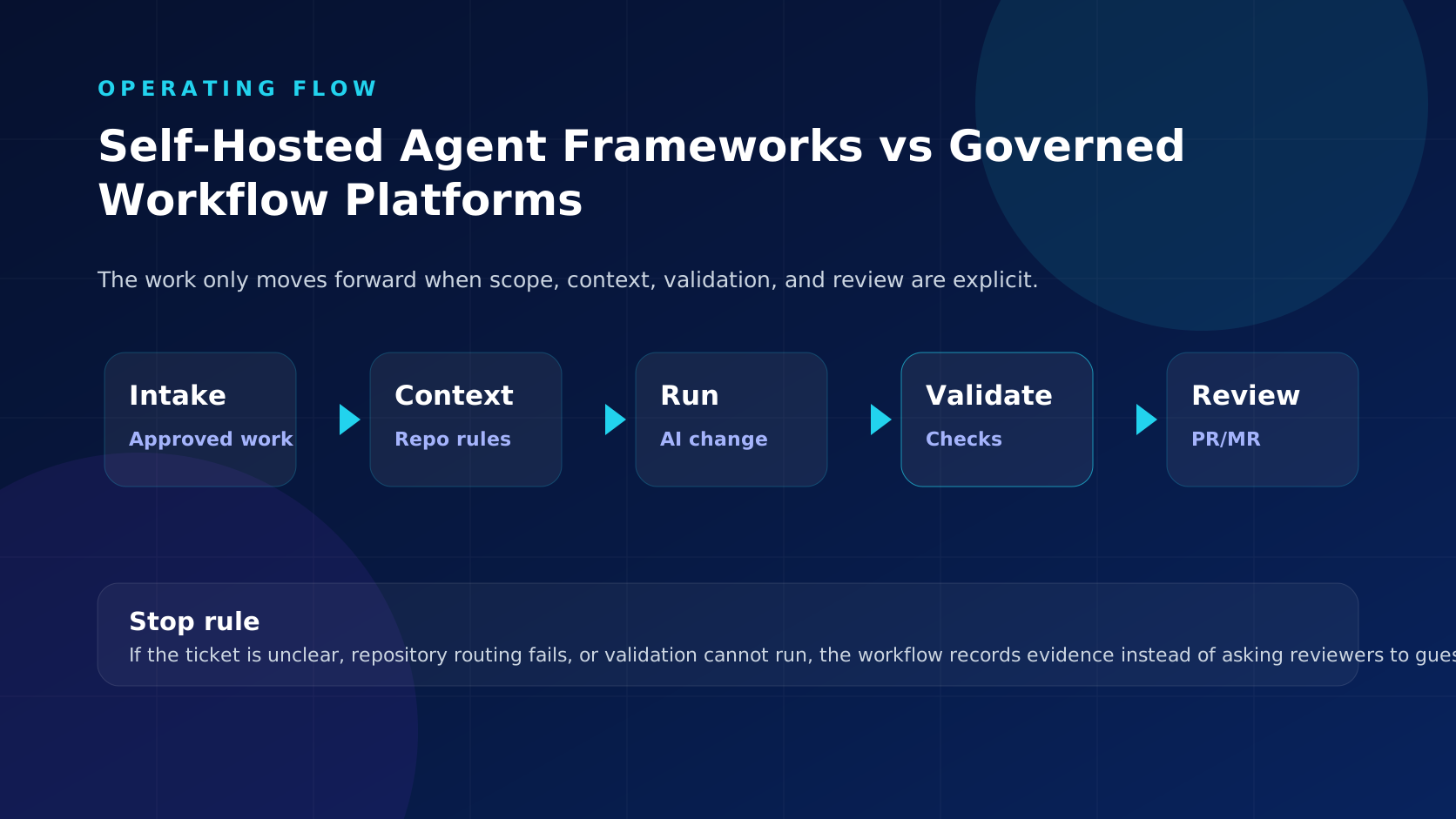
This article focuses on the operating details behind deciding when raw agent runtime needs productized work intake and evidence. In the buying decision, the team should be able to explain why a run started, what code it touched, what checks ran, and why a reviewer can trust the handoff.
The goal is not to remove reviewers. It is to give them smaller self hosted agent frameworks changes, clearer context, and evidence that the right checks happened. That means treating scope, validation, and review handoff as first-class parts of self-hosted agent frameworks evaluation.
MergeLoom is not affiliated with self-hosted agent frameworks or the other tools discussed here. This self-hosted agent frameworks comparison is meant to clarify workflow fit, not to attack products that may still be useful inside the right operating model.
Use Delivery Control As The Evaluation Lens
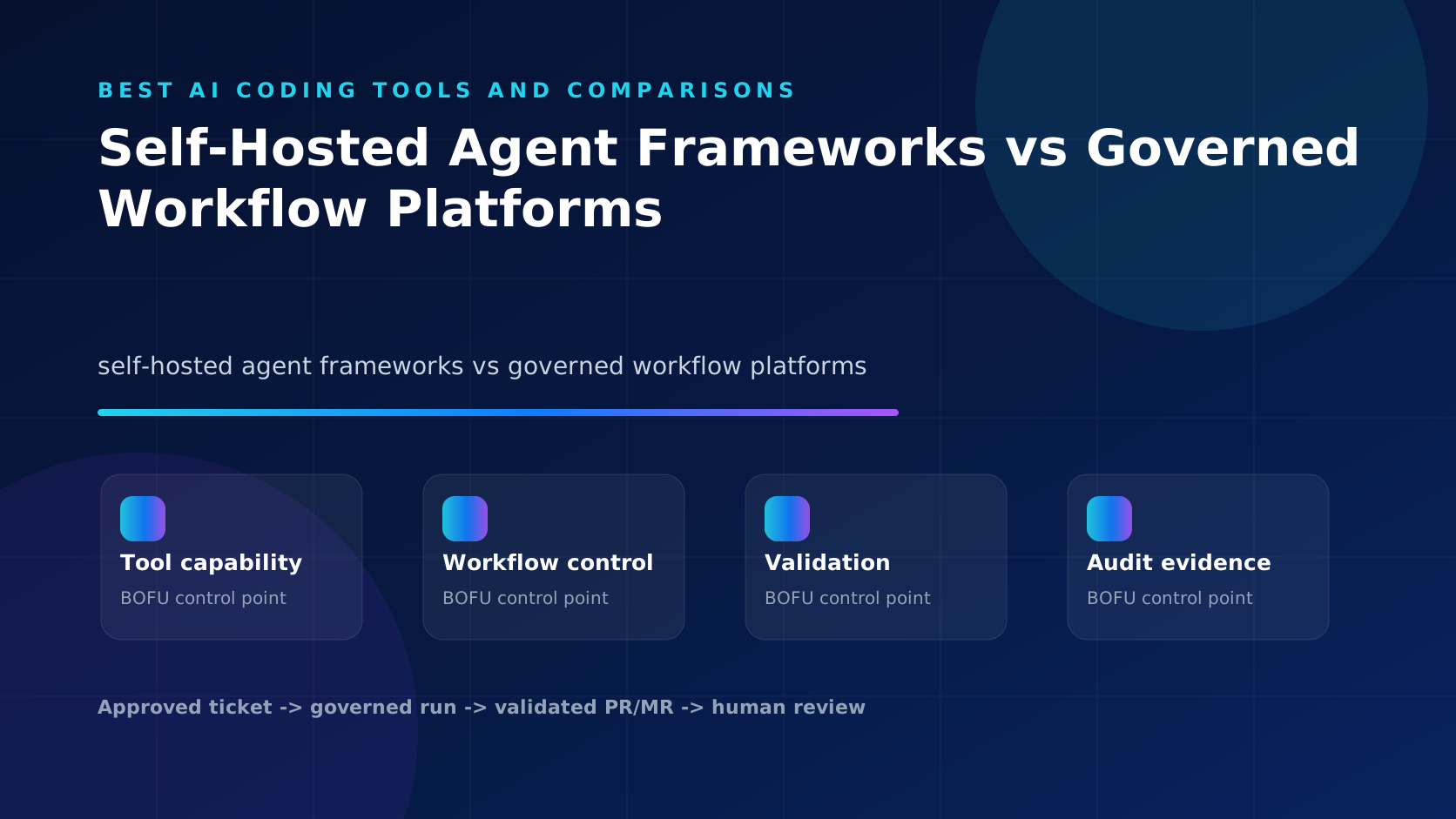
This is not only a model comparison. In this self hosted agent guide, the important question is what each tool owns in the path from approved work to accepted software change.
Use this evaluation lens:
- Where work starts for self-hosted agent frameworks: issue, editor, PR/MR, chat, or a separate agent session.
- The self hosted agent guide: check whether approval is visible before work begins and after review.
- How repository context is selected and how sensitive context is bounded.
- Which validation checks run before a reviewer is asked to inspect the output.
- What evidence appears in the PR/MR for human review and audit.
- Who retains approval, merge authority, and responsibility for the final change.
Keep Useful Tools In Their Lane
- self-hosted agent frameworks may be a strong fit when the main need is individual developer assistance, suite-native AI, code review comments, or editor-based work.
- MergeLoom becomes relevant when teams need self-hosted agent frameworks evaluation to include approved tickets, repositories, validation gates, and review handoffs.
- A mixed stack can make sense: self-hosted agent frameworks can stay useful for local assistance while MergeLoom standardizes controlled ticket-to-code work.
- The self hosted agent guide review check: base the buying decision on stack fit, control needs, data boundaries, and reviewer trust.
In Self-Hosted Agent Frameworks vs Governed Workflow Platforms, Compare governed AI coding workflows, workflow documentation, and validation and review controls are useful follow-up pages because they separate tool capability from governed delivery, deployment control, and validation before review.
How To Make This Specific Enough To Run
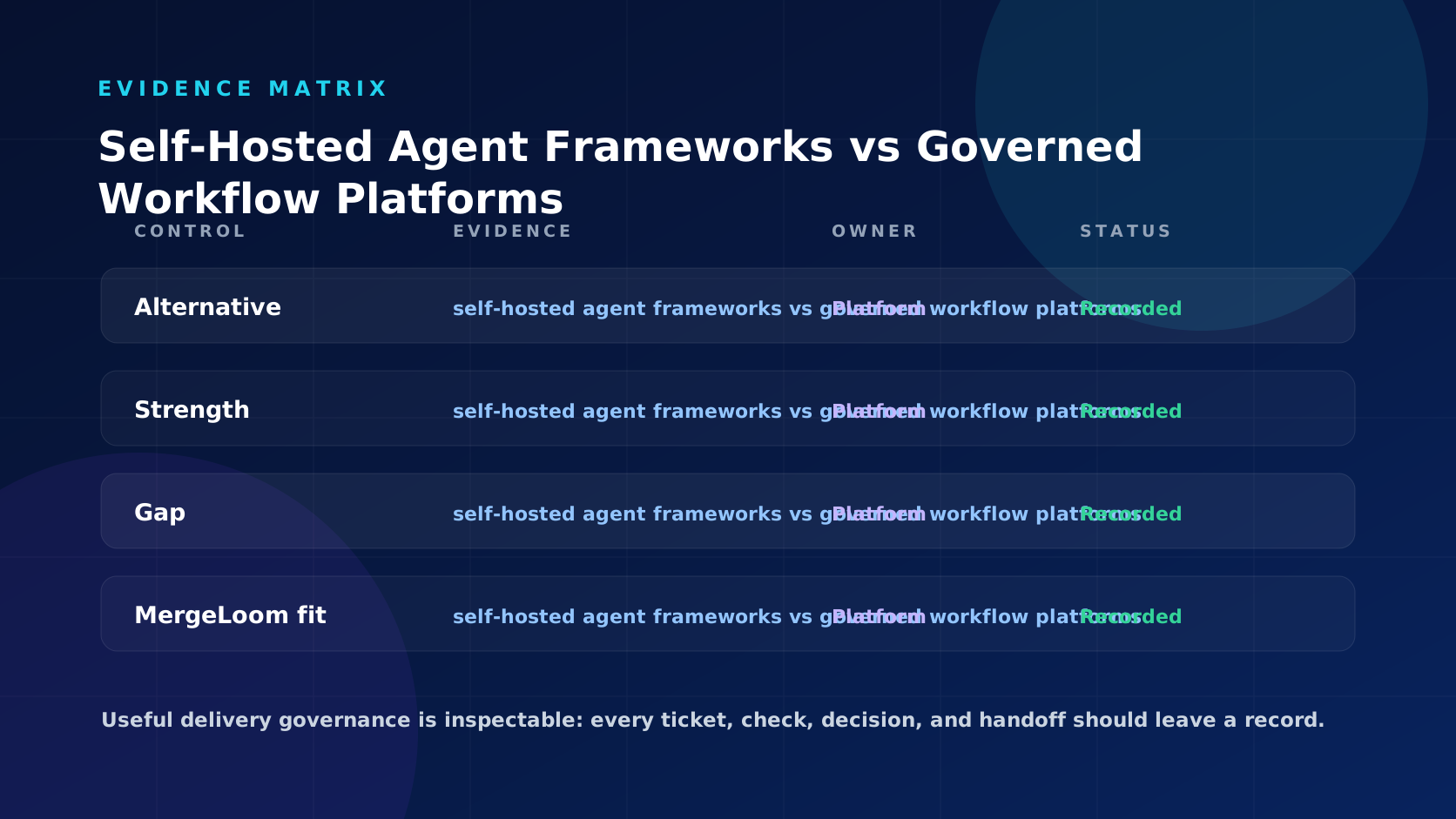
Self-hosted agent frameworks evaluation is most useful when it changes the default behavior of the team. Instead of asking someone to reinterpret self-hosted agent frameworks vs governed workflow platforms from memory, the evaluation brief should capture the boundary, validation expectation, and review owner.
- Source boundary: the evaluation brief should show what prompted deciding when raw agent runtime needs productized work intake and evidence and what success means.
- Execution boundary: self-hosted agent frameworks evaluation should state repository rules before an agent can write changes.
- Gate boundary: the governance-fit check should prevent unvalidated work from becoming reviewer workload. Reviewers should see this before approval for the self hosted agent guide.
- Review handoff: the tool evaluation note should put commits, checks, and human decisions in one place. Add this to the operating record for the self hosted agent guide.
- Escalation boundary: the buyer or platform evaluator should have a documented path when the evaluated tool cannot show review evidence in the team stack. The owner should confirm this ahead of execution for the self hosted agent guide.
That level of specificity lets CTOs, Heads of Platform, procurement teams, and technical evaluators expand self-hosted agent frameworks evaluation deliberately instead of treating every generated branch as equally trustworthy.
Risk Signals In Early Pilots
Self hosted agent frameworks is weak when the evaluation stops at feature lists instead of the real delivery path.
These review-load signals are worth catching early:
- The evaluation brief omits the owner, service boundary, or acceptance signal needed for self hosted agent frameworks.
- The generated branch for the category decision changes files that were never named in the source request.
- The self hosted agent guide handoff check: the tool evaluation note lacks the validation summary, failed-check notes, or open questions reviewers need.
- The self hosted agent guide owner check: the buyer or platform evaluator cannot tell which context sources were used or excluded.
- A failed run keeps retrying after the evidence says it should stop.
- The self hosted agent guide scaling check: the dashboard treats provider use, CI time, and review effort as separate stories instead of one accepted-work record.
Compare governed AI coding workflows explains where this comparison fits commercially; workflow documentation and validation and review controls explain how prepared work stays bounded enough for review.
Readiness Checks Before Scaling
The workflow becomes easier to defend when CTOs, Heads of Platform, procurement teams, and technical evaluators can answer these points directly:
- Run trigger: what approved work record starts deciding when raw agent runtime needs productized work intake and evidence, and who can approve that trigger?
- Repo selection: how is the correct repository, branch, or component chosen for the evaluation?
- Context controls: which source materials should be attached to the run record before execution? Track this with the review packet for the self hosted agent guide.
- Validation controls: which checks, gates, or manual review steps are mandatory for the tool evaluation note? Keep this visible before review for the self hosted agent guide.
- Decision record: how will approval, rejection, rerun, or escalation be visible after review? Reviewers should see this before approval for the self hosted agent guide.
- Risk response: what should happen when the evaluated tool cannot show review evidence in the team stack during the tool decision?
That discipline keeps the operating model from expanding faster than the team’s ability to inspect, validate, and approve the result.
The MergeLoom Role In The Stack
The stack decision is clearest when buyers separate tool capability from the operating model needed for deciding when raw agent runtime needs productized work intake and evidence. The right stack can include multiple tools, but MergeLoom keeps the governed delivery workflow consistent across them.
The practical next step after self hosted agent frameworks is Compare governed AI coding workflows. Teams that need more implementation detail around self hosted agent frameworks should also review workflow documentation and validation and review controls, then compare the related pages MergeLoom vs GitHub Copilot Coding Agent, MergeLoom vs GitLab Duo Agent Platform, GitLab Approval Rules Best Practices.
Rollout Checklist
- Ownership map: write down what self-hosted agent frameworks, MergeLoom, Jira, GitLab, CI, and review each own before comparing features.
- Evaluation task: test the workflow choice against approved work, not only ad hoc prompts or demo tasks. Add this to the operating record for the self hosted agent guide.
- Control review: check deployment fit, data boundary, validation, audit, and human approval requirements. The owner should confirm this ahead of execution for the self hosted agent guide.
- Stack decision: keep self-hosted agent frameworks where it helps while standardizing the governed workflow around intake and review evidence.
- Evidence standard: prefer accepted PRs/MRs over vendor claims or isolated productivity anecdotes. Capture this before review begins for the self hosted agent guide.
Bottom Line
The useful buying question for self hosted agent frameworks is whether the tool fits the team’s actual intake, repository, validation, and approval path.
Compare governed AI coding workflows when the evaluation needs workflow evidence, not only feature lists for self-hosted agent frameworks.