
This article focuses on the operating details behind coordinating tickets, context, validation, review, cost, and audit outside individual tools. In the governed path, the team should be able to explain why a run started, what code it touched, what checks ran, and why a reviewer can trust the handoff.
The goal is not to remove reviewers. It is to give them smaller workflow-layer governance changes, clearer context, and evidence that the right checks happened. That means treating scope, validation, and review handoff as first-class parts of AI coding workflow layer.
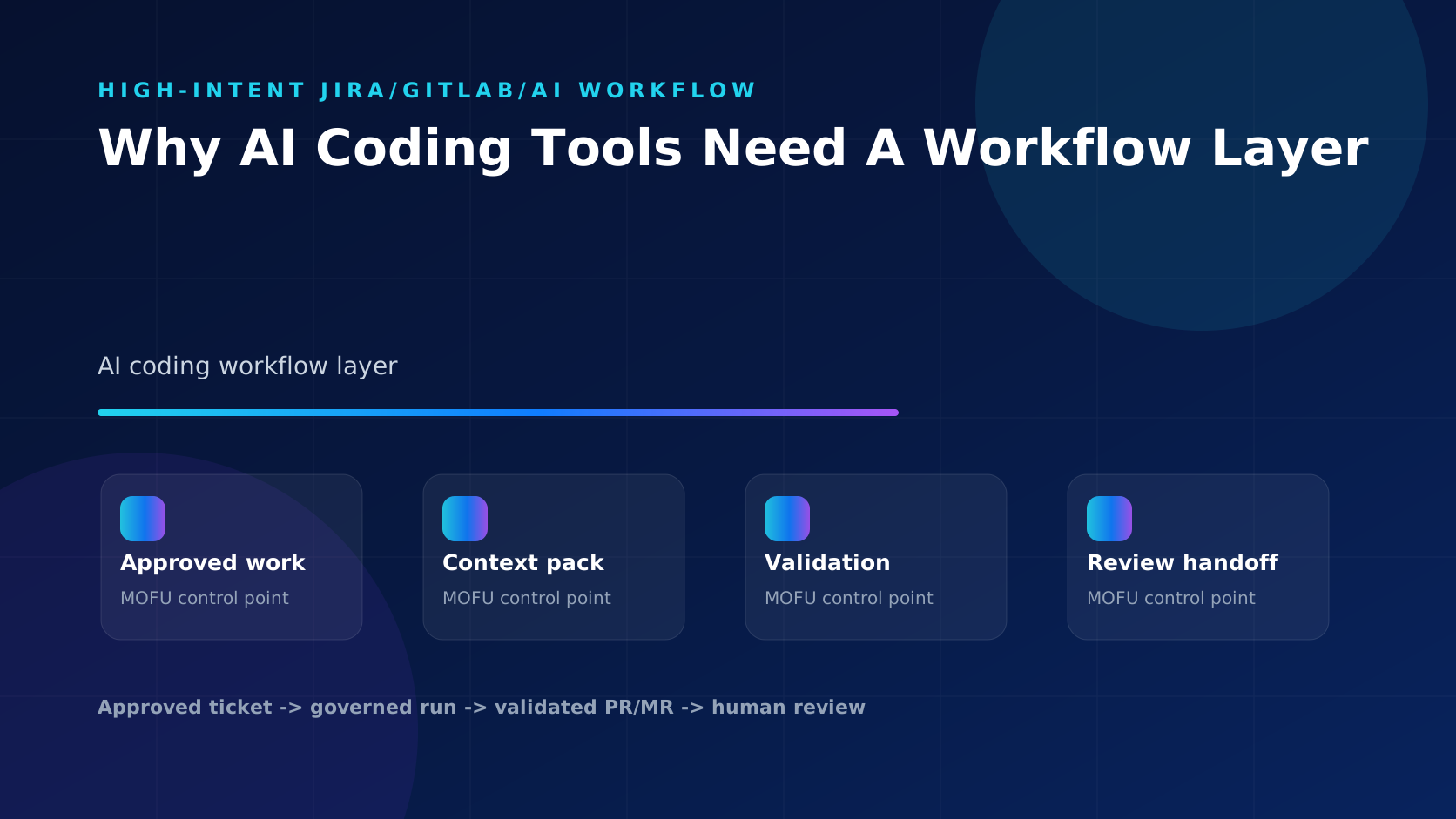
Treat Intake As Part Of Delivery
For the workflow, the work starts before an agent checks out a repository. The request should make AI coding workflow layer inspectable from the first step: why it started, what it may touch, and how review will decide. Without that intake quality, the AI step inherits ambiguity and pushes it downstream.
The operating sequence for AI coding workflow layer should be:
- Move work about AI coding workflow layer only from an approved Jira or GitLab state, not from a loose prompt.
- Check that the work item explains AI coding workflow layer and names the affected repository or service.
- Attach repository rules, validation commands, branch conventions, and reviewer expectations that match AI coding workflow layer.
- Create a bounded branch whose title, commits, and PR/MR description preserve the source ticket key for this workflow.
- Run the configured tests, linting, build steps, or project-specific checks before requesting human attention on the handoff.
- Record failed checks, repair attempts, skipped checks, and unresolved questions in a review packet for the governed run.
- Let reviewers approve, request changes, or reject the review path through the normal code-host workflow.
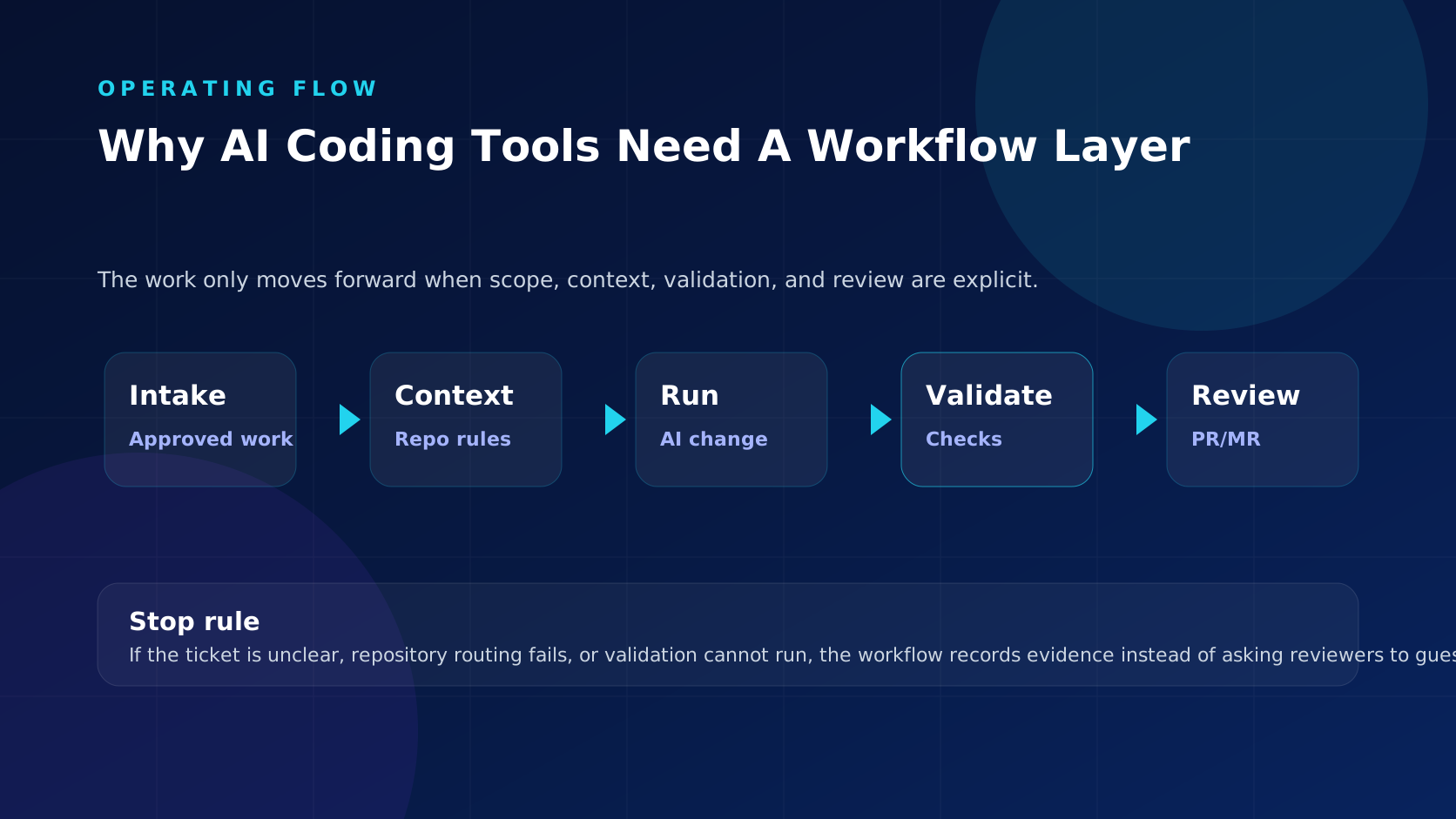
Put Guardrails Around The Handoff
Governance works best when it is visible in the delivery path itself. The PR/MR should show the request, the boundary, the checks, and the unresolved questions before approval.
- Eligibility: which approved status, label, or field lets work on the delivery path enter the run queue. Track this with the review packet for the workflow-layer governance.
- Repository routing: which component, service, or codebase owns changes for the change.
- Context boundary: which docs, prior decisions, and repository instructions can influence the run. Keep this visible before review for the workflow-layer governance.
- Validation gate: which CI jobs or local commands must finish before review starts.
- Repair limit: how many bounded retries are allowed before the run stops or escalates.
- Review authority: who approves, rejects, or narrows the change before merge authority is used. Reviewers should see this before approval for the workflow-layer governance.
The pages Explore ticket-to-code automation and workflow documentation should be read together: one describes the governed delivery path, and the other shows how prepared work enters that path.
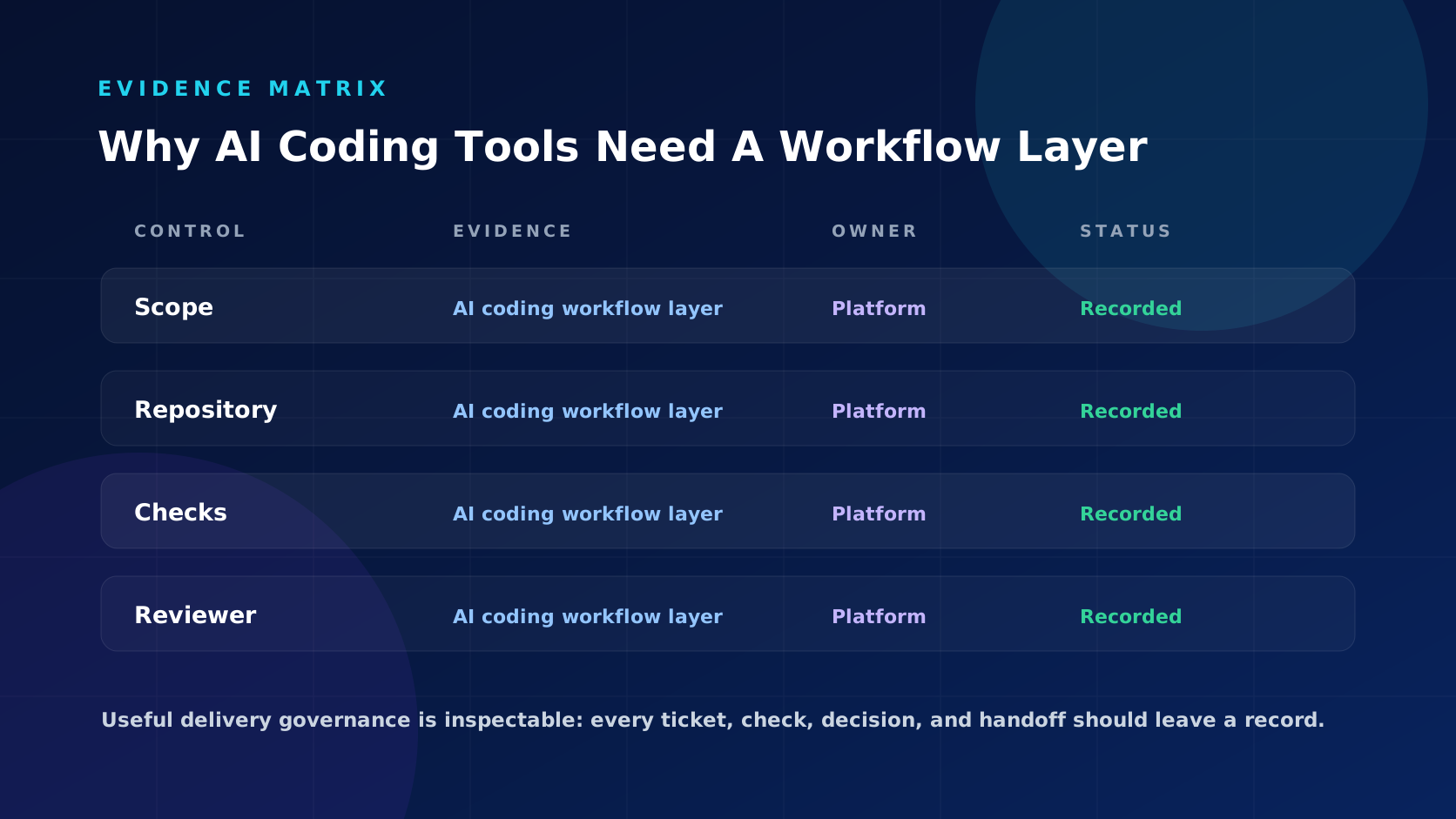
How To Make This Specific Enough To Run
The ticket path is most useful when it changes the default behavior of the team. Instead of asking someone to reinterpret the MR path from memory, the source work item should capture the boundary, validation expectation, and review owner.
- Record boundary: the work item should make coordinating tickets, context, validation, review, cost, and audit outside individual tools specific enough for a bounded run.
- Scope boundary: the automation path should declare the affected area and the nearest safe stopping point.
- Validation boundary: the readiness gate should show whether the generated work met the expected evidence standard. Add this to the operating record for the workflow-layer governance.
- Handoff boundary: the PR/MR should make it clear what the reviewer is being asked to decide. The owner should confirm this ahead of execution for the workflow-layer governance.
- Control boundary: the team should pause, reroute, or reject the run when scope or ownership is ambiguous. Capture this before review begins for the workflow-layer governance.
That level of specificity lets CTOs, VP Engineering, platform teams, Jira admins, and GitLab admins expand the implementation queue deliberately instead of treating every generated branch as equally trustworthy.
Anti-Patterns To Avoid
Early pilots usually fail when the scoped request has no visible stop point between intake and review.
The workflow needs attention when these signals appear:
- The workflow-layer governance intake record points at work but not at the code boundary or validation expectation.
- The workflow-layer governance owner check: a reviewer cannot connect the branch, checks, and source request without reconstructing the path manually.
- The PR/MR asks for approval before the readiness gate has produced useful evidence.
- The same clarification questions appear in review because the branch handoff was not made concrete earlier.
- Repair attempts for workflow-layer governance continue after ownership, scope, or policy should have forced a pause.
- Savings claims around workflow-layer governance ignore review loops, rejected diffs, and follow-up cleanup.
A team can use Explore ticket-to-code automation to choose the workflow-layer governance path, workflow documentation to prepare the run, and validation and review controls to make validation or audit evidence explicit.
Governance Questions Worth Answering
Treat the following questions as the pre-expansion checklist for this operating path:
- Eligibility owner: who confirms that coordinating tickets, context, validation, review, cost, and audit outside individual tools has enough detail to run?
- Scope owner: who confirms the repository boundary and out-of-scope notes for this workflow?
- Context owner: who approves the documentation, comments, and code context used by the worker? Escalate if the record cannot answer it. Reference: the workflow-layer governance.
- Validation owner: who decides whether the readiness gate is sufficient before the PR/MR moves to review? Track this with the review packet for the workflow-layer governance.
- Review owner: who reads the evidence, requests changes, and keeps merge authority?
- Exception owner: who handles the handoff when the run cannot produce trustworthy evidence?
The practical outcome for the governed run is a workflow that can grow while still making pause, reject, rerun, and approval decisions visible.
Where The Platform Layer Helps
The review path helps teams run coordinating tickets, context, validation, review, cost, and audit outside individual tools without moving approval outside the normal delivery path. For workflow-layer governance, Jira remains the work record, GitLab remains the code-review surface, and CI remains the validation system; MergeLoom prepares the run for those controls.
The practical next step after workflow-layer governance is Explore ticket-to-code automation. Teams that need more implementation detail around workflow-layer governance should also review workflow documentation and validation and review controls, then compare the related pages Jira Automation For Software Teams Practical Workflow Ideas, How To Link Jira Issues To GitLab Merge Requests, OpenHands Alternative For GitLab And Jira Teams.
Rollout Checklist
- Choose one use case with clear scope and a predictable repository boundary.
- Define the Jira or GitLab state that marks work ready for a governed run.
- Require branch names, commits, and PR/MR descriptions to carry the source work key.
- Run configured checks before review and record any checks that could not run.
- Keep final approval and merge authority with the normal code-host workflow.
Bottom Line
A useful rollout for workflow-layer governance gives automation a narrow path and gives humans enough evidence to stop, rerun, or approve the change.
Explore ticket-to-code automation to evaluate how MergeLoom can coordinate intake, validation, and review for workflow-layer governance.