
The practical question behind code attribution for AI-generated changes is whether a team can handle showing who requested work, which run changed code, and how reviewers accepted it without creating review debt. For the governance workflow, the implementation path has to preserve the systems already used for planning, source control, CI, approval, and audit.
In the policy, MergeLoom keeps the AI step inside the delivery path engineering teams already trust: ticket, branch, checks, PR/MR, and review. The aim is to make attribution changes repeatable enough for platform teams without hiding ambiguity from reviewers.
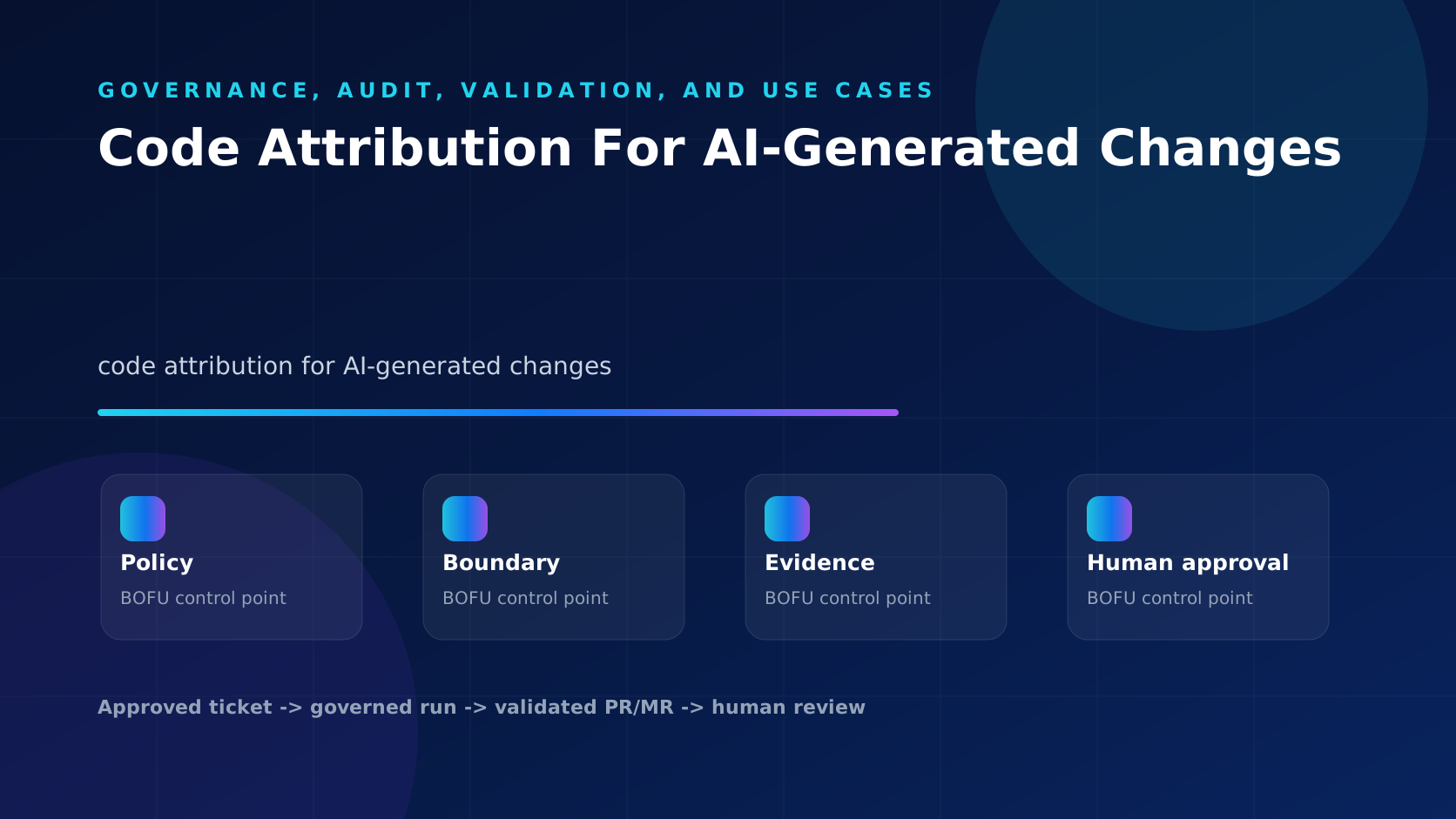
Define The Control Surface
Governance has to be concrete enough for platform teams to operate. A useful policy maps the intake rules, repository permissions, validation gates, and review ownership for attribution changes.
The minimum control surface should include:
- Approved intake: who can request attribution changes and which system records that request.
- Repository permission: which branches, files, and worker actions are allowed for attribution changes.
- Context boundary: which tickets, docs, code, comments, and secrets are allowed or excluded from attribution changes.
- Provider routing: which model or provider can handle the repository class behind attribution changes.
- Validation gate: which checks must pass for the inspection path, and what happens when they fail.
- Human authority: who can approve, reject, rerun, pause, or merge work produced through the approval rule.
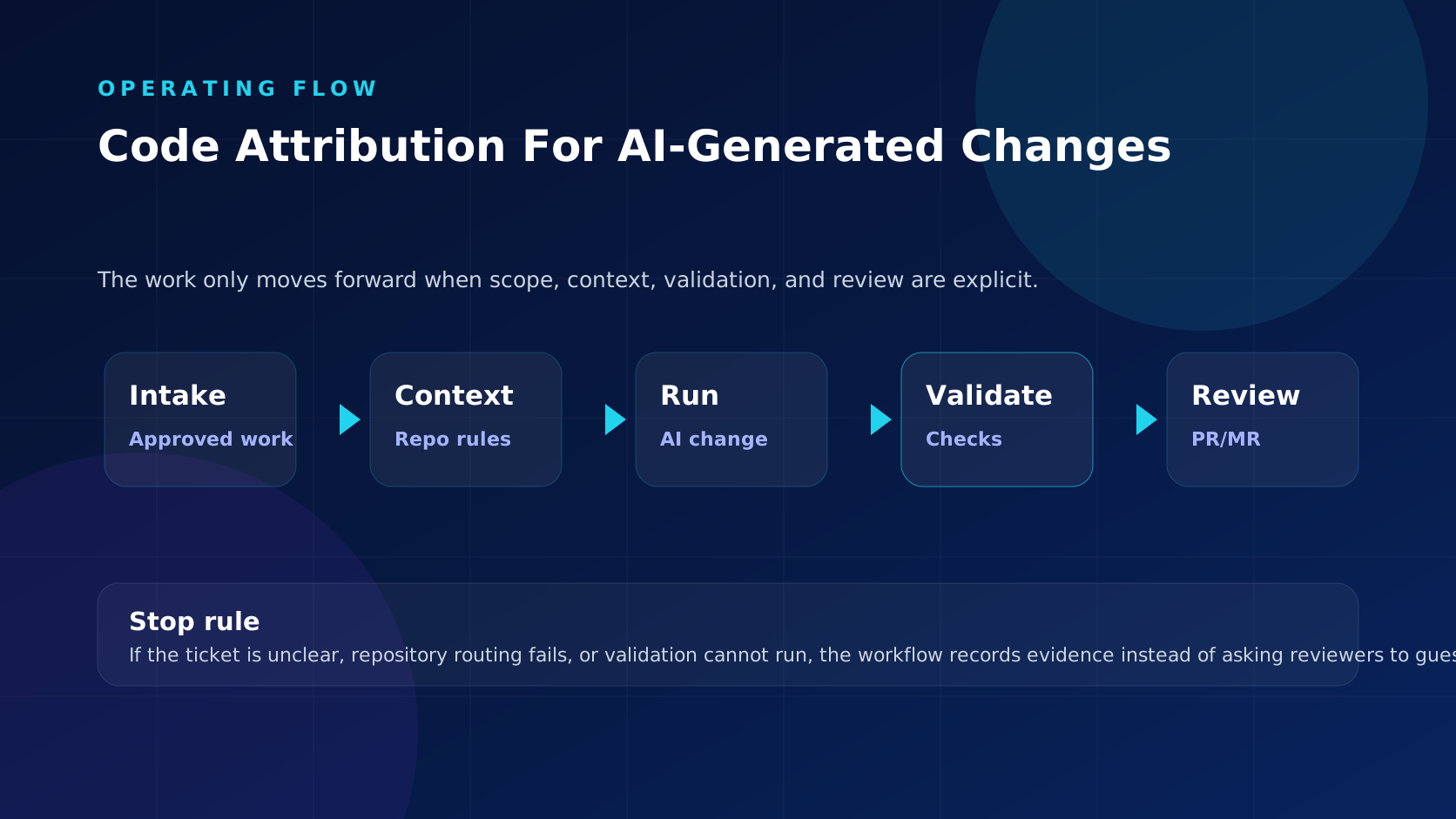
Evidence Is The Operating Control
If a team cannot reconstruct a run, it cannot govern the run. The evidence trail for the security review should answer what started, what changed, what checked, what failed, what was repaired, and who accepted or rejected the result.
- The source ticket or issue that authorized the control.
- The repository, branch, commit range, and PR/MR created during the policy.
- The context sources used for the audit path and the sources explicitly excluded.
- The validation commands, CI jobs, skipped checks, and repair attempts tied to the governance workflow.
- The reviewer decision, requested changes, acceptance, rejection, or escalation route tied to the evidence trail.
In Code Attribution For AI-Generated Changes, the related control surfaces are Review AI coding governance controls, workflow documentation, and validation and review controls: audit evidence, data boundaries, and validation before review.
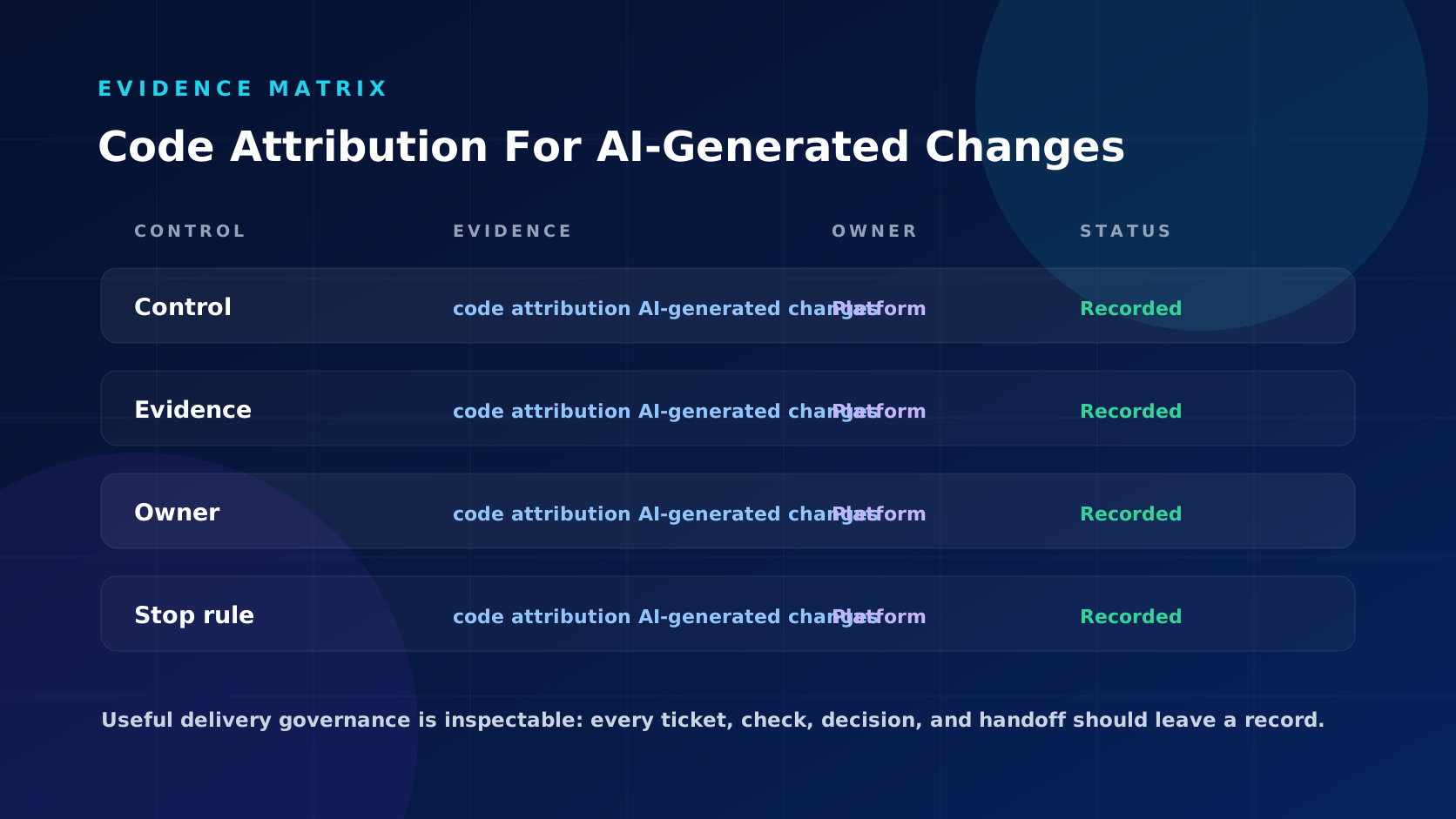
What To Decide For This Use Case
The value of the review record depends on how well the team can separate eligible work from ambiguous work. When the request is showing who requested work, which run changed code, and how reviewers accepted it, the first control is a visible stop condition before automation creates a branch.
- Ticket boundary: the policy record should connect showing who requested work, which run changed code, and how reviewers accepted it to acceptance criteria and review ownership.
- Run boundary: the access rule should keep context, branch, repository, and file scope aligned.
- Quality boundary: the policy gate should produce a result that can be inspected after the run.
- Evidence boundary: the audit record should include repair history and reviewer-facing unresolved questions.
- Decision boundary: the human reviewer should decide whether the work is accepted, rejected, rerun, or escalated. Track this with the review packet for the code attribution generated guide.
Those boundaries make the risk control easier to govern across teams because the exception path is visible before the change reaches merge authority.
Failure Modes To Watch
A governance rollout around the operating policy should make policy application inspectable during execution and review.
Treat these as stop signals:
- The policy record names the inspection path but leaves repository scope, expected behavior, or reviewer focus ambiguous.
- The branch history does not connect the approval rule back to the approved source record and ticket key.
- The code attribution generated guide review check: the audit record explains code changes while hiding validation output, skipped checks, or unresolved questions.
- Reviewers ask for context that should have been captured before execution.
- The code attribution generated guide rollout check: repair work continues after scope or ownership is ambiguous instead of pausing for an owner decision.
- Cost reporting counts activity around the security review but misses failed checks, rejected work, or manual cleanup.
The reason to link the control with Review AI coding governance controls, workflow documentation, and validation and review controls is continuity from intake through reviewer decision.
Decisions To Make Before Rollout
The scale decision should depend on whether these questions have clear owners and visible evidence:
- Work intake: what makes showing who requested work, which run changed code, and how reviewers accepted it a candidate for automation rather than ordinary manual work?
- Code boundary: which repositories and branches are allowed for the policy?
- Context approval: who decides which docs, comments, and repository instructions are safe to use? Add this to the operating record for the code attribution generated guide.
- Review readiness: what must the policy gate confirm before the audit record is handed to the human reviewer?
- Traceability: how will the team connect the source request, commits, checks, and review decision? The owner should confirm this ahead of execution for the code attribution generated guide.
- Fallback: what is the human path when scope or ownership is ambiguous?
The answers make failure cheaper in the audit path because the team can stop, reroute, or escalate before reviewers inherit a weak branch.
Where MergeLoom Fits
The governance workflow gives platform and security owners a visible control record. Security, platform, and code-owner policies remain authoritative; MergeLoom records the run boundary and evidence those stakeholders need to inspect.
Teams standardizing the evidence trail can use Review AI coding governance controls, workflow documentation, and validation and review controls as the internal path from intake to governance. Related reads: AI Coding Governance Policy Template For Enterprise Teams, AI Coding Audit Trail Checklist, How To Set Up CI/CD In GitLab.
Rollout Checklist
- Assign an owner, exceptions, and operating reviews.
- Define allowed repositories, data boundaries, providers, credentials, and context sources for the review record.
- Record the access rule evidence in a location security and engineering leaders can inspect.
- Test the risk control stop rules with unclear, failed, and out-of-scope work before broad rollout.
- Review audit samples before expanding to more sensitive repositories.
Bottom Line
Governance around the operating policy is useful only when reviewers and auditors can inspect the run without relying on private memory.
Review AI coding governance controls to evaluate governed AI coding controls for the inspection path.