GitLab Duo Agent Platform is an important sign of where software delivery is heading. GitLab’s official docs describe an AI-native solution that embeds agents across the software development lifecycle, with agentic workflows and specialized assistants for routine tasks.
For teams already using GitLab, this is a natural category shift. AI is moving closer to issues, merge requests, security workflows, and planning activity.
The governance question is what needs to sit around AI coding workflows so they work across teams, projects, and release processes. That is where MergeLoom fits: not as a replacement for GitLab, but as a workflow layer for approved ticket execution, context, validation, audit trails, cost per accepted outcome, and human review.
What GitLab Duo Agent Platform Signals
The GitLab Duo Agent Platform docs describe an offering available across GitLab.com, GitLab Self-Managed, and GitLab Dedicated tiers. GitLab positions the platform around multiple intelligent assistants throughout the SDLC, with routine task delegation such as refactoring, security scans, and research.
GitLab’s product page also describes AI orchestration across the software lifecycle, including specialized agents, customizable agents, agent catalogs, and flows that combine one or more agents into guided sequences. That brings agentic automation closer to the systems where engineering work already happens, and raises the bar for governance.
Agentic Workflows Need A Delegation Policy
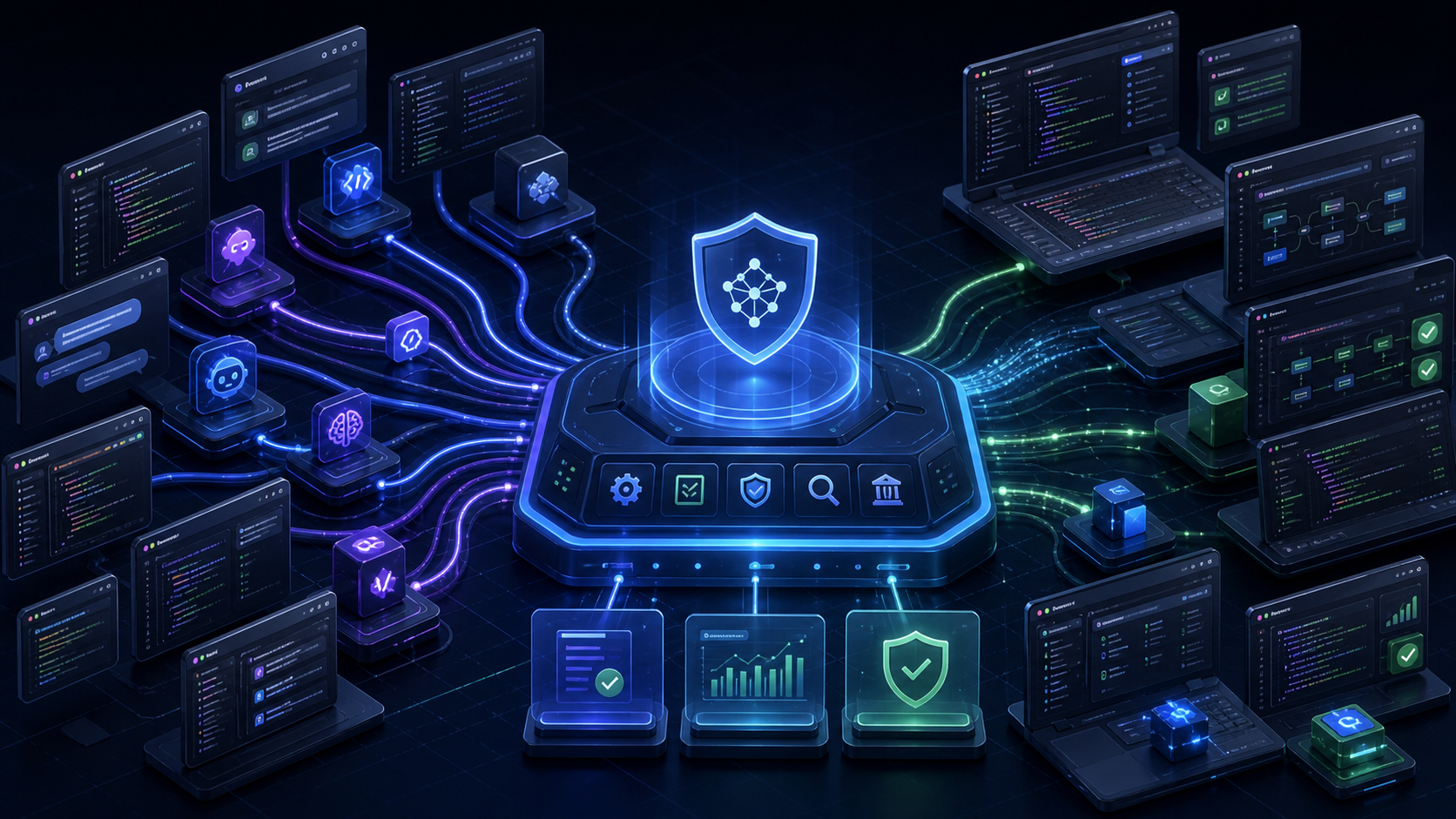
The first governance question is not which model is best. It is which work should be delegated at all.
Teams should define allowed work types before scaling agent usage:
- small bug fixes with clear reproduction steps
- test coverage for existing behavior
- documentation updates
- bounded refactors with good tests
- minor configuration changes
- maintenance work with clear validation commands
They should also name work that requires tighter handling:
- authentication and authorization changes
- billing logic
- data migrations
- security incident response
- large architecture changes
- tickets with unclear acceptance criteria
MergeLoom’s AI coding agent governance policy template gives teams a practical starting point for writing this down.
Keep The Ticket As The Source Of Work
Agentic workflows become easier to audit when they start from an approved issue, ticket, or work item.
The ticket should carry:
- the user or business problem
- acceptance criteria
- affected product area
- repository routing hints
- risk notes
- review expectations
Loose prompts are harder to govern because intent becomes scattered across chat, agent memory, local context, and comments. The result may be good code, but the delivery record is incomplete.
MergeLoom’s work intake integrations are built around existing trackers, including GitLab workflows. The ticket or issue remains attached to the run and the resulting MR or PR.
Control Context Before The Agent Runs
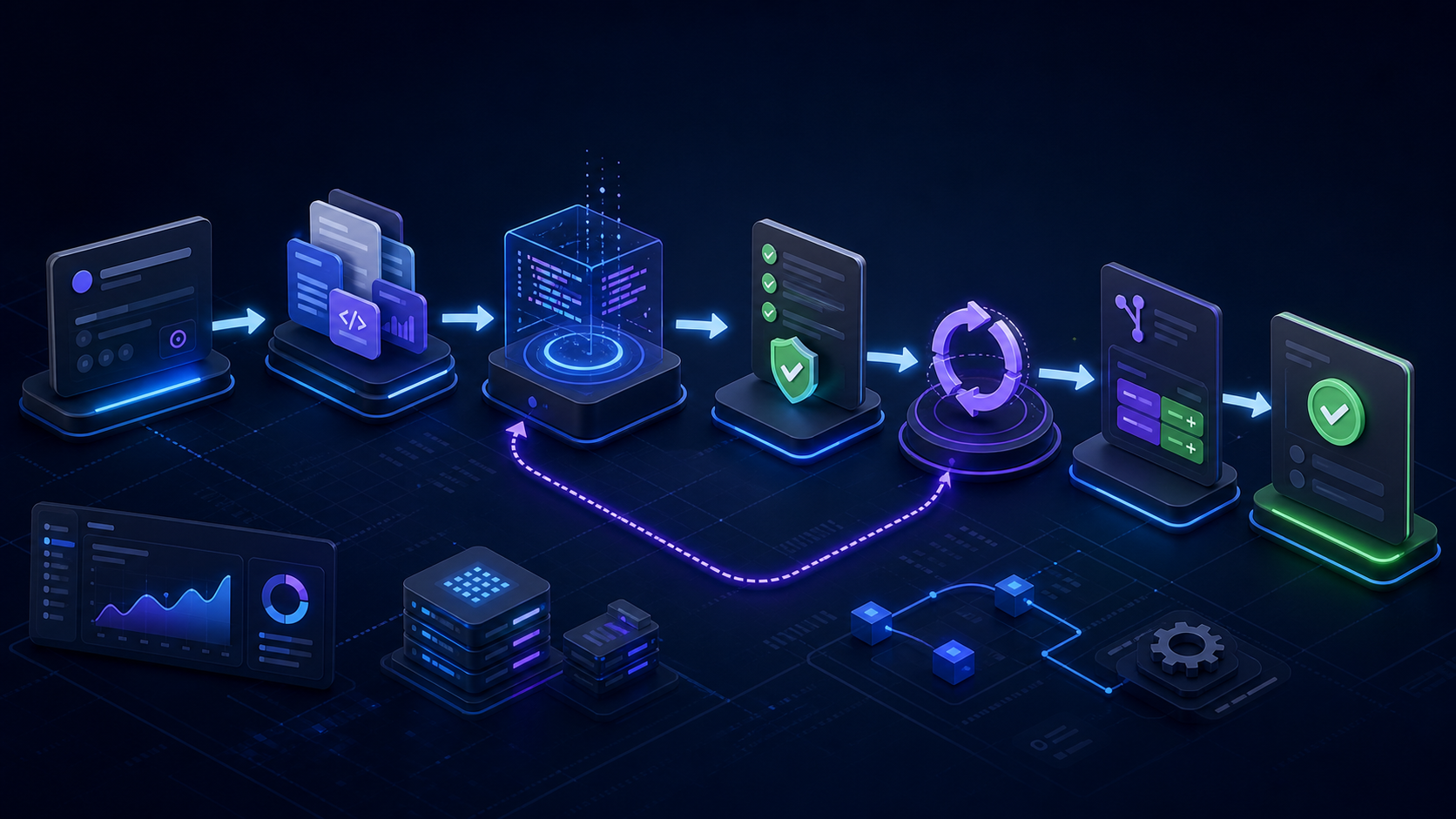
GitLab has an advantage when the agent platform is close to repositories, issues, merge requests, and security signals. Still, teams need a policy for what counts as approved context.
Define where the agent should look for:
- repository instructions
- architecture rules
- API contracts
- test commands
- ownership rules
- security constraints
- known stale documentation
This matters in GitLab environments with many groups, projects, templates, and shared services. The agent should not rediscover the same rules on every run, and reviewers should not have to guess which context was used.
MergeLoom’s Context Engine creates reusable repository context so runs start with approved rules and documentation rather than one-off prompting.
Require Validation Before Merge Request Review
GitLab merge request checks and pipeline policies are central to delivery control. Agentic workflows should respect that control and add pre-review evidence rather than bypassing it.
For AI-generated changes, require validation before a reviewer is asked to spend attention:
- formatting and lint checks
- type checks
- unit tests
- targeted integration tests
- build commands
- repository-specific scripts
If validation fails, the agent workflow should repair within scope or stop with clear evidence. It should not push a noisy MR into the review queue and make humans reconstruct what happened.
MergeLoom’s Quality Agents handle clarity checks, investigation, validation, bounded repair, specialist review, and Diff Guard before handoff.
Preserve Human Review
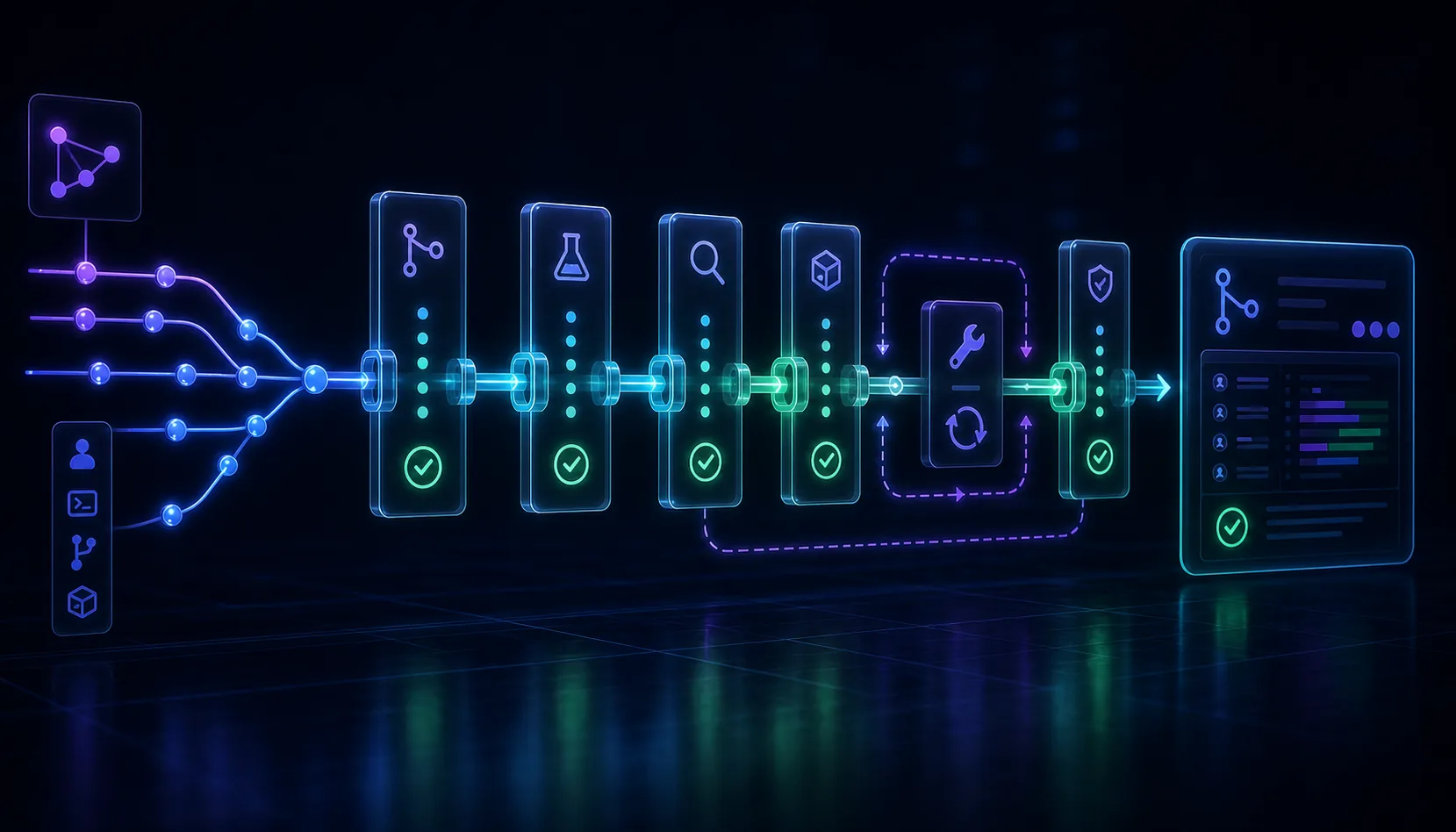
Governance should not remove human review. It should make review more focused.
Reviewers should receive:
- the source ticket or issue
- a concise change summary
- acceptance criteria addressed
- commands run
- validation results
- known gaps or stopped checks
- files changed and risky areas
Humans still own architecture fit, product judgment, security judgment, and merge approval. The agent can prepare the branch, but the team still decides whether it should ship.
Agentic workflows should reduce routine implementation load, not dilute ownership.
Audit And Measure Outcomes
GitLab already gives teams a strong delivery system of record. AI governance should add run-level evidence to that record.
Track:
- who delegated the work
- which issue or ticket started the run
- which context sources were used
- which repository and branch changed
- which validation commands ran
- repair attempts
- MR outcome
- cost per accepted MR
MergeLoom’s audit trails and attribution focus on this evidence path. The goal is to let engineering, security, finance, and compliance teams understand the delivery outcome, not just the AI event.
For cost discipline, pair this with the AI coding tools cost model so usage is tied to accepted work rather than raw sessions.
Where MergeLoom Fits With GitLab Duo
GitLab Duo Agent Platform is a strong choice for teams that want agentic workflows inside GitLab’s lifecycle. MergeLoom is useful when the organization needs a cross-workflow operating layer around AI delivery.
That layer includes:
- approved work intake from existing trackers
- repository context and rules
- controlled execution
- validation and repair before MR/PR handoff
- audit evidence
- cost per accepted outcome
- human review as the final control
This can matter when teams use GitLab alongside Jira, Linear, Azure Boards, GitHub, or other planning systems.
Bottom Line
GitLab Duo Agent Platform validates agentic software delivery inside the SDLC. The next step for engineering leaders is to define the controls around it: delegated work types, trusted context, validation gates, audit trails, outcome metrics, and review ownership.
If your team wants AI coding to stay tied to approved work and merge request evidence, start with Ticket-To-Code Automation or book a MergeLoom demo to map the governance layer around your GitLab workflow.
Disclaimer: GitLab and GitLab Duo are products of GitLab Inc. MergeLoom is not affiliated with GitLab.