
GitLab Issue Template For Software Development is for teams already working in GitLab who want a cleaner path from issue or ticket to branch, validation, and review. The useful starting point is the native workflow already around the issue template: issues, labels or statuses, branches, CI, templates, approvals, and reviewer ownership.
The goal is not to introduce a new tool on day one. The goal is to make the issue template clearer inside the stack the team already uses, then decide where automation can safely help later.
What The Native Workflow Should Decide
GitLab issue templates for software development should answer a practical delivery question: can this work move from the GitLab issue into a bounded implementation path and return as the GitLab merge request with enough evidence for the project maintainer and developer? If the answer is not visible in the workflow record, the work is not ready to move forward.
The decision surface should include:
- Ready signal: the template asks for problem, expected outcome, affected project, acceptance criteria, validation, risk, and reviewer focus.
- Scope boundary: the issue is clear enough to create one branch and one reviewable MR.
- Validation expectation: the template asks for pipeline, test command, manual check, or known validation gap before implementation starts.
- Review evidence: the MR can point back to the issue and show which template fields were satisfied.
- Stop condition: pause or reroute the work when issues start with a title and labels but no usable implementation context.
Practical Setup Sequence
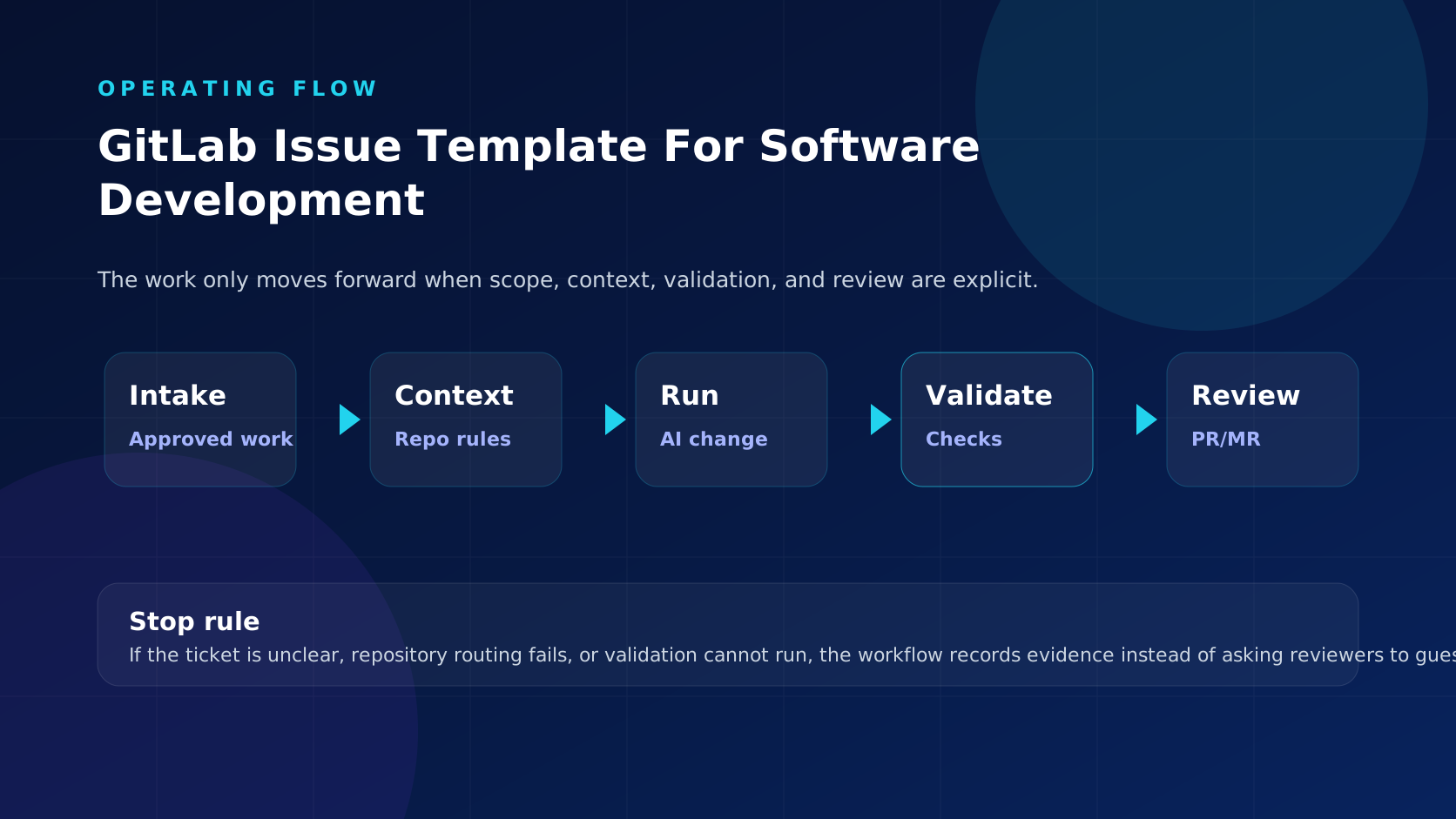
In practice, the GitLab issue template guide should operate as a sequence of handoffs, not as a naming convention. The sequence below keeps GitLab as the system of record while the issue template moves toward reviewable output.
- Start from the GitLab issue, not from a private note, side conversation, or vague backlog item.
- Confirm the ready signal before anyone creates a branch or starts implementation.
- Bind the work to one repository route, branch convention, and review owner where possible.
- Carry the source key and scope summary into commits, branch name, and the GitLab merge request.
- Run the expected validation and record pass, fail, skip, and repair outcomes.
- Give the project maintainer and developer the evidence needed to approve, request changes, reject, or send the work back to triage.
What To Configure
Configuration for the GitLab issue template guide should make the safe path easy and the unsafe path visible. In this case, the working focus is the issue template, so statuses, labels, branch rules, templates, pipeline settings, or approval rules should change what can happen next.
- For the GitLab issue template guide, make queue eligibility explicit in GitLab: a status, label, field, or approval should change what happens next.
- For the issue template, keep routing concrete by naming the repository, component, service, package, or code owner before execution starts.
- In this GitLab workflow covering the issue template, separate implementation authority from merge authority so delivery can move without weakening approval.
- The GitLab merge request should carry validation notes from the GitLab issue for the issue template, including skipped checks and failed repair attempts.
- Use human-only, needs-scope, or blocked states when the source request for the issue template still needs judgment before code changes would help.
- Review GitLab rules for the GitLab issue template guide with platform owners before expanding the queue to sensitive services or multi-repository work.
Practical Setup Details
A GitLab issue template should make the issue useful before any branch exists. It should ask for the intended change, affected project, acceptance criteria, validation expectation, risk notes, and reviewer focus. The template is not a prompt wrapper; it is the work record that tells the team whether the issue can become a merge request.
- Put project, component, or repository selection near the top of the template so routing is not inferred later.
- Require acceptance criteria that describe observable behavior, not only implementation ideas.
- Ask for validation evidence up front: pipeline, local command, manual check, or known gap.
- Include a human-only option for issues involving design judgment, incidents, credentials, or broad refactors.
Review Evidence
Reviewers using the GitLab issue template guide should not have to infer whether the work was scoped correctly. The review packet for the issue template should make the source request, implementation boundary, validation result, and final decision inspectable.
- The original request from the GitLab issue for the issue template: what was approved, by whom, and why it was eligible.
- The boundary for the issue template: what files, service, component, or repository area the run was allowed to touch.
- The GitLab merge request should summarize what changed from the GitLab issue for the issue template and what was deliberately left out of scope.
- The validation record tied to the issue template: which jobs, commands, or manual checks ran and what happened.
- The project maintainer and developer should leave a decision trail for the issue template: approval, requested changes, rejection, rerun, or escalation.
Failure Modes To Avoid
The weak version of the GitLab issue template guide looks organized in the tracker but still leaves reviewers to reconstruct the real story behind the issue template. These are the patterns to stop early.
- The source record tied to the issue template is marked ready even though acceptance criteria, owner, or repository route are missing.
- The GitLab issue template guide produces a branch for the issue template that combines unrelated work because the source request was too broad.
- The issue template turns validation failure into a reviewer problem instead of a pre-review repair or stop decision.
- The GitLab merge request shows the diff for the issue template but omits the source request, scope limit, skipped checks, or unresolved questions.
- The team reports activity around the issue template without separating accepted changes from failed runs and cleanup.
Use workflow documentation for workflow documentation on the issue template, validation and review controls for validation and review controls, and Explore ticket-to-code automation when this native handoff is clear enough to automate. Related operational pages: Jira Automation For Software Teams Practical Workflow Ideas, How To Link Jira Issues To GitLab Merge Requests, Jira Workflow Best Practices For Engineering Teams.
Where MergeLoom Fits Later
Teams reading GitLab Issue Template For Software Development should treat the native setup above as the first step. MergeLoom becomes relevant later, when approved work should move into implementation automatically while still respecting the same issue structure, repository rules, CI evidence, approval rules, and human review.
That matters because automation without a good GitLab workflow just moves ambiguity into review. The useful metric for the issue template is still accepted, validated change with a traceable source record.
Rollout Checklist
- Start the GitLab issue template guide on a low-risk queue with predictable repository ownership.
- Define the ready, blocked, validation failed, review ready, and human-only paths for the issue template before opening the queue.
- Require every branch for the issue template to carry the source work key and validation summary.
- Sample accepted and rejected changes for the issue template weekly to see whether reviewers had enough evidence.
- Expand GitLab coverage for the issue template only after the team can explain why work started, what changed, what checked, and who approved it.
Bottom Line
The GitLab issue template guide is useful for the issue template when it makes the next decision clearer: start, stop, repair, review, or keep the work human-only. If reviewers can see the source request, boundary, validation result, and approval decision for the issue template in one path, the workflow is doing real operational work.
Explore ticket-to-code automation to see how approved work can move through your existing GitLab issue software development handoff with evidence attached.