
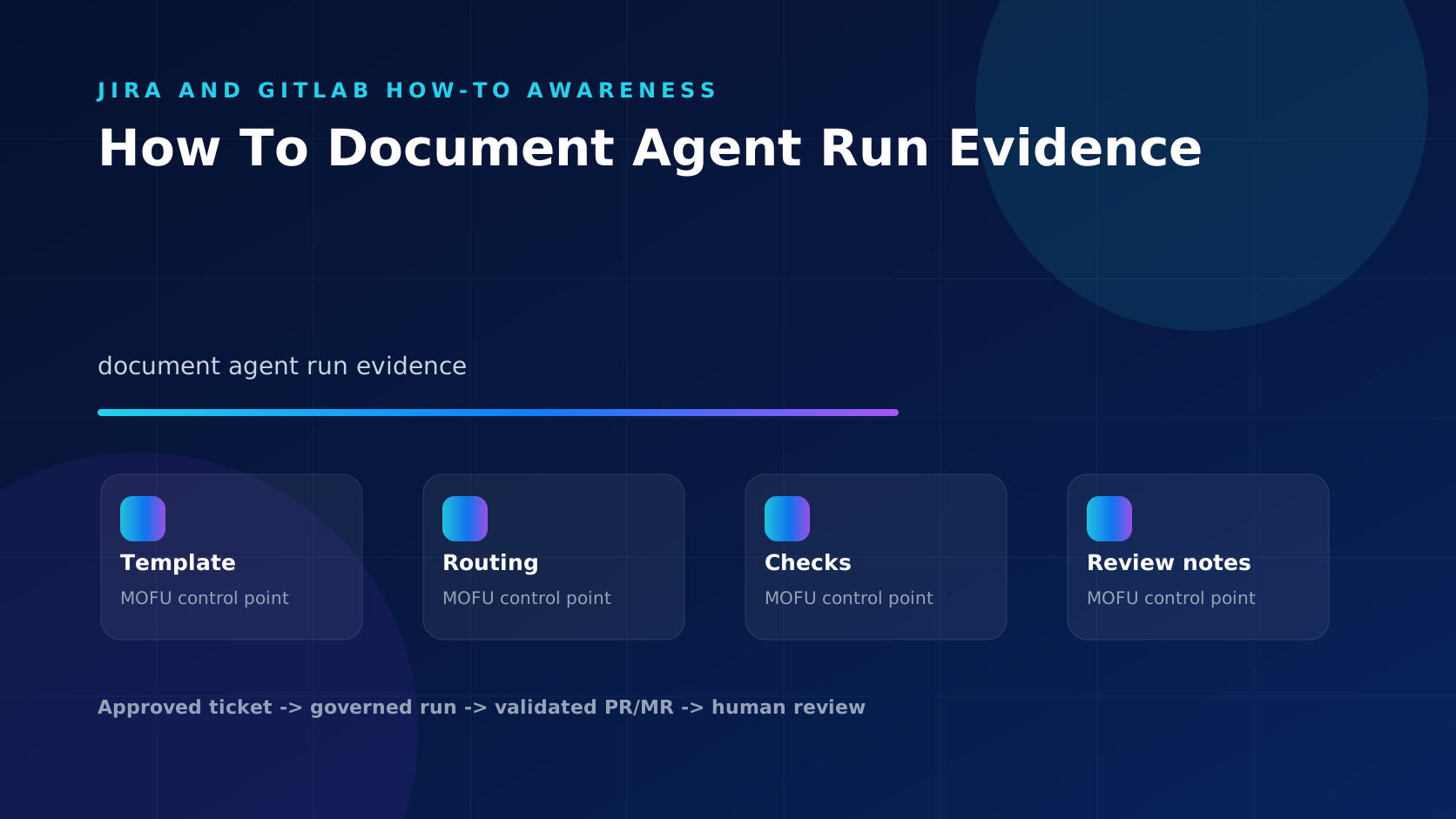
This article focuses on the operating details behind capturing ticket context, branch changes, validation checks, and review outcome. In the template, the team should be able to explain why a run started, what code it touched, what checks ran, and why a reviewer can trust the handoff.
The goal is not to remove reviewers. It is to give them smaller agent evidence notes changes, clearer context, and evidence that the right checks happened. That means treating scope, validation, and review handoff as first-class parts of agent run evidence documentation.
Turn The Idea Into Executable Scope
Treat agent evidence notes as an operational handoff, not only as tracker hygiene. The practical test is whether someone outside the original conversation can inspect the resulting change.
Use this setup:
- Name the source work item, owner, and expected outcome for agent run evidence documentation.
- Identify the repository, service, component, module, or file area involved in agent run evidence documentation.
- The agent evidence notes: write acceptance criteria that can be checked by a test, build, manual review step, or explicit reviewer judgment.
- Add constraints, out-of-scope notes, and dependencies so agent run evidence documentation does not broaden the change.
- State validation commands, expected CI jobs, or the reason validation is not available for agent run evidence documentation.
- The agent evidence notes review check: describe reviewer focus areas, risk notes, and what should happen if the agent needs clarification on the ticket.
Make Reviewer Questions Predictable
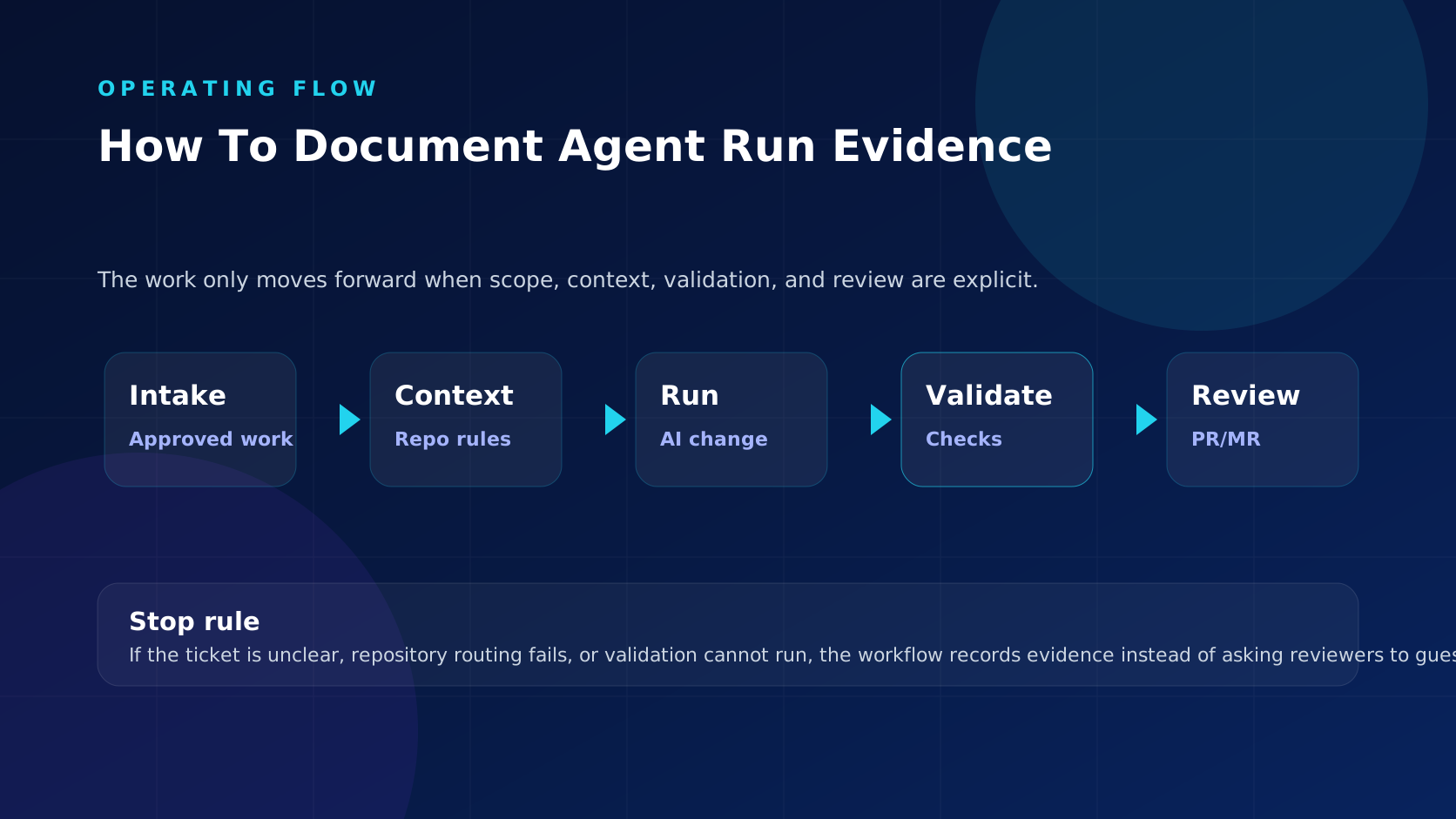
- The agent evidence notes rollout check: the agent can tell whether the branch handoff is ready without asking a human to reinterpret the ticket.
- The agent evidence notes delegation check: reviewers can connect the generated branch and PR/MR back to the original request quickly.
- The agent evidence notes evidence check: the validation evidence for the intake path answers the most obvious quality questions before review starts.
- The agent evidence notes handoff check: the run stops visibly when the review path lacks scope, routing, or checks instead of producing a speculative diff.
- The agent evidence notes owner check: the workflow remains useful even when the team decides the operating step should stay human-only.
The supporting path through Learn how governed AI coding fits into your workflow and workflow documentation keeps the practice from becoming isolated ticket hygiene. It turns the prepared work into something reviewers can inspect.
How To Make This Specific Enough To Run
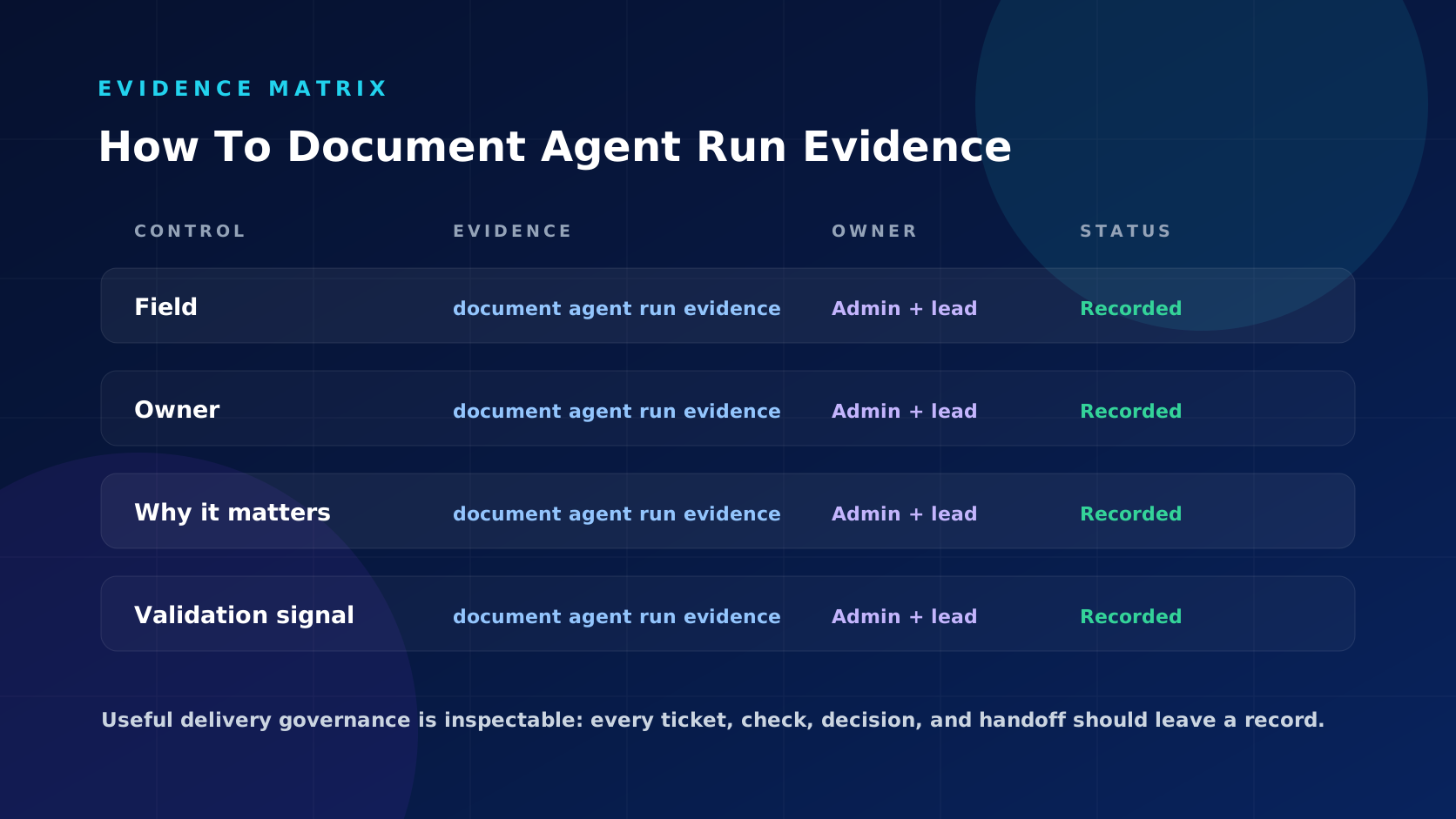
The evidence packet is most useful when it changes the default behavior of the team. Instead of asking someone to reinterpret document agent run evidence from memory, the source work item should capture the boundary, validation expectation, and review owner.
- Record boundary: the work item should make capturing ticket context, branch changes, validation checks, and review outcome specific enough for a bounded run.
- Scope boundary: the reviewer handoff should declare the affected area and the nearest safe stopping point.
- Validation boundary: the readiness gate should show whether the generated work met the expected evidence standard. Escalate if the record cannot answer it. Reference: the agent evidence notes.
- Handoff boundary: the PR/MR should make it clear what the reviewer is being asked to decide. Track this with the review packet for the agent evidence notes.
- Control boundary: the team should pause, reroute, or reject the run when scope or ownership is ambiguous. Keep this visible before review for the agent evidence notes.
That level of specificity lets engineering managers, technical leads, Jira admins, GitLab admins, and DevOps teams expand this practice deliberately instead of treating every generated branch as equally trustworthy.
Anti-Patterns To Avoid
A prepared request for the request should reduce clarification, not move ambiguity into the branch.
The workflow needs attention when these signals appear:
- The agent evidence notes intake record points at work but not at the code boundary or validation expectation.
- The agent evidence notes rollout check: a reviewer cannot connect the branch, checks, and source request without reconstructing the path manually.
- The PR/MR asks for approval before the readiness gate has produced useful evidence.
- The same clarification questions appear in review because the handoff was not made concrete earlier.
- Repair attempts for agent evidence notes continue after ownership, scope, or policy should have forced a pause.
- Savings claims around agent evidence notes ignore review loops, rejected diffs, and follow-up cleanup.
A team can use Learn how governed AI coding fits into your workflow to choose the agent evidence notes path, workflow documentation to prepare the run, and validation and review controls to make validation or audit evidence explicit.
Governance Questions Worth Answering
Treat the following questions as the pre-expansion checklist for this operating path:
- Eligibility owner: who confirms that capturing ticket context, branch changes, validation checks, and review outcome has enough detail to run?
- Scope owner: who confirms the repository boundary and out-of-scope notes for the workflow?
- Context owner: who approves the documentation, comments, and code context used by the worker? Add this to the operating record for the agent evidence notes.
- Validation owner: who decides whether the readiness gate is sufficient before the PR/MR moves to review? The owner should confirm this ahead of execution for the agent evidence notes.
- Review owner: who reads the evidence, requests changes, and keeps merge authority?
- Exception owner: who handles the review packet when the run cannot produce trustworthy evidence?
The practical outcome for the prepared work is a workflow that can grow while still making pause, reject, rerun, and approval decisions visible.
Where The Platform Layer Helps
Repeatability matters when capturing ticket context, branch changes, validation checks, and review outcome depends on individual notes instead of a governed run path. Agent evidence notes should still be documented in the team’s tracker or code host; MergeLoom makes the prepared work executable without turning it into an unmanaged prompt.
The practical next step after agent evidence notes is Learn how governed AI coding fits into your workflow. Teams that need more implementation detail around agent evidence notes should also review workflow documentation and validation and review controls, then compare the related pages How To Write Jira Tickets Developers Can Actually Use, How To Set Up Jira Workflow Statuses, Jira Workflow Best Practices For Engineering Teams.
Rollout Checklist
- Apply the practice to a real low-risk ticket or issue first.
- Check whether the next actor can identify repository, scope, checks, and reviewer focus for the ticket.
- Update the template or labels when reviewers repeat a clarification about agent evidence notes.
- Connect the branch handoff to validation output and PR/MR descriptions, not only ticket hygiene.
- Document when the intake path should be escalated instead of delegated.
Bottom Line
A good handoff for capturing ticket context, branch changes, validation checks, and review outcome keeps the work concise while making boundary, validation, and ownership visible.
Learn how governed AI coding fits into your workflow to make agent evidence notes executable without bypassing validation or human approval.