
The practical question behind keep human review in AI coding is whether a team can handle making review authority explicit when AI prepares the branch without creating review debt. For the operating step, the implementation path has to preserve the systems already used for planning, source control, CI, approval, and audit.
In the template, MergeLoom keeps the AI step inside the delivery path engineering teams already trust: ticket, branch, checks, PR/MR, and review. The aim is to make human review authority repeatable enough for platform teams without hiding ambiguity from reviewers.
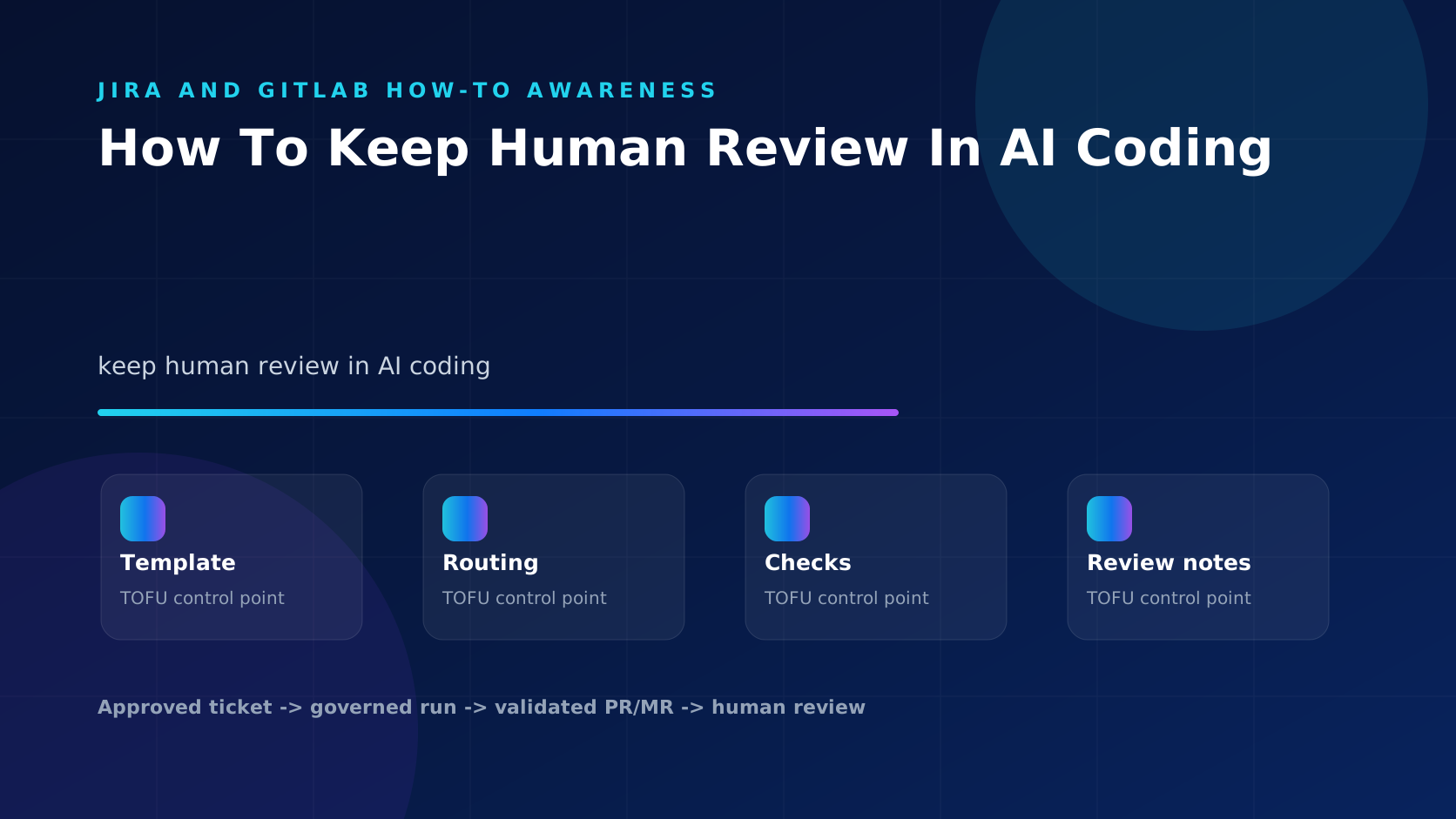
Write For The Next Actor In The Workflow
Treat human review authority as an operational handoff, not only as tracker hygiene. The request should make ownership, boundary, and validation visible before any generated branch asks for attention.
Use this setup:
- Name the source work item, owner, and expected outcome for human review authority.
- Identify the repository, service, component, module, or file area involved in human review authority.
- The keep human review guide: write acceptance criteria that can be checked by a test, build, manual review step, or explicit reviewer judgment.
- Add constraints, out-of-scope notes, and dependencies so human review authority does not broaden the change.
- The keep human review guide review check: state validation commands, expected CI jobs, or the reason validation is not available for the prepared work.
- The keep human review guide rollout check: describe reviewer focus areas, risk notes, and what should happen if the agent needs clarification on the ticket.
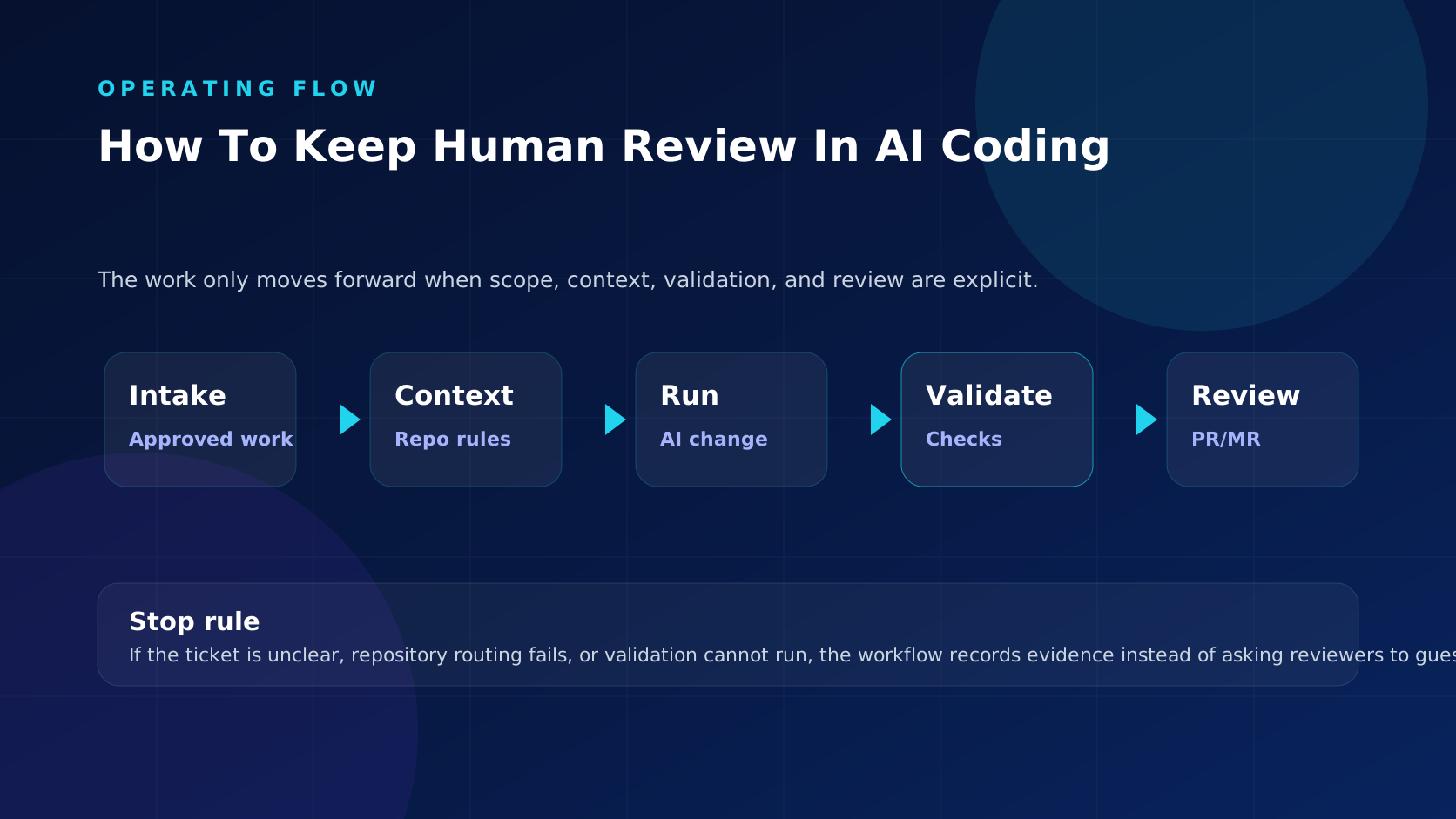
Keep The Handoff Short And Inspectable
- The keep human review guide delegation check: the agent can tell whether the branch handoff is ready without asking a human to reinterpret the ticket.
- The keep human review guide evidence check: reviewers can connect the generated branch and PR/MR back to the original request quickly.
- The keep human review guide handoff check: the validation evidence for the intake path answers the most obvious quality questions before review starts.
- The keep human review guide owner check: the run stops visibly when the review path lacks scope, routing, or checks instead of producing a speculative diff.
- The keep human review guide scaling check: the workflow remains useful even when the team decides the operating step should stay human-only.
A useful template should make Learn how governed AI coding fits into your workflow easier to operate and workflow documentation easier to audit. The connection is the source request, validation record, and reviewer handoff.
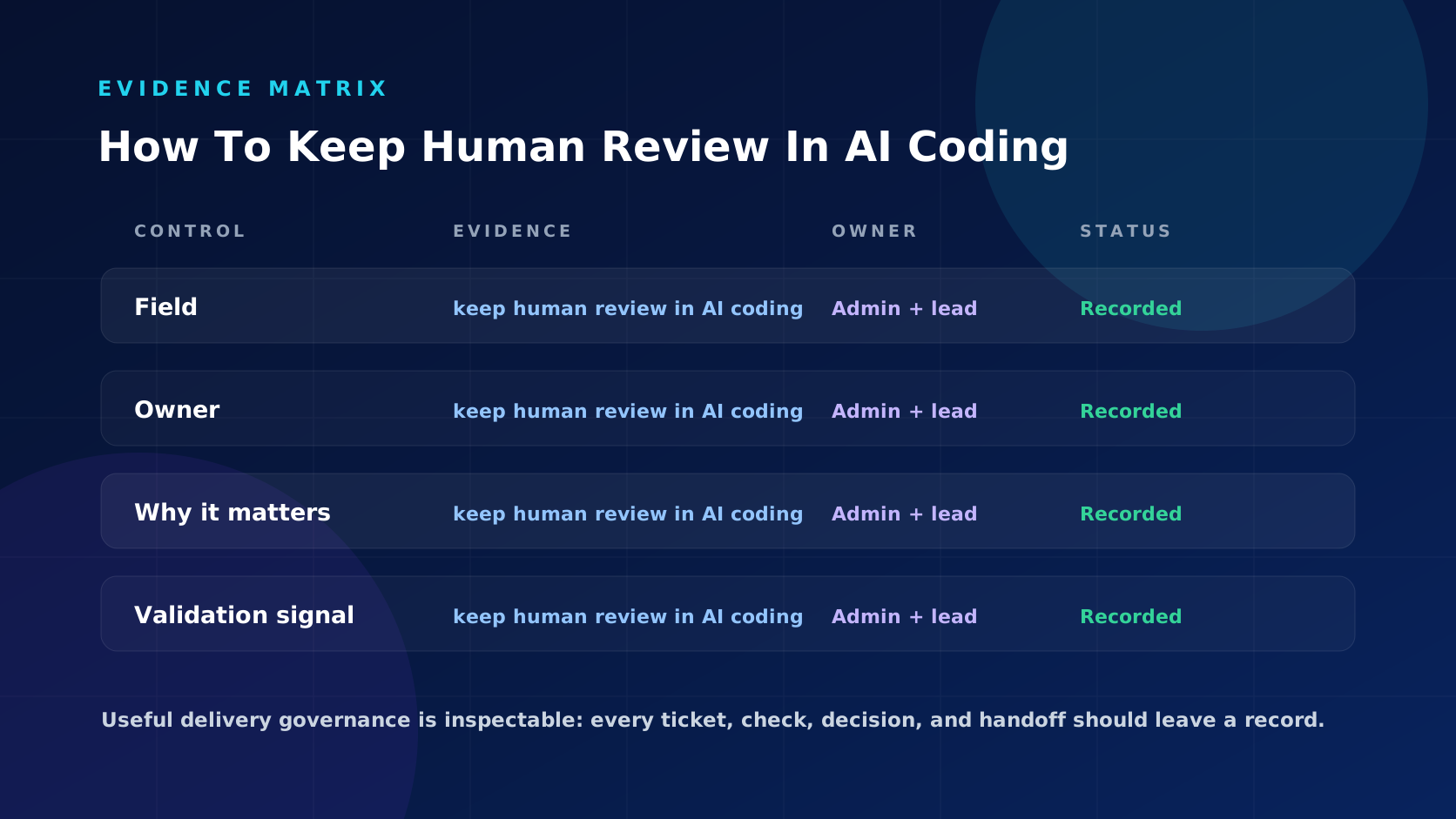
What To Decide For This Use Case
The value of the evidence packet depends on how well the team can separate eligible work from ambiguous work. When the request is making review authority explicit when AI prepares the branch, the first control is a visible stop condition before automation creates a branch.
- Source boundary: the source work item should show what prompted making review authority explicit when AI prepares the branch and what success means.
- Execution boundary: the reviewer handoff should state repository rules before an agent can write changes.
- Gate boundary: the review gate should prevent unvalidated work from becoming reviewer workload.
- Review handoff: the PR/MR should put commits, checks, and human decisions in one place.
- Escalation boundary: the human reviewer should have a documented path when scope or ownership is ambiguous. Track this with the review packet for the keep human review guide.
Those boundaries make this practice easier to govern across teams because the exception path is visible before the change reaches merge authority.
Risk Signals In Early Pilots
The request fails when the next actor has to infer the repository boundary or validation expectation.
These review-load signals are worth catching early:
- The source work item omits the owner, service boundary, or acceptance signal needed for the handoff.
- The generated branch for the workflow changes files that were never named in the source request.
- The keep human review guide review check: the PR/MR lacks the validation summary, failed-check notes, or open questions reviewers need.
- The human reviewer cannot tell which context sources were used or excluded.
- A failed run keeps retrying after the evidence says it should stop.
- The keep human review guide rollout check: the dashboard treats provider use, CI time, and review effort as separate stories instead of one accepted-work record.
Learn how governed AI coding fits into your workflow explains where the review packet fits commercially; workflow documentation and validation and review controls explain how prepared work stays bounded enough for review.
Readiness Checks Before Scaling
The workflow becomes easier to defend when engineering managers, technical leads, Jira admins, GitLab admins, and DevOps teams can answer these points directly:
- Run trigger: what approved work record starts making review authority explicit when AI prepares the branch, and who can approve that trigger?
- Repo selection: how is the correct repository, branch, or component chosen for the prepared work?
- Context controls: which source materials should be attached to the run record before execution? Add this to the operating record for the keep human review guide.
- Validation controls: which checks, gates, or manual review steps are mandatory for the PR/MR? The owner should confirm this ahead of execution for the keep human review guide.
- Decision record: how will approval, rejection, rerun, or escalation be visible after review? Capture this before review begins for the keep human review guide.
- Risk response: what should happen when scope or ownership is ambiguous during the ticket?
That discipline keeps the branch handoff from expanding faster than the team’s ability to inspect, validate, and approve the result.
The MergeLoom Role In The Stack
The intake path gives making review authority explicit when AI prepares the branch a practical path from prepared work to review evidence. The review path remains anchored in the prepared work item; MergeLoom turns that source record into a bounded run with evidence.
Teams standardizing the operating step can use Learn how governed AI coding fits into your workflow, workflow documentation, and validation and review controls as the internal path from intake to governance. Related reads: How To Write Jira Tickets Developers Can Actually Use, How To Set Up Jira Workflow Statuses, AI Merge Request Automation For GitLab Teams.
Rollout Checklist
- Apply the practice to a real low-risk ticket or issue first.
- Check whether the next actor can identify repository, scope, checks, and reviewer focus for the evidence packet.
- Update the template or labels when reviewers repeat a clarification about the reviewer handoff.
- Connect this practice to validation output and PR/MR descriptions, not only ticket hygiene.
- Document when the request should be escalated instead of delegated.
Bottom Line
The practical test for the handoff is whether a reviewer can understand the branch without reconstructing the original conversation.
Learn how governed AI coding fits into your workflow when the next step is turning the workflow into reviewable AI-assisted delivery.