
A search for low-risk AI coding use cases usually signals a buyer concern about starting with tests, docs, dependency updates, small fixes, and bounded maintenance, not only code generation. A credible rollout for low risk use cases treats AI coding as a delivery workflow, not a side channel around Jira, GitLab, CI, or review.
That is the difference between an AI coding trial and a workflow that platform teams can govern across low risk use cases. For the governance workflow, the operating model has to be visible enough for engineering leaders to expand or stop deliberately.
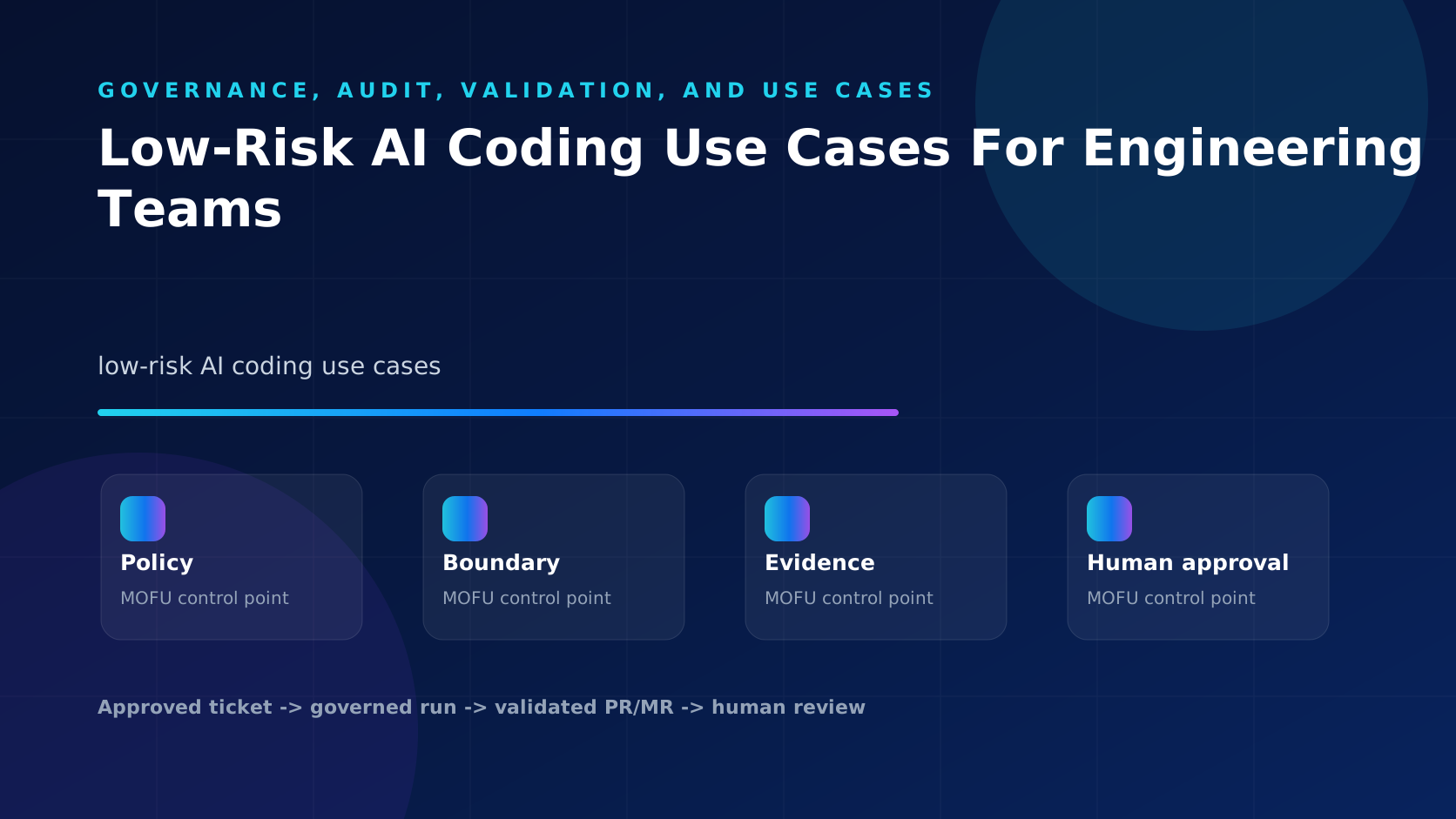
Keep Governance Close To Delivery
Governance has to be concrete enough for platform teams to operate. A useful policy maps the intake rules, repository permissions, validation gates, and review ownership for low risk use cases.
The minimum control surface should include:
- Approved intake: who can request low risk use cases and which system records that request.
- Repository permission: which branches, files, and worker actions are allowed for low risk use cases.
- Context boundary: which tickets, docs, code, comments, and secrets are allowed or excluded from low risk use cases.
- Provider routing: which model or provider can handle the repository class behind the evidence trail.
- Validation gate: which checks must pass for the review record, and what happens when they fail.
- Human authority: who can approve, reject, rerun, pause, or merge work produced through the access rule.
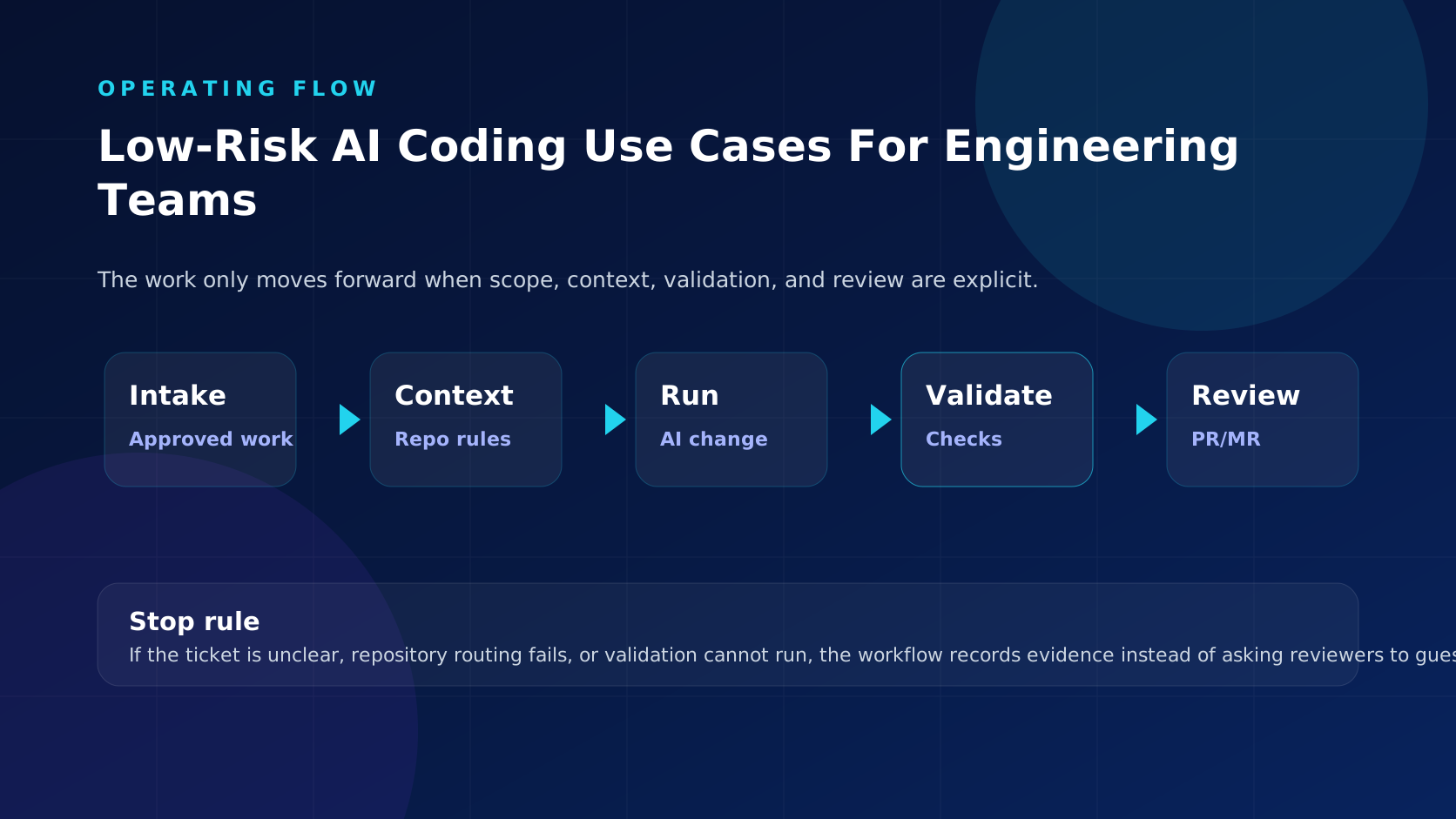
Show What Happened Without Guesswork
If a team cannot reconstruct a run, it cannot govern the run. The evidence trail for the risk control should answer what started, what changed, what checked, what failed, what was repaired, and who accepted or rejected the result.
- The source ticket or issue that authorized the operating policy.
- The repository, branch, commit range, and PR/MR created during the inspection path.
- The context sources used for the approval rule and the sources explicitly excluded.
- The validation commands, CI jobs, skipped checks, and repair attempts tied to the security review.
- The reviewer decision, requested changes, acceptance, rejection, or escalation route tied to the control.
In Low-Risk AI Coding Use Cases For Engineering Teams, the related control surfaces are Review AI coding governance controls, workflow documentation, and validation and review controls: audit evidence, data boundaries, and validation before review.
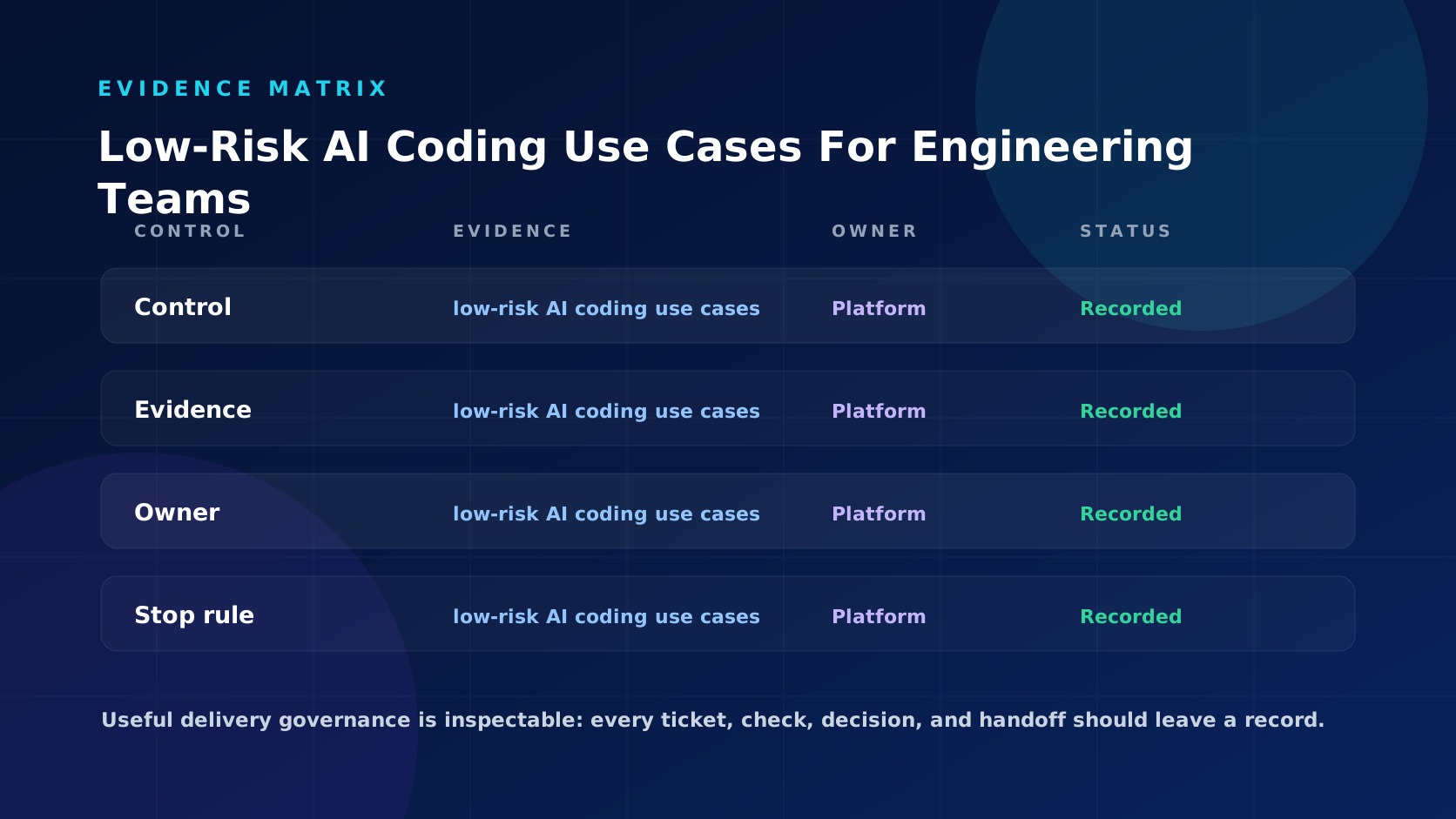
The Implementation Boundary
With the policy, the implementation boundary matters more than the model name. The team should know which system starts the run, which repository is in scope, and which evidence must appear in the audit record.
- Planning boundary: the source record should narrow starting with tests, docs, dependency updates, small fixes, and bounded maintenance before a worker opens a branch.
- Execution boundary: the audit path should keep file scope, branch naming, and repository ownership explicit.
- Validation boundary: the policy gate should show which commands or CI jobs were attempted and what failed. Track this with the review packet for the low risk use guide.
- Reviewer boundary: the audit record should make review ownership and unresolved risk easy for the human reviewer to find.
- Stop boundary: the governance workflow should halt when scope, ownership, or validation cannot be explained.
It also keeps Review AI coding governance controls connected to the operational details in workflow documentation for the evidence trail, which is where many AI coding pilots lose the evidence reviewers need.
Anti-Patterns To Avoid
Governance stays theoretical when access, context, validation, and audit rules are approved in principle but not applied in the workflow.
The operating owner should look for these patterns:
- The review record intake record points at work but not at the code boundary or validation expectation.
- The low risk use guide review check: a reviewer cannot connect the branch, checks, and source request without reconstructing the path manually.
- The audit record asks for approval before the policy gate has produced useful evidence.
- The low risk use guide rollout check: the same clarification questions appear in review because the access rule was not made concrete earlier.
- Repair attempts for the risk control continue after ownership, scope, or policy should have forced a pause.
- Savings claims around the operating policy ignore review loops, rejected diffs, and follow-up cleanup.
Teams should connect the inspection path to Review AI coding governance controls, workflow documentation, and validation and review controls before expanding the queue; otherwise automation can drift away from evidence.
Governance Questions Worth Answering
A team is ready to broaden the workflow only when the operating owner can answer these questions consistently:
- Ready state: what does the team need to see before starting with tests, docs, dependency updates, small fixes, and bounded maintenance leaves the backlog or queue?
- Ownership: which team, reviewer, or component owner is accountable for the approval rule?
- Context limit: which information is required for the security review, and which secrets or side discussions are excluded?
- Validation plan: which command, pipeline, or review step must be complete before the audit record is trusted? Add this to the operating record for the low risk use guide.
- Evidence location: where will logs, CI output, repair attempts, and final decisions be stored? The owner should confirm this ahead of execution for the low risk use guide.
- Stop rule: what condition tells the human reviewer that the control should not continue?
The answers make the policy more repeatable and reduce the chance that unclear work turns into an oversized branch.
Where The Platform Layer Helps
The audit path turns policy decisions for starting with tests, docs, dependency updates, small fixes, and bounded maintenance into run boundaries, evidence records, and review handoffs that teams can inspect. The policy owner still decides the rules; MergeLoom makes the rule application visible during execution and review.
Review AI coding governance controls is the commercial path connected to the governance workflow; workflow documentation and validation and review controls provide the supporting operational controls. Use AI Coding Governance Policy Template For Enterprise Teams, AI Coding Audit Trail Checklist, AI Workflow For Technical Debt Queues for related reading.
Rollout Checklist
- Assign an owner, exceptions, and operating reviews.
- Define allowed repositories, data boundaries, providers, credentials, and context sources for the evidence trail.
- Record the review record evidence in a location security and engineering leaders can inspect.
- Test the access rule stop rules with unclear, failed, and out-of-scope work before broad rollout.
- Review audit samples before expanding to more sensitive repositories.
Bottom Line
Inspectability matters. The evidence for the risk control should let engineering, platform, and security teams understand the run without reconstructing it from memory.
Review AI coding governance controls to make the operating policy activity visible across intake, execution, validation, and review.