Automated AI governance platforms are starting to matter for a simple reason: AI coding is already happening inside software teams, but the evidence trail often disappears before the code reaches review.
Developers can use AI through CLI tools, IDE assistants, chats, or local agents, then commit the result like normal human-authored work. By the time the change reaches Git, the audit record may only show a developer name, a commit hash, or a generic AI agent identity. Compliance, security, and engineering leaders are left trying to answer harder questions after the fact: which work was AI-assisted, who authorized the run, what ticket it related to, which permissions were used, which model was called, and what validation happened before merge?
That is the audit gap this article focuses on. Traditional AI governance tools, AI governance software, AI model governance tools, and governance tools for enterprise AI model lifecycle management often concentrate on model inventory, policy, risk, and ethics. Those controls still matter. But software teams also need workflow-level evidence for how AI-generated code enters a repository.
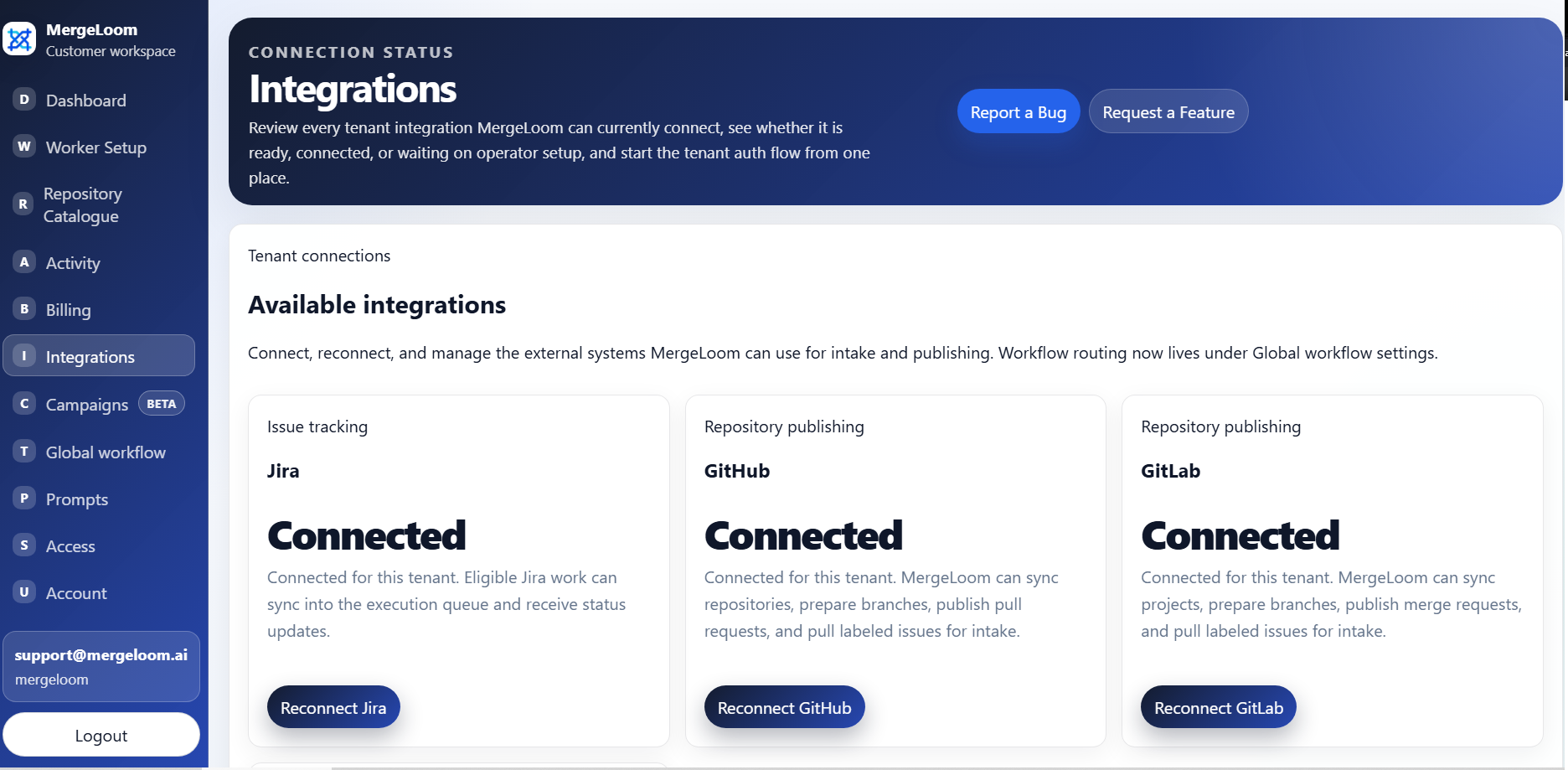
MergeLoom is one practical example of that delivery-layer approach. It connects work intake, system context, repository rules, validation commands, a customer-managed worker, approved AI providers, and code-host review output so teams can trace an AI coding run from issue to PR/MR. That makes it relevant to teams evaluating AI governance solutions, AI governance monitoring, AI governance platforms, and AI governance tools for compliance workflows.
If your evaluation also includes AI review tools, our CodeRabbit alternative comparison explains the difference between standalone AI code review and governed AI delivery.
The goal is not to replace human review or claim that one tool solves every compliance requirement. The goal is narrower and more operational: create a controlled path for AI-assisted code changes, then preserve enough evidence that engineering and compliance teams can understand what happened.
The Rise of AI Coding Tools and the Audit Gap Challenge
AI coding tools are already inside engineering workflows. Some teams have approved them formally. Others have a loose policy that lets developers use AI locally as long as they remain responsible for the final code. Either way, the same problem appears once AI-generated or AI-assisted code is committed through a normal developer account.
The problem is not just that “AI changed code.” The deeper issue is that organizations lose attribution. A developer may ask an AI CLI to refactor a module, use an IDE assistant to generate tests, paste code from a chat session, or run a local coding agent against a bug ticket. When that work is pushed, the repository may only show a normal commit.
That creates a weak point for code review, incident response, security review, and audit. Engineering leaders may not be able to tell whether a change was human-authored, AI-assisted, or generated by an automated run tied to a specific business request. This is why the best tools for managing AI governance in workflows are moving beyond model dashboards and into the software delivery path.
Key challenges include:
- Insufficient tracking of AI-generated code changes.
- Lack of accountability and transparency.
- Difficulty in meeting compliance and regulatory standards.
The practical fix is not another policy document. Teams need a required path for AI-assisted changes. In practice, many organizations only get a reliable audit trail when they establish a golden path for AI-assisted changes (a controlled workflow that teams are required to use) instead of relying on unmanaged local AI usage.
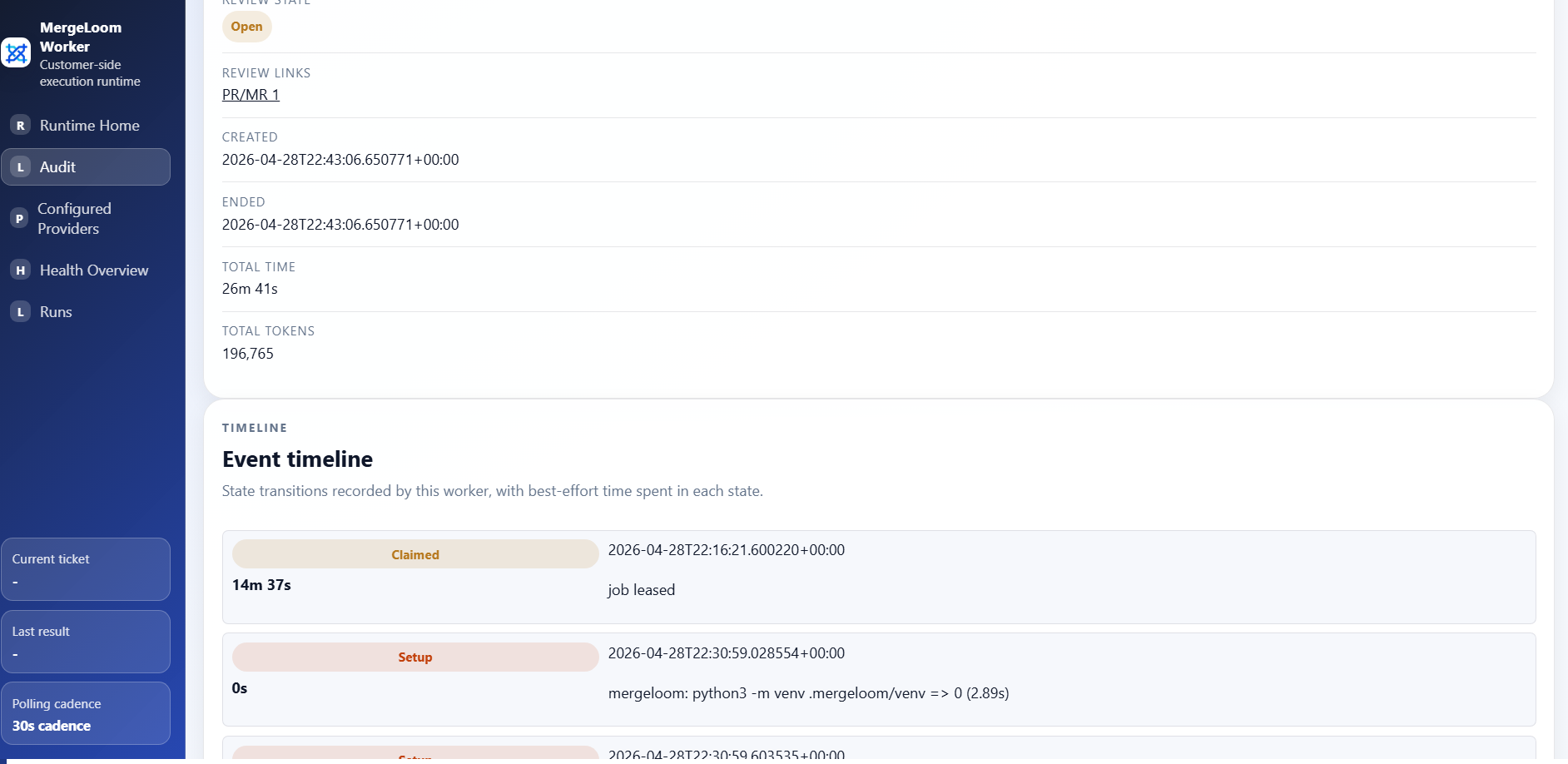
The rise of AI coding tools demands a parallel change in governance. Engineering leaders need controls that make AI-assisted code visible before it becomes another ordinary commit.
Understanding Automated AI Governance Platforms
Automated AI governance platforms should make AI usage observable and enforceable. In model-heavy environments, that may mean policy approval, model inventory, risk scoring, dataset controls, bias review, and stakeholder impact assessment. In software delivery, it also means controlling how AI-generated code moves from request to repository.
That second part is easy to miss. A company can have strong model governance tools and still have weak evidence around AI coding if developers are free to use unmanaged local tools and commit the output normally. Many enterprises are now looking at automated generative AI policy enforcement tools platforms, policy-as-code, and CI/CD controls for exactly this reason.
Key features of these platforms include:
- Comprehensive audit trails for AI-generated code.
- Real-time monitoring of AI models and tools.
- Policy enforcement to ensure compliance and ethics.
For engineering teams, the useful version of AI governance is not another disconnected dashboard. It is a repeatable workflow where approved work enters through a tracker, repository-specific rules are applied, the AI provider is known, validation is enforced, and the final change returns to normal review.
This is also where repository rules and validation commands become part of governance. If a team can enforce setup, linting, tests, custom checks, and publish rules before a PR/MR appears, the audit trail becomes more useful than a log that only says an AI agent ran.
Why Code Attribution Matters: Risks and Compliance in AI-Generated Code
Code attribution matters because software incidents are investigated through evidence. When a risky change reaches production, teams need to know where it came from, who approved the work, what permissions were used, and whether tests or checks ran before review.
AI-assisted code makes that harder when the AI work happens outside the delivery workflow. A developer can use a local assistant, clean up the output, and commit it normally. The repository history may still be accurate for human ownership, but it will not explain which work was AI-assisted or what controls ran.
Compliance and security teams need more than a commit author. They need a record that connects the business request, the initiating user, the AI run, validation output, and the review artifact.
A robust attribution system addresses multiple concerns:
- Improve security review by making AI-assisted changes easier to identify.
- Simplify audits by connecting each run to the request and review output.
- Support compliance by preserving evidence of authorization and validation.
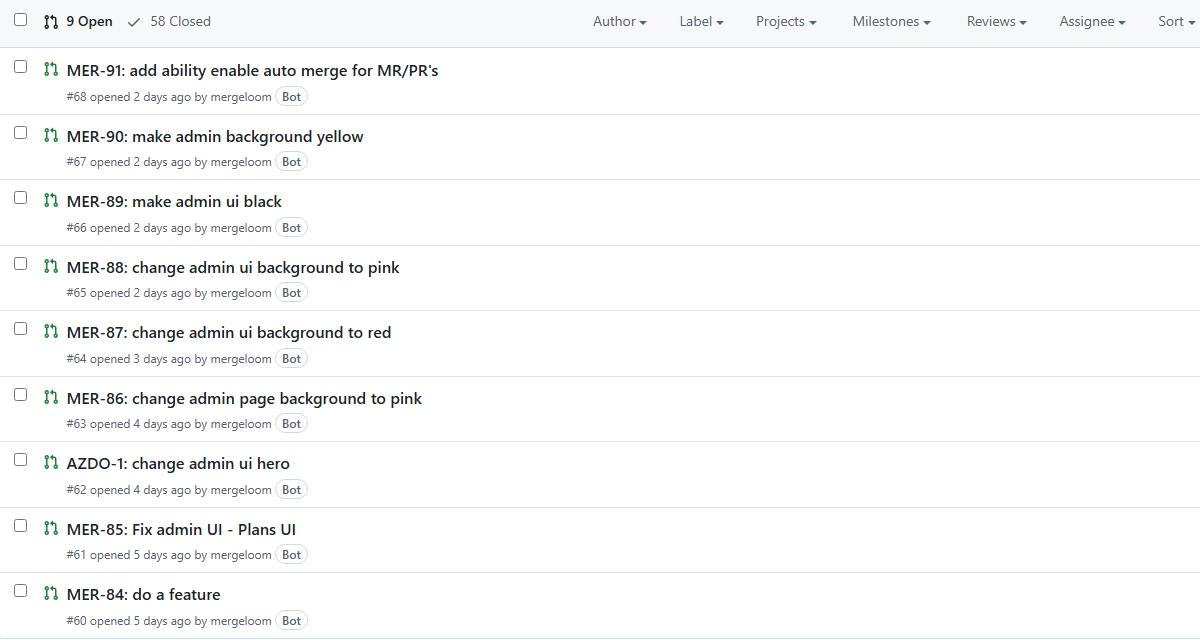
Strong attribution does not make AI code automatically safe. It gives teams the evidence they need to review, challenge, approve, or reject AI-assisted work with less guesswork.
Key Features of Modern AI Governance Tools
Modern AI governance tools should make AI usage visible, controllable, and reviewable. For model teams, that often means model inventory, approvals, risk assessments, and monitoring. For engineering teams, it also means controls inside the software delivery path.
The strongest platforms reduce manual evidence gathering. They show who initiated a run, which provider or model was used, what data or context was available, what checks ran, and what output reached review.
Effective AI governance tools also include:
- Automated compliance checks and audit records.
- Real-time monitoring for anomaly detection and AI governance monitoring.
- Integration with existing workflows and AI model governance tools.
Teams often complement these capabilities with software for assessing AI model risk and ethics and focused AI model governance tools that support model registration, lineage, and reviews.
The key is fit. A platform that is excellent for model inventory may still need delivery-layer controls if AI is writing code that reaches production repositories.
AI Governance Platforms for Regulated Industries: What Changes When Auditors Show Up
In regulated industries, the question isn’t only whether an AI system is safe or ethical. It’s whether you can produce evidence that your controls actually ran. That’s why AI governance platforms for regulated industries tend to be judged by auditability: can you prove approvals, access boundaries, and change controls for AI-assisted work?
For software delivery, auditors often want to see a consistent story across:
- Change management: a clear link from a business request to a code change, plus who approved it.
- Access and authorization: who initiated the AI-assisted work and which credentials/permissions were used.
- Evidence of testing/validation: what ran (tests, linters, build steps) and whether it passed before review.
- Retention and reviewability: logs and artifacts stored long enough to support audits and incident investigations.
This is where workflow evidence matters as much as model evidence. Even strong data governance and model oversight can leave an audit gap if AI-assisted code enters Git without a durable trail. Many teams pair delivery controls with the best AI compliance tools for data governance to ensure consistent evidence across data, models, and code.
AI Governance Tools for Compliance Workflows: What Compliance Teams Need from Engineering
Compliance teams usually don’t need more dashboards. They need repeatable answers. The best AI governance tools for compliance workflows make it easy to answer questions like which model was used for this change, who authorized it, and what validations ran, without chasing people in Slack.
Practical capabilities to look for include:
- Queryable evidence: filter AI runs by repository, ticket/issue, model/provider, user, date range, and outcome.
- Exception handling: a way to record why policy was bypassed (and who approved the exception).
- Exportable audit packages: evidence you can hand to internal audit or an external assessor without manual reconstruction.
- Policy alignment: controls that map cleanly to existing SDLC requirements (approvals, segregation of duties, required checks).
This is also where teams evaluate broader AI governance companies and top AI governance solutions companies, looking for vendors with strong governance frameworks for enterprise AI that support both model oversight and delivery-layer evidence.
Example: Enterprise AI Governance Suites vs. Workflow-Level Code Attribution
Not every organization needs the same depth of controls. Some large enterprises adopt broad, cross-functional AI governance suites that cover policy, model inventory, risk workflows, and organization-wide reporting. For example, Credo AI is often positioned as an enterprise-grade platform for AI governance programs that span multiple teams and model types.
That kind of suite can be a great fit when you need centralized governance across many AI systems and business units. But for smaller and mid-sized enterprises, the immediate pain point is often narrower and more operational: developers are already using AI to change production code, and leadership wants more visibility into what happened inside the software delivery workflow.
In those cases, a workflow-focused tool like MergeLoom can be a pragmatic starting point. It doesn’t try to be a full enterprise suite. Instead, it helps teams create a controlled ticket-to-code automation path so they can get attribution, enforce validations, and keep a clear audit trail from ticket to PR/MR.
MergeLoom in Action: Practical Example of Automated AI Governance
MergeLoom helps close the audit gap in AI-generated code by giving teams a controlled path for AI-assisted changes to enter the codebase. The key is enforcement: MergeLoom provides the strongest attribution benefits when an organization makes it the golden path for AI coding work (instead of letting AI changes originate from unmanaged local tools and then get committed like normal).
When teams route work through MergeLoom, the outcome can be the same (code merged and shipped through your normal Git workflow), but the process is typically faster and produces a far more complete audit trail of who did what, and why. The data boundary model is important here: checkout, context assembly, model calls, validation, and branch preparation happen on the customer-side worker rather than as unmanaged local developer activity.
At a high level, MergeLoom turns approved tickets and issues into PRs or MRs using AI:
- A user selects or tags an approved ticket/issue to run (so the work stays tied to a business request).
- The AI implementation runs on a controlled, customer-managed worker (not an unmanaged developer laptop).
- Teams can enforce setup and validation commands before anything is published for review.
- MergeLoom then opens a PR/MR in GitHub or GitLab so the existing review flow stays in place.
When MergeLoom is used as the required path for AI coding work, it can produce an audit log that ties AI-generated changes back to the initiating user and the ticket/issue, along with run details such as the repository, worker, provider/model configuration, validation results, and the review diff produced by that AI run.
Important limitation: MergeLoom can’t retroactively attribute AI assistance that happened outside of its workflow. If developers keep using local CLI tools, IDE assistants, or chat tools and then commit normally, you still have the same attribution blind spot.
Additional MergeLoom capabilities include:
- Integrations for work intake (Jira, GitHub Issues, GitLab Issues, monday.dev, Linear, Azure Boards) and code hosting (GitHub, GitLab, Azure DevOps Repositories).
- Support for approved AI providers/models on the worker (Codex CLI, Claude Code CLI, OpenAI-compatible endpoints, Vertex AI/Gemini, AWS Bedrock, Azure Foundry).
- Configurable repository rules and required validation steps to reduce low-quality changes reaching review.
For teams that want the validation side of the workflow, see Quality Agents and review guardrails. For teams focused on standardizing system context across repositories, services, APIs, and docs before AI coding starts, see the Context Engine.
Integrating AI Governance into Engineering Workflows
AI governance works best when it fits the workflow engineers already use. If governance requires a separate spreadsheet or a manual after-the-fact report, teams will miss evidence and compliance will still have to reconstruct what happened.
Start by mapping the current path from ticket to code review. Identify where AI can enter, which approvals are required, which repositories are allowed, and what validation must run before review. The best tools for managing AI governance in workflows should complement existing DevOps practices instead of forcing a second delivery process.
Engineering and compliance teams should agree on the evidence they need before the first pilot. That keeps AI governance tools for compliance workflows focused on repeatable answers, not just more alerts.
Key steps for integrating AI governance include:
- Identifying crucial points for governance interventions.
- Aligning governance strategies with business objectives.
- Training teams on AI governance best practices.
- Continuously monitoring and refining governance processes.
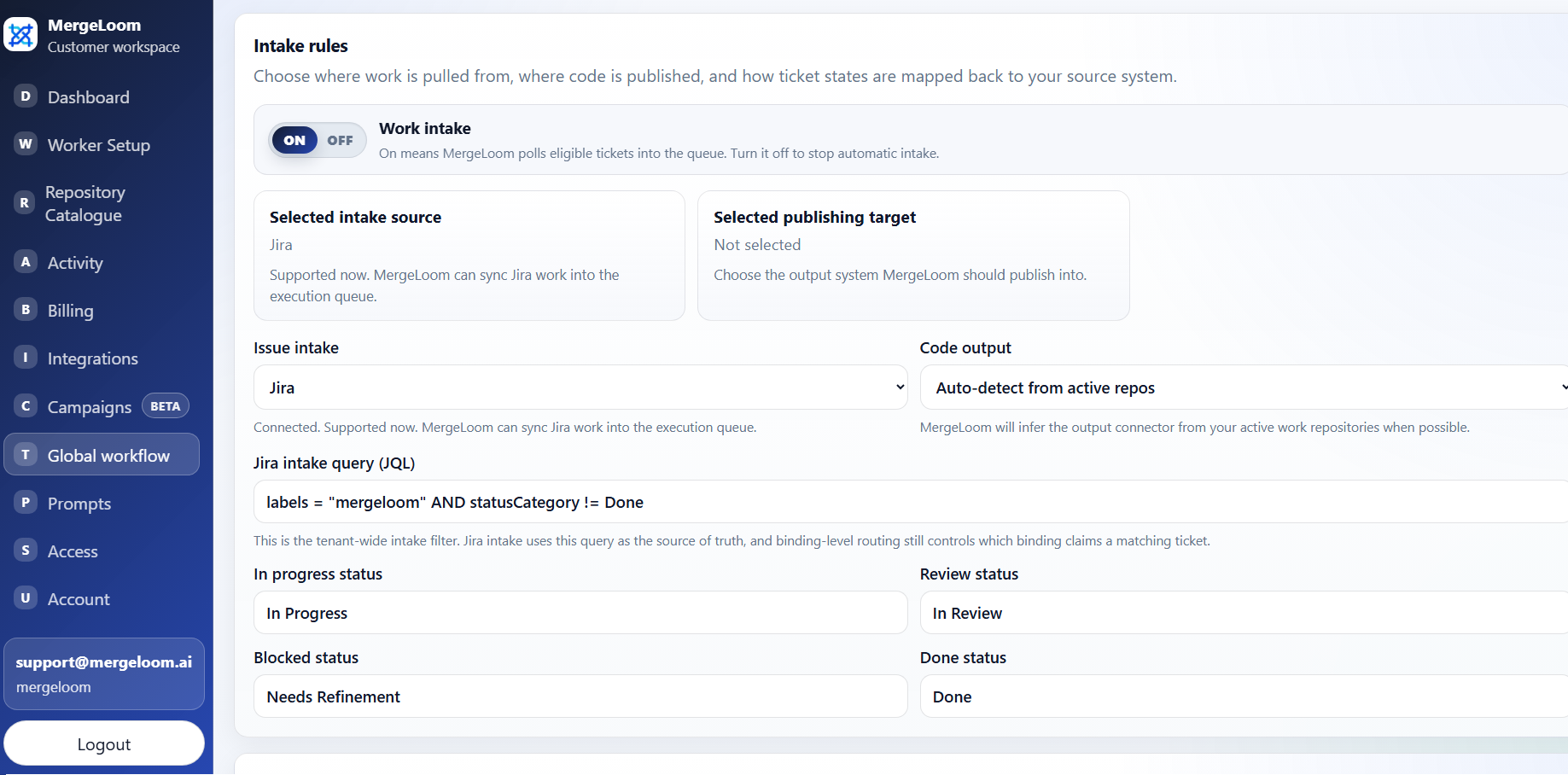
The benefit is practical: fewer missing logs, fewer unclear approvals, and less time spent asking developers to remember what happened after a change has already merged.
Best Practices for Closing the Audit Gap in AI-Generated Code
Closing the audit gap starts with a rule: AI-assisted production code should enter through a path that records evidence as the work happens. After-the-fact tagging is weaker because teams have to reconstruct context from memory, chat logs, or commit messages.
Automated governance tools should record the request, user, repository, model/provider, validation result, and review output. Where appropriate, complement delivery controls with the best AI compliance tools for data governance.
Regular audits are still useful, but they should test whether the workflow evidence exists instead of manually rebuilding it every time.
Implementing best practices includes:
- Utilizing automated governance tools for continuous tracking.
- Conducting regular and detailed audits of AI code.
- Ensuring clear documentation of AI development processes.
- Fostering a culture of transparency and accountability.
The goal is to make good behavior easier. Developers should not need to write long manual audit notes for every AI-assisted change if the workflow can collect the evidence automatically.
Comparing Top AI Governance Platforms and Solutions
Choosing the right AI governance platform depends on where your risk sits. A broad enterprise suite may be right if you need model inventory, policy workflows, risk scoring, and cross-business reporting. A workflow-level platform may be the faster first step if the urgent problem is AI-assisted code reaching repositories without a clear trail.
When evaluating AI governance tools, consider integration capabilities, ease of use, scalability, security controls, monitoring, reporting, and whether the platform can produce evidence your auditors will actually ask for.
Here are some considerations when comparing top AI governance platforms:
- Integration with Existing Systems: How easily can the platform integrate with current tools and workflows?
- User Experience: Is the platform intuitive and user-friendly for both technical and non-technical users?
- Scalability: Can the tool efficiently handle increasing amounts of data and users?
- Compliance Features: Does the platform offer robust compliance monitoring tools?
- Vendor Support: What level of support and training does the vendor provide?
When shortlisting, many organizations look at AI governance companies and top AI governance solutions companies, prioritizing vendors with strong governance frameworks for enterprise AI. Also consider platforms for AI model governance tools that align with your model ops stack.
The right answer may be a combination: a broad AI governance suite for policy and model oversight, plus delivery-layer controls for code changes created with AI.
The Future of Automated AI Governance: Trends and Predictions
AI governance will move closer to the systems where AI is used. For software teams, that means tighter links between work trackers, repositories, CI/CD, model providers, security tools, and audit records.
A key trend is integration with existing enterprise workflows. Organizations are increasingly seeking platforms that fit into the way work already gets approved, implemented, reviewed, and released.
Emerging trends in automated AI governance include:
- Increased Automation: Automation of compliance checks and risk assessments to reduce manual workload.
- Enhanced AI Ethics: Tools focusing on ethical AI implementation and bias detection.
- Real-time Monitoring: Continuous monitoring for immediate detection of anomalies and compliance issues.
- Comprehensive Analytics: Advanced analytics for better insights into AI model behaviors and outcomes.
The likely direction is straightforward: less unmanaged local AI activity, more controlled workflows, and more evidence captured automatically at the moment AI work happens.
Conclusion: AI Governance Has to Reach the Code Workflow
Automated AI governance platforms are no longer only about model inventories, risk registers, or policy approvals. For software teams, governance also has to cover the delivery workflow where AI-generated code enters the codebase.
If developers use unmanaged AI tools and commit the results normally, organizations may lose the evidence they need most: who initiated the AI work, what request it came from, which provider/model was used, what permissions were involved, and what validation ran before review.
MergeLoom gives teams a practical path for closing that gap by routing approved issues through a controlled worker, applying system context and repository rules, and returning the result to a normal code review flow. Start free with MergeLoom to test a controlled AI coding workflow from issue to PR/MR.
FAQ
Question: What is the audit gap in AI-generated code, and why does it matter?
Short answer: The audit gap is the difficulty of tracking and attributing code changes made by AI tools. Without clear traceability, teams struggle to identify who or what created specific code segments, complicating code reviews and accountability. This lack of attribution elevates compliance and security risks, making it harder to meet regulatory standards and maintain code integrity.
Question: How do automated AI governance platforms close the audit gap?
Short answer: They create end-to-end visibility and control over AI activities by maintaining comprehensive audit trails, enforcing policies automatically, and monitoring models and tools in real time. These platforms integrate with existing workflows (including CI/CD and policy-as-code), standardize model lifecycle oversight, and generate actionable monitoring and reporting. The result is reliable attribution, faster anomaly response, and easier audits.
Question: Which capabilities should engineering leaders prioritize when evaluating AI governance tools?
Short answer: Look for features that combine transparency, control, and scale:
- Comprehensive audit trails and automated compliance checks
- Real-time monitoring and anomaly detection
- Policy enforcement (including generative AI policy-as-code)
- Strong security controls (e.g., access controls, encryption)
- Integration with existing DevOps and model ops stacks, plus model registration, lineage, and review workflows
- Risk and ethics assessment to complement existing controls
Question: How does MergeLoom illustrate automated AI governance in practice?
Short answer: MergeLoom illustrates workflow-level AI governance by routing AI coding through a controlled path tied to an approved ticket/issue and producing a PR/MR in GitHub/GitLab. When an organization enforces MergeLoom as the required path for AI coding work, it can generate a detailed audit trail linking the change to the initiating user, the business request, the provider/model configuration, execution on a customer-managed worker, validation results, and the review diff produced by that AI run. If developers keep using unmanaged local AI tools outside that workflow, the same attribution blind spot remains.
Question: How can teams integrate AI governance into engineering workflows effectively, especially in regulated contexts?
Short answer: Start by mapping current workflows to identify governance intervention points, then align governance goals with business objectives. Integrate policy-as-code into CI/CD, train teams on best practices, and establish continuous monitoring and periodic audits. Encourage close collaboration between engineering and compliance, prioritize data privacy and transparency, and ensure audit readiness with thorough logs and documentation critical for regulated industries like finance and healthcare.