GitHub Issues are a natural starting point for AI-generated pull requests. They already sit beside the repository, often contain the bug report or feature request, and can be linked directly to branches, pull requests, labels, milestones, and owners.
GitHub’s Copilot cloud agent documentation says sessions can be started from several clients, including GitHub issues, the agents tab, the dashboard, Copilot Chat, new repositories, and failing GitHub Actions runs. It also notes that some entry points open a pull request automatically, while others let you prompt Copilot to open one or create a pull request from session logs when work finishes.
That validates a broader market shift: AI coding is moving into the same workflow surfaces developers already use. The remaining question is how to keep that workflow controlled enough for enterprise use.
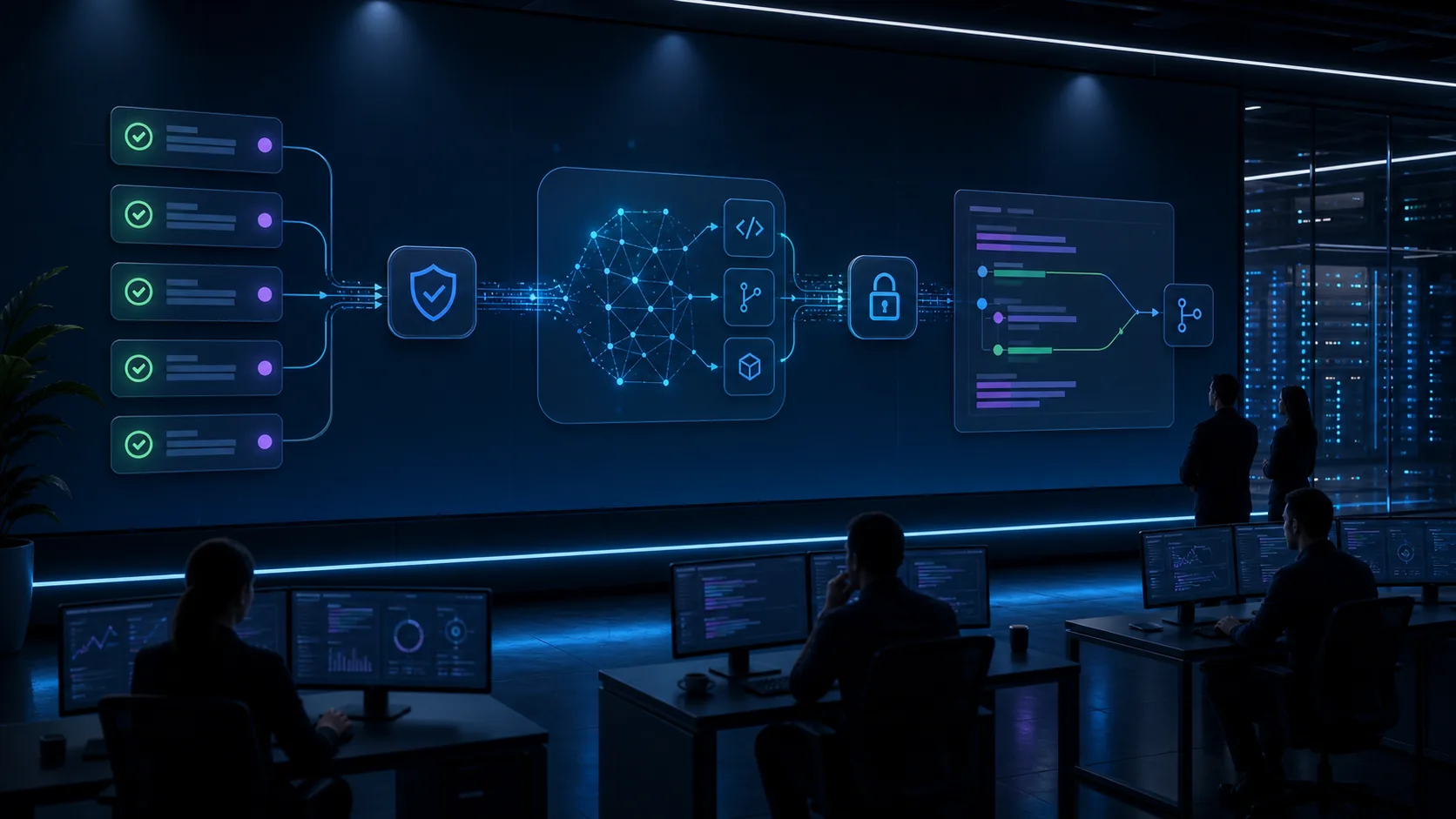
A Good Issue Is The First Control
An AI coding run is only as useful as the work definition behind it. GitHub Issues vary widely. Some are clear, tested bug reports. Others are broad ideas, customer complaints, product debates, or incomplete notes.
Before assigning AI to an issue, the issue should answer:
- What problem should be solved?
- What behavior should change?
- What should stay out of scope?
- Which repository or service is involved?
- How should the change be validated?
- Who should review the result?
If the issue cannot answer those questions, the best AI action may be clarification, not code generation.
MergeLoom’s ticket template for AI coding agents gives teams a structure for making issues implementation-ready before a coding run starts.
Define Which Issues Can Produce Pull Requests
Not every issue should be eligible for an AI-generated pull request.
Good candidates include:
- small bugs with reproduction steps
- test coverage gaps
- documentation fixes
- minor dependency or configuration updates
- well-bounded UI or API changes that follow existing patterns
Riskier candidates include authentication, authorization, payments, data migration, incident response, and broad architecture work. Those issues may still benefit from AI-assisted investigation or test drafting, but they should not automatically produce a review-ready PR.
MergeLoom’s AI coding governance policy template helps teams define those boundaries before rollout.
Attach Trusted Repository Context
GitHub Issues provide task context. They do not always provide system context.
An agent may need to know:
- where the relevant code lives
- which package manager or build tool is used
- how tests are grouped
- which architecture patterns are expected
- which files are generated
- which directories are security-sensitive
- which docs are current enough to trust
Developers often keep this in memory. Agents need it made explicit.
MergeLoom’s Context Engine is built for reusable repository rules and approved context. The goal is to keep each run grounded in the same operating assumptions reviewers expect.
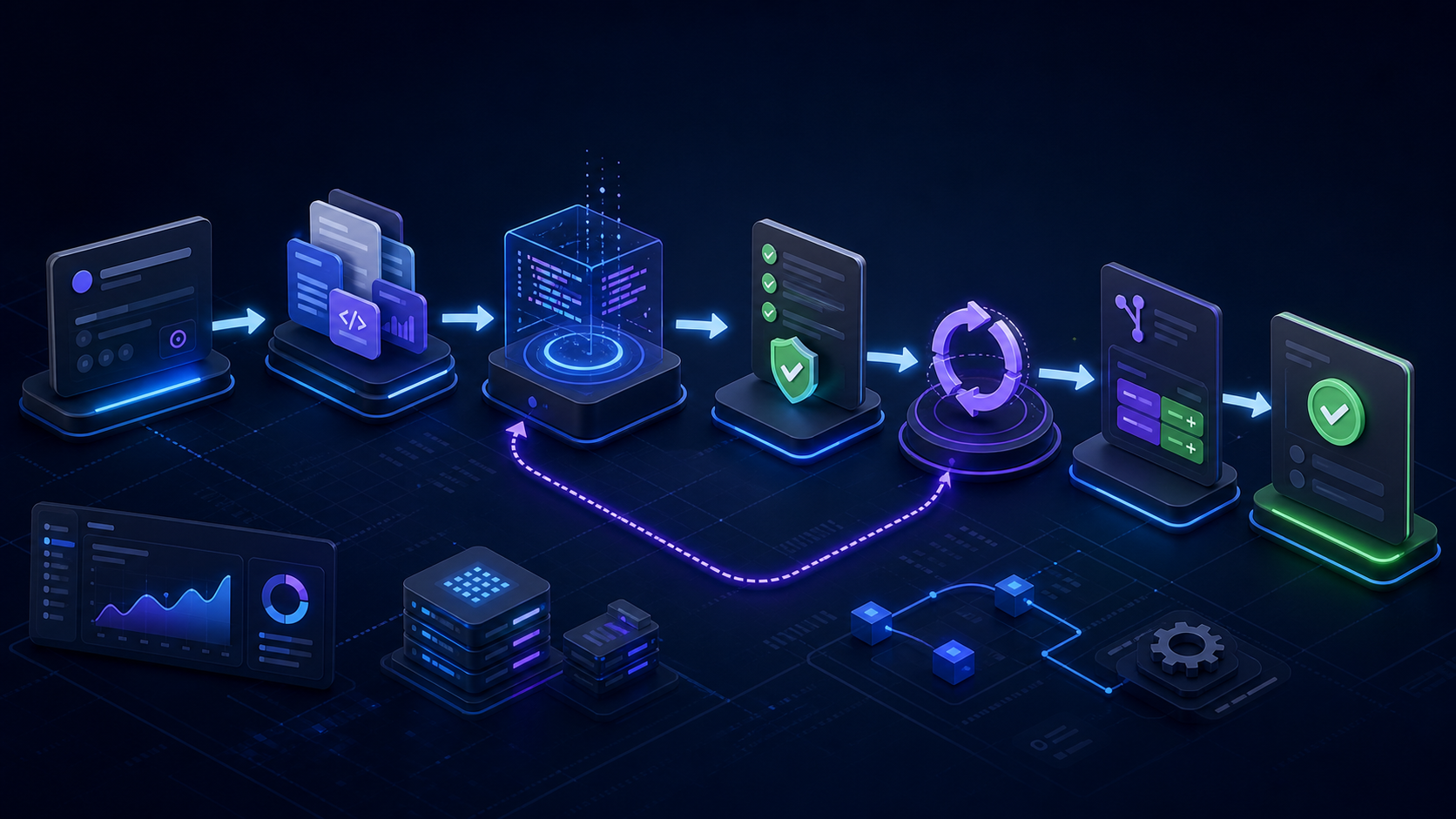
Run Validation Before Asking For Review
An AI-generated PR should not reach reviewers with obvious formatting failures, type errors, broken tests, or a diff that clearly escaped the issue scope.
Require checks before review:
- formatting and lint commands
- type checks
- relevant unit tests
- build commands
- custom repository validation
- diff scope checks
Branch protection and CI remain important, but they should not be the first serious inspection point. A workflow layer should run the checks it knows about, attempt bounded repair when appropriate, and preserve the output.
MergeLoom’s Quality Agents do this before PR/MR handoff so human reviewers can focus on judgment rather than basic cleanup.
Make The Pull Request Easy To Review
The pull request should tell the reviewer exactly what happened.
A useful AI-generated PR includes:
- source issue link
- plain-English implementation summary
- acceptance criteria addressed
- validation commands run
- validation results
- known limitations
- review focus areas
This is not paperwork. It reduces reviewer reconstruction time. It also makes the AI workflow easier to audit later if a change needs investigation.
MergeLoom’s audit trails and attribution connect the issue, run, context, validation, and PR/MR output into one evidence path.
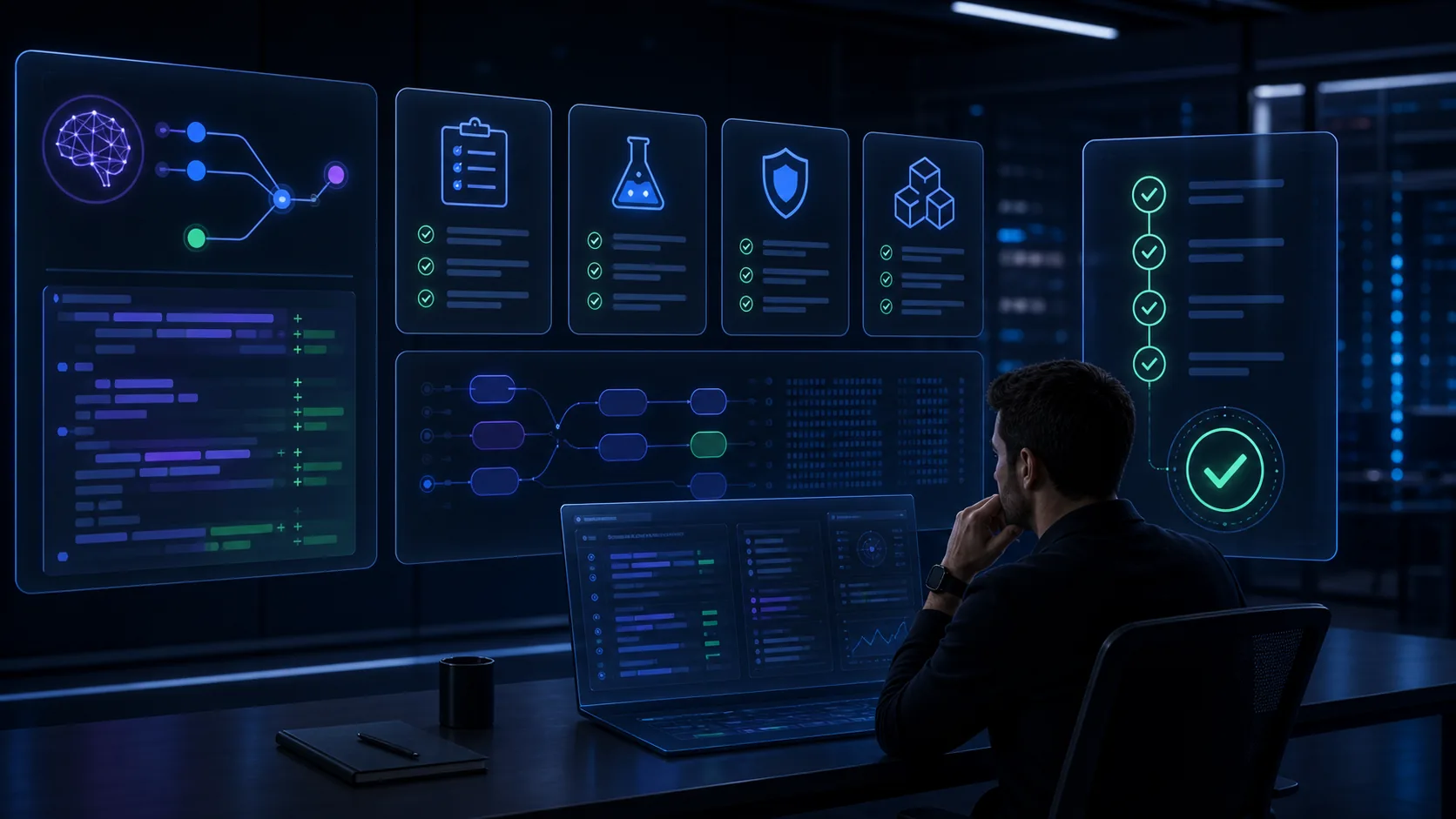
Keep Humans Responsible For Merge
AI-generated pull requests should still move through normal review ownership. CODEOWNERS, branch protection, required checks, security review, and release controls still matter.
The best workflow keeps humans in charge of:
- product fit
- architecture tradeoffs
- security risk
- performance risk
- customer impact
- merge approval
AI can prepare a branch. It should not quietly redefine the team’s engineering standards.
Track Cost Per Accepted PR
Issue-to-PR automation should be measured by outcomes, not only activity.
Track how many issues were eligible, how many runs started, how many stopped before coding, how many PRs opened, how many PRs merged, how much review rework was needed, and what each accepted result cost.
That is where AI coding economics become concrete. A high number of generated PRs is not a success metric if reviewers reject or heavily rewrite them.
MergeLoom’s AI coding tools cost model explains how to reason about cost across model usage, context, validation, review, and accepted delivery.
Where MergeLoom Fits
GitHub Issues and Copilot cloud agent make agentic pull request workflows more accessible. MergeLoom complements that by adding the workflow controls many teams need before broader rollout: approved issue intake, reusable context, controlled execution, validation before PR, audit trails, and cost per accepted outcome.
To plan a controlled GitHub Issues to PR workflow, start with Ticket-To-Code Automation or book a demo to map issue labels, repository rules, validation commands, and review ownership.