GitLab has made issue-to-merge-request AI workflows a visible part of its platform direction. The official GitLab Duo Agent Platform documentation describes an AI-native solution with multiple agents across the software development lifecycle. Its listed generally available features include Developer Flow, which converts issues into merge requests, and Code Review Flow for review tasks and coding standards.
That is a strong category signal. AI coding is moving closer to normal planning, repository, CI/CD, and review systems.
For enterprise teams, the next question is governance. If an issue can become a merge request through AI execution, what controls decide when that should happen, which context is trusted, which checks must pass, and what evidence reviewers receive?
The Issue Is The Contract
An issue-to-MR workflow works best when the issue is specific enough to act as a contract.
Before AI coding starts, the issue should include:
- the problem or requested behavior
- acceptance criteria
- expected affected area
- known constraints
- validation expectations
- review owner or owning team
If the issue is vague, AI may still produce code, but the review burden moves downstream. Reviewers then have to decide whether the agent solved the right problem, not just whether the code compiles.
MergeLoom’s ticket template for AI coding agents gives teams a practical structure for making issues ready for AI execution.
Decide Which GitLab Issues Are Eligible
AI-generated merge requests are most useful when the work is bounded.
Good candidates include:
- small bugs with clear reproduction steps
- test additions
- documentation changes
- minor refactors with existing coverage
- CI configuration fixes with clear failure evidence
Higher-risk work should usually stay human-led at first: authentication, authorization, payment flows, schema migrations, large architecture changes, and security incident fixes.
This is not about distrusting GitLab Duo or any other agent. It is about making the delegation boundary explicit.
MergeLoom’s AI coding risk management guide covers how to classify work by blast radius before assigning it to agents.
Teams can make this practical with labels and workflow states. For example, an issue might need an “AI-ready” label, clear acceptance criteria, and an owning team before it enters the queue. A separate “human-led” label can keep sensitive or ambiguous work out of automated execution without blocking AI-assisted research.
Add Context Beyond The Issue Body
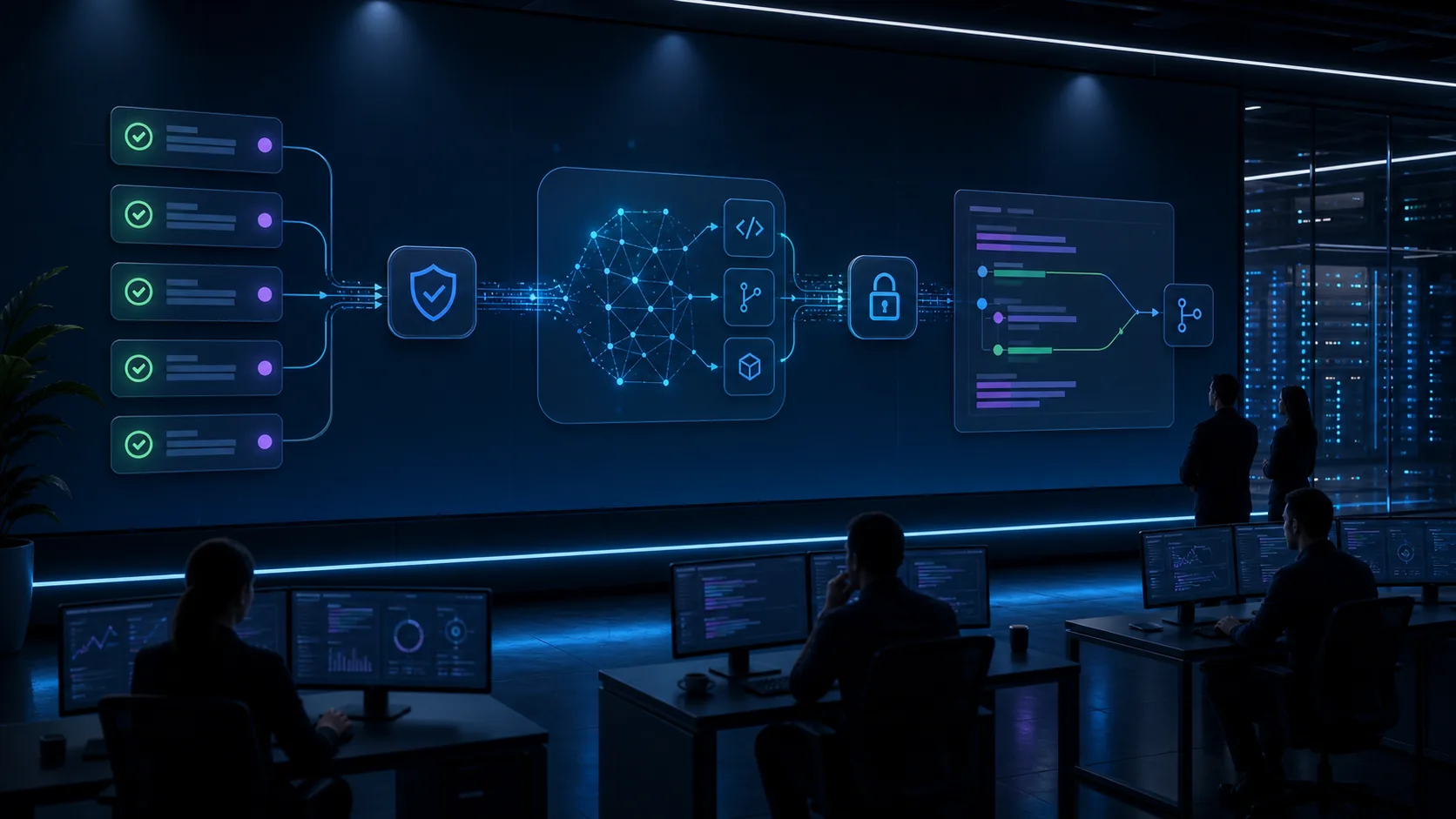
GitLab issues are useful task records, but they rarely contain all the repository knowledge an agent needs.
The workflow should provide:
- repository setup commands
- test commands
- CI expectations
- service boundaries
- coding conventions
- security-sensitive paths
- docs the agent can trust
GitLab Duo Agent Platform also includes features such as project context initialization that can document project conventions for AI agents. That kind of context is important because issue text alone is usually not enough for reliable coding work.
MergeLoom’s Context Engine takes the same governance problem seriously: context should be reusable, approved, attached to the run, and visible in the audit trail.
Validate Before The Merge Request Is Ready
An AI-generated MR should not create avoidable cleanup for maintainers.
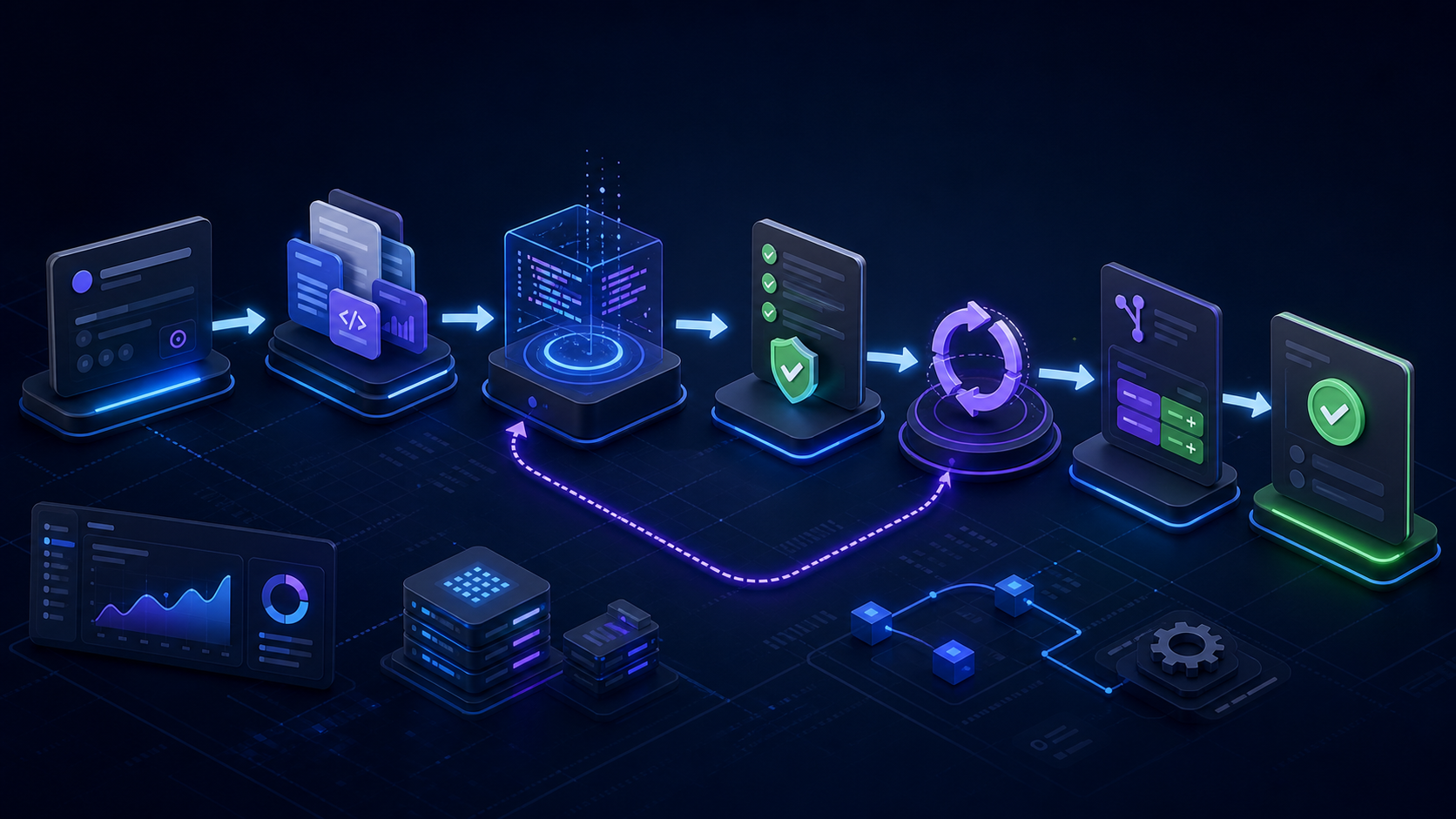
Before review, require the workflow to run:
- formatting checks
- lint checks
- type checks
- unit or integration tests relevant to the issue
- CI or build commands where feasible
- diff scope checks
GitLab CI/CD can catch many problems after an MR exists. A stronger workflow also validates before handoff, then attaches the result to the MR summary.
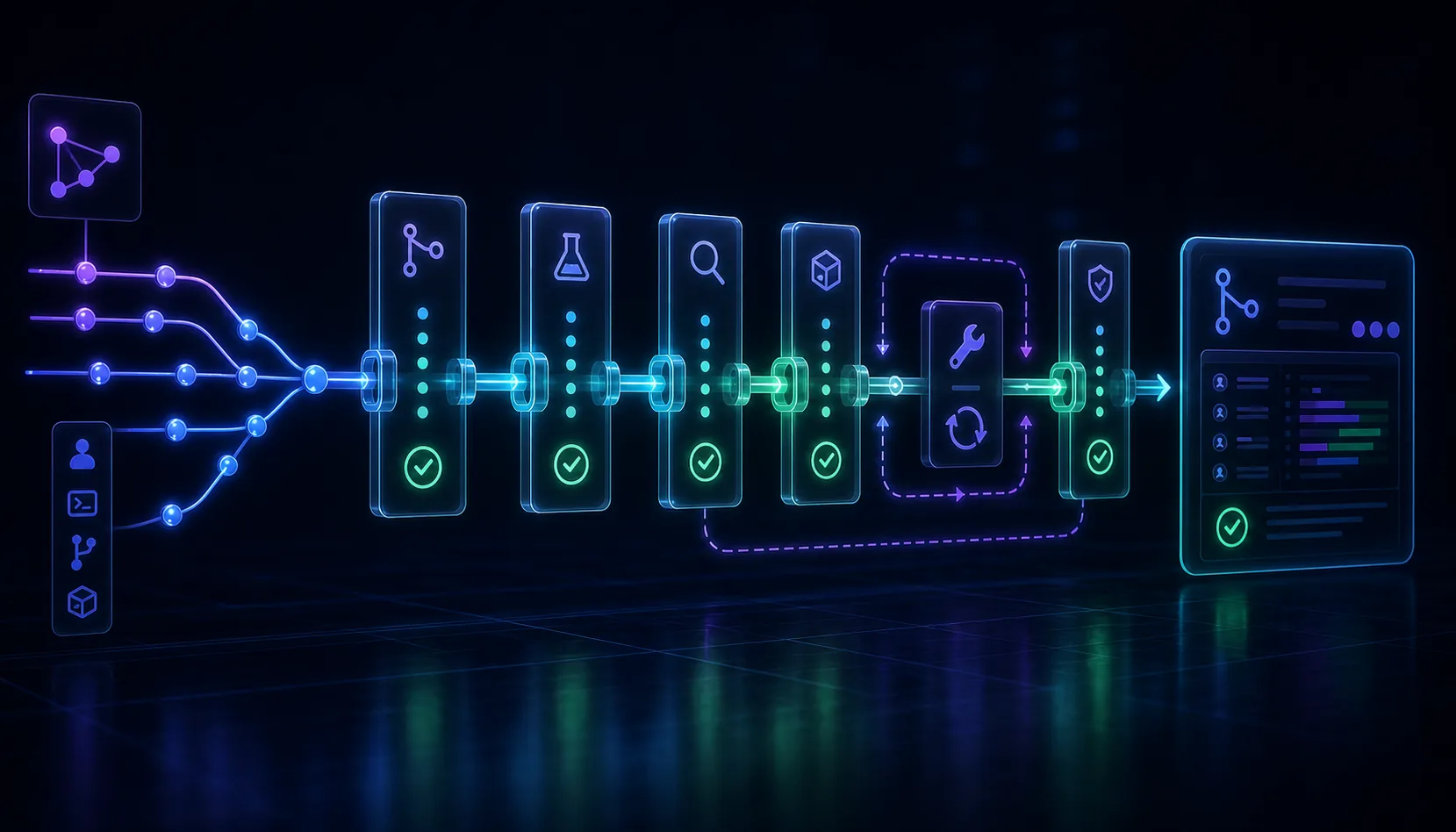
MergeLoom’s repository rules and validation docs explain how repository-specific commands can become part of a controlled run rather than informal reviewer expectation.
Keep Reviewers In Control
The merge request remains the right human control point. AI can prepare the change, but humans still decide whether to merge.
Reviewers should receive:
- source issue link
- implementation summary
- acceptance criteria mapping
- validation output
- files changed
- known gaps
- review focus areas
That evidence reduces wasted review time. It also keeps the review grounded in the original issue instead of treating the MR as an isolated diff.
MergeLoom’s Quality Agents are built around this pre-review handoff: validate the change, repair bounded failures, check diff scope, and preserve evidence before human review.
Audit The Full Path
GitLab already gives teams strong primitives around issues, merge requests, approvals, CI/CD, and auditability. AI coding adds a new chain of evidence that should be preserved:
- who delegated the issue
- which context sources were used
- which repository and branch were selected
- what files changed
- which validation commands ran
- what repair attempts happened
- which MR was created
- whether the MR was accepted after review
MergeLoom’s audit trails and attribution focus on this evidence path from ticket to validated PR/MR.
Measure Accepted Merge Requests
Usage metrics are not enough. For AI-generated MRs, leaders should measure accepted outcomes.
Track:
- eligible issues
- attempted AI runs
- runs stopped before code
- MRs opened
- MRs merged
- review rework
- validation failures
- cost per accepted MR
This keeps AI coding grounded in delivery value rather than activity volume.
Where MergeLoom Fits
GitLab Duo Agent Platform validates issue-to-MR automation inside GitLab’s own ecosystem. MergeLoom complements that direction by providing a workflow layer around approved work, controlled context, execution, validation before handoff, audit trails, and outcome cost visibility across existing delivery tools.
For GitLab teams that want AI-generated merge requests without giving up review discipline, start with Ticket-To-Code Automation or book a demo to map issue labels, repository rules, CI commands, and approval paths.