Atlassian’s Rovo Dev is another sign that AI coding is moving into the systems engineering teams already use. Atlassian describes Rovo Dev as an AI agent for professional software engineers that handles planning, code generation, code reviews, and repetitive work at scale. Its support docs describe Rovo Dev surfaces across the CLI, code reviews in Bitbucket and GitHub, IDE work, Jira work items, automations, Bitbucket Pipelines, and MCP.
That is a meaningful market signal. Teams do not want AI coding isolated in a side chat. They want it connected to Jira, code hosts, review, and delivery.
The enterprise question is what workflow control needs to exist around that experience.
Rovo Dev Brings AI Closer To Jira Work
The Rovo Dev support page says teams can work with Rovo Dev in Jira to transform Jira work items into working code. Atlassian’s product page also describes Rovo Dev as connecting across work items, pull requests, and codebases.
That direction makes sense. Jira already contains the planning context for many software teams: issue type, priority, acceptance criteria, comments, attachments, links, sprint state, and ownership.
Starting AI coding from Jira can reduce the gap between planning and implementation. It can also create risk if the ticket is too vague, the repository context is incomplete, or the resulting pull request reaches review without enough validation evidence.

Treat Jira Tickets As Governed Intake
Before any AI coding workflow starts, teams should define what a Jira ticket must contain.
A useful AI-ready ticket includes:
- a clear problem statement
- specific acceptance criteria
- out-of-scope notes
- affected product area or service
- links to design or customer context
- validation expectations
- review owner or owning team
If those fields are missing, the right next step may be clarification rather than code generation.
MergeLoom’s Jira to pull request workflow and ticket template for AI coding agents show how to structure Jira work so agents can act on it with less guesswork.
Decide Which Work Can Be Delegated
Rovo Dev can help across planning, coding, review, and automation, but enterprises still need a delegation policy.
Good early candidates include:
- small bugs with clear reproduction steps
- test coverage additions
- documentation updates
- minor UI changes that follow existing components
- bounded maintenance tasks
Use tighter controls for authentication, authorization, billing, data migrations, sensitive customer data paths, and large architecture changes. Those areas can still benefit from AI-assisted investigation or drafting, but automatic implementation should not be the first rollout step.
MergeLoom’s AI coding risk management guide gives teams a practical way to classify work by risk before assigning it to an agent.
Context Must Be More Than The Ticket
Jira explains what the team wants. The repository explains how the system works.
AI coding needs both.
Teams should define trusted context sources:
- repository setup instructions
- test and build commands
- architecture docs
- API contracts
- code ownership rules
- security-sensitive paths
- component and style conventions
Atlassian positions Rovo Dev around the Teamwork Graph and existing permissions, which can help connect knowledge across Atlassian products. Enterprise teams should still decide which sources are approved for coding runs and how stale or conflicting context is handled.
MergeLoom’s Context Engine gives teams a reusable context layer for AI coding runs so the same repository rules and docs can be applied consistently.
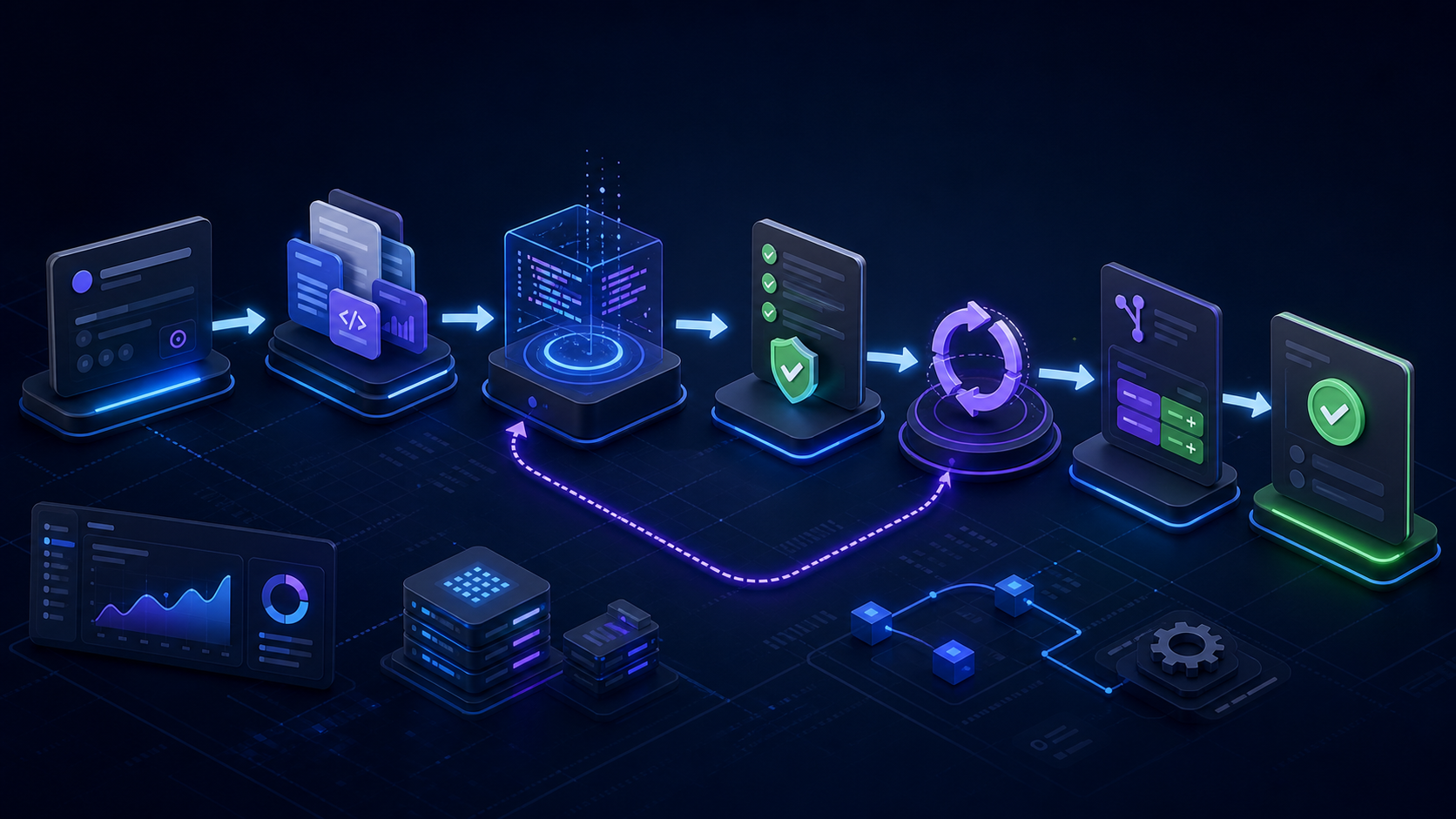
Validate Before Pull Request Review
AI coding should not turn reviewers into first-pass test runners.
Before a pull request or merge request is considered ready, the workflow should run:
- formatting checks
- lint checks
- type checks
- relevant tests
- build commands
- repository-specific validation
- diff scope checks
If checks fail, the system should try bounded repair or stop and explain why. Reviewers need the evidence either way.
MergeLoom’s Quality Agents focus on this pre-review path: clarity checks, investigation, validation, repair, review prep, and diff guard before handoff.
Keep Review Ownership Human
Rovo Dev and similar tools can help generate code and review suggestions, but human review remains the control point for production systems.
Reviewers still need to decide:
- whether the ticket was interpreted correctly
- whether the architecture choice fits the system
- whether security and data handling are acceptable
- whether tests cover the right behavior
- whether the change should merge now
The workflow should make those decisions easier by providing a clean handoff: source ticket, implementation summary, validation output, changed files, known gaps, and reviewer focus areas.
MergeLoom’s audit trails and attribution preserve that evidence from ticket through run and PR/MR handoff.

Watch Data Boundaries And Deployment Needs
Atlassian’s Rovo Dev page states that Rovo Dev uses third-party hosted LLMs from OpenAI and Anthropic and respects organization AI settings and permissions. It also states that supported source code management tools are currently Bitbucket Cloud and GitHub.
Those facts may be fine for many teams. Other enterprises may need a tighter execution boundary, private networking, or a customer-hosted worker.
MergeLoom’s Self Hosted AI coding infrastructure is designed for teams that need execution inside their own environment while still producing normal PRs and MRs for review.
Where MergeLoom Fits
Rovo Dev validates that AI coding belongs near Jira work, repositories, IDEs, and review workflows. MergeLoom complements that ecosystem direction by focusing on the operating layer around the coding run: approved ticket intake, context, controlled execution, validation before handoff, audit evidence, and cost per accepted outcome.
If your team is evaluating Rovo Dev and wants a clear governance model around enterprise AI coding, start with Ticket-To-Code Automation or book a MergeLoom demo to map the workflow controls around your Jira and repository process.